Peptides in Korean Skincare: What They Actually Do
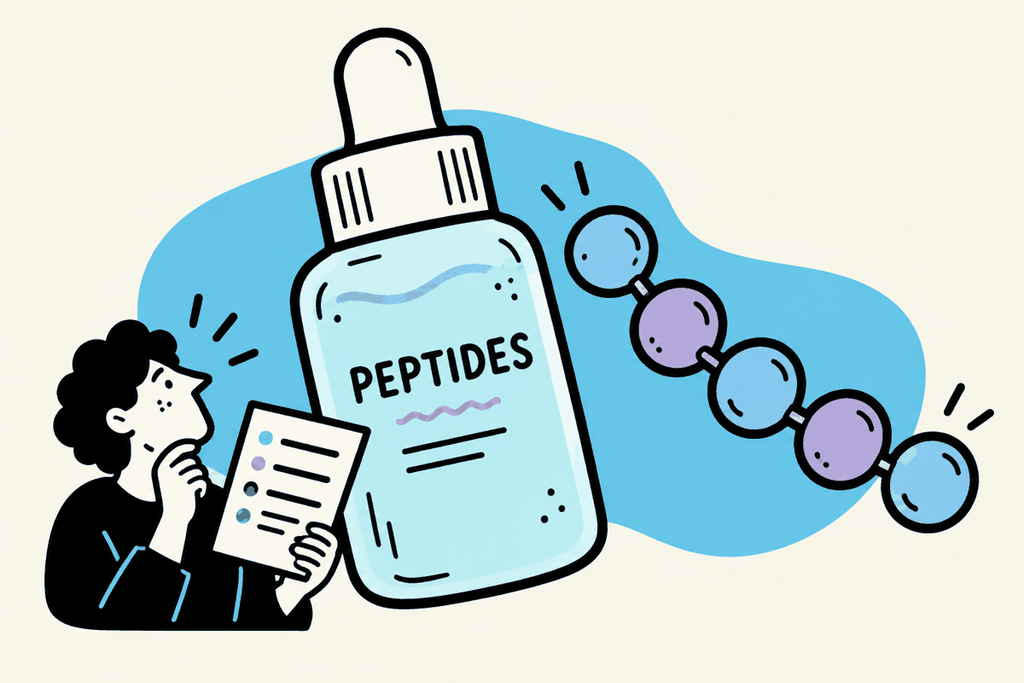
Peptides occupy an interesting middle ground in Korean skincare, widely used in anti-aging formulations, frequently mentioned on ingredient lists, but rarely given the same dedicated marketing spotlight as snail mucin or Centella asiatica. Here’s what they actually are and whether they deserve more attention than they typically get.
What Peptides Actually Are
Peptides are short chains of amino acids, the building blocks of proteins, including collagen, one of skin’s primary structural proteins. Cosmetic peptides are designed to send specific “signals” to skin cells, most commonly encouraging collagen production or supporting other structural and repair processes, depending on the specific peptide sequence used.
Why Peptides Aren’t a Single Ingredient
Unlike niacinamide or hyaluronic acid, “peptides” is a category name covering dozens of distinct compounds with different mechanisms:
- Signal peptides. Encourage collagen and elastin production
- Carrier peptides. Help deliver trace elements (like copper) that support wound healing and enzyme processes
- Enzyme-inhibitor peptides. Slow the breakdown of existing collagen
- Neurotransmitter-inhibitor peptides. Sometimes marketed as “Botox-like,” working to relax the look of expression lines by mildly limiting muscle contraction signals
This variety means a product’s actual effectiveness depends heavily on which specific peptides are used and at what concentration, a more complex evaluation than most single-ingredient K-beauty actives require.
How Peptides Fit Into Korean Skincare Philosophy
Korean anti-aging skincare tends to favor a gradual, preventive approach over dramatic intervention, discussed in the context of Korean beauty standards throughout this blog. Peptides fit this philosophy well. They work through gradual, cumulative signaling to skin cells rather than providing the more immediate exfoliation or hydration effects of ingredients like AHA/BHA or hyaluronic acid, aligning with a longer-term, consistency-focused approach to anti-aging.
Does the Science Hold Up?
Reasonably well, though with important caveats. Peptide research is promising. Several specific peptide sequences (like Matrixyl, a well-studied signal peptide) have published clinical data supporting modest improvements in fine lines and skin texture over consistent use. However:
- Peptides are large molecules, and skin penetration (getting the peptide deep enough to actually signal cells) is a genuine formulation challenge that not every product solves equally well
- Marketing often implies more dramatic, faster results than the underlying research supports
- Results are generally gradual (think months, not weeks) and modest rather than transformative
What About PDRN? Not a Peptide, but Often Sold Next to Them
PDRN (polydeoxyribonucleotide) turns up on the same Korean shelves and in the same “regeneration” marketing, so it is worth separating from peptides. Peptides are short chains of amino acids. PDRN is a mixture of DNA fragments, and according to a recent review of the research it is mainly extracted from the sperm of chum salmon or rainbow trout. The two work through different routes, so one is not a stronger version of the other.
The proposed mechanism is that PDRN breaks down into smaller parts that act on adenosine A2A receptors and feed the cell’s nucleotide recycling pathway, which is linked to calmer inflammation and better tissue repair. The same review says parts of this are still unproven, including whether the DNA fragments really turn into adenosine, and that fragment size is not consistently defined.
The human evidence in the reviews I read is mostly about injections, not creams. The studies they describe cover wound healing in diabetic foot ulcers and skin booster treatments in clinics. For topical products sold as skincare, the main review I read cites no controlled trials, which is different from saying no such trials exist, and its support for topical use comes mainly from cell and animal studies. A separate narrative review also reports no skin penetration data for topical use and says its anti-aging claims rest mainly on lab work with skin cells.
In practice, that means a PDRN serum is best treated as a hydrating, soothing product with an interesting but unproven extra, not as a substitute for the clinic injections that the research is mostly about. I have not used a PDRN product myself, so I am not judging how any specific one feels. If you want to try one, check where PDRN sits on the ingredient list and patch test first, especially if you have a fish allergy.
Popular Korean Peptide Products
- COSRX The 6 Peptide Skin Booster Serum. A light, water-based serum in a 150ml pump bottle that pairs six peptides (including acetyl hexapeptide-8) with niacinamide, adenosine, allantoin and acetyl glucosamine. My experience with it is below.
- COSRX Advanced Snail Peptide Eye Cream. Combines peptides with the brand’s signature snail mucin for a dual-hydration-and-signaling approach
My Experience With COSRX The 6 Peptide Skin Booster
My skin is slightly oily and sensitive. I used it for about four weeks as the first step after cleansing, layered twice, followed by my usual serum and moisturizer. It sinks in quickly and leaves my skin smoother and more moisturized, with no stinging. The change was gradual. “Comfortable” describes it better than “dramatic”, which matches what the research says about peptides: they’re a slow, steady ingredient, not an overnight fix.
- I use vitamin C in the morning and this serum at night, which is a personal habit rather than a requirement.
- Some users report redness or breakouts with this serum. If your skin reacts, stop using it.
Who Should Consider Peptide Products
Good candidates: those focused on gradual, long-term anti-aging prevention, particularly for fine lines, loss of firmness, or early collagen decline. Given their generally gentle, non-irritating nature, peptides are also reasonable for sensitive skin seeking anti-aging benefits without the irritation risk of retinoids.
Less essential for: very young skin without specific aging concerns, where the investment may be premature relative to more immediately relevant ingredients like sunscreen and basic hydration.
For a real product example, see my review of the COSRX The 6 Peptide Skin Booster, a light hydrating serum I used during my military service in Korea.
How to Incorporate Peptides Into a Routine
Peptide products typically function as a treatment serum, slotting into the routine after toner/essence and before heavier moisturizer, consistent with the general layering logic covered in our 10-step routine guide. Peptides generally layer well with most other actives, including retinoids and vitamin C. The main exception is copper peptides, which some brands advise keeping apart from pure vitamin C (L-ascorbic acid) and strong acids, so follow the directions on your product.
Can I use peptides and retinol together?
Yes, generally without issue. Some formulations even combine both intentionally, since peptides’ gentler mechanism can complement retinol’s more intensive cell-turnover effects.
How long until peptides show visible results?
Realistically 8-12 weeks of consistent use for most peptide formulations, reflecting their gradual, cumulative mechanism rather than immediate visible change.
Are “copper peptides” different from regular peptides?
Copper peptides specifically combine a peptide carrier with copper, an element associated with wound healing and enzymatic processes. They’re a distinct subcategory worth knowing, sometimes marketed separately from general “peptide” claims.
Peptides represent one of Korean skincare’s more scientifically grounded, if less flashy, anti-aging ingredient categories, useful for gradual collagen support and fine-line improvement, provided expectations stay realistic about the timeline and magnitude of results relative to more dramatically marketed alternatives.
Read Next
The Azelaic Acid pH Controversy: What It Actually Proves (And What It Does Not)
This is the second post in a series about reading what is actually in a…
Adenosine: Korea’s Officially Approved Anti-Wrinkle Ingredient
Adenosine occupies a unique regulatory position in Korean skincare that most international shoppers never realize:…
Pure Vitamin C vs. Derivatives: Which One Is in Your Brightening Serum?
Two serums both say vitamin C on the front. One stings slightly, comes in an…
What Is Snail Mucin and Why Is It in Every K-Beauty Product?
If you’ve spent more than five minutes browsing a K-beauty section, whether that’s a shelf…
Propolis in Korean Skincare Explained: Benefits, Products, and How to Use It
Propolis has quietly become one of the more consistently used ingredients across Korean skincare’s brightening…
What Does “Hanbang” Mean in Korean Skincare?
“Hanbang” appears constantly in Korean skincare marketing (printed on packaging, used in brand descriptions, referenced…