Adenosine: Korea’s Officially Approved Anti-Wrinkle Ingredient
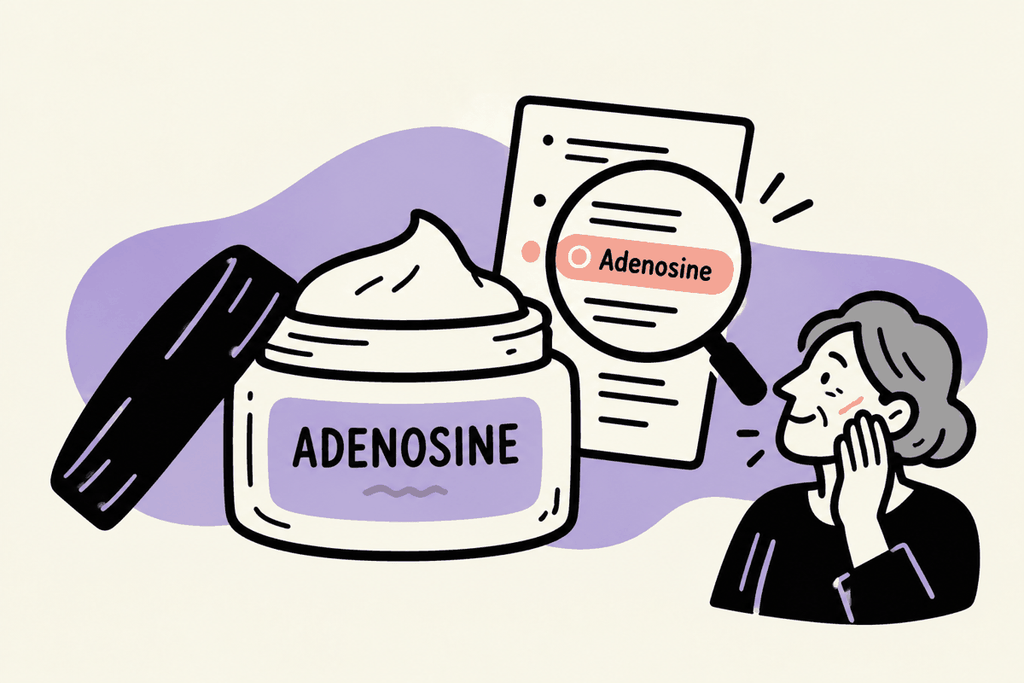
Adenosine occupies a unique regulatory position in Korean skincare that most international shoppers never realize: it’s one of a small handful of ingredients specifically recognized by Korea’s Ministry of Food and Drug Safety (MFDS) as a “functional” anti-wrinkle ingredient, giving products containing it a distinct official status most K-beauty actives don’t have.
In this guide
- What Adenosine Actually Is
- Why Korea’s Regulatory Recognition Matters
- The Science Behind Adenosine
- Why It’s Less Internationally Famous Than Other K-Beauty Actives
- Popular Korean Adenosine Products
- Who Should Consider Adenosine Products
- How to Incorporate Adenosine Into a Routine
- Common Questions About Adenosine
- Why Adenosine Matters
What Adenosine Actually Is
Adenosine is a naturally occurring molecule involved in cellular energy processes throughout the body, including skin cells. In skincare formulation, it’s used at low, cosmetically regulated concentrations distinct from its pharmaceutical uses (adenosine has entirely different applications in medicine at much higher doses), specifically for its skin-signaling properties related to collagen support and fine line reduction.
Why Korea’s Regulatory Recognition Matters
This is the most distinctive thing about adenosine within Korean skincare culture. Korea’s MFDS maintains a specific “functional cosmetics” (기능성화장품) certification system, requiring products claiming certain functions, including anti-wrinkle effects, to substantiate those claims with a MFDS-recognized active ingredient at a verified minimum concentration. Adenosine is one of a limited list of ingredients approved for this anti-wrinkle functional claim, alongside a small number of others like retinyl palmitate and certain other regulated actives.
This is a meaningfully different regulatory framework than most Western markets, where “anti-aging” and “anti-wrinkle” marketing claims often face much looser substantiation requirements. A Korean product legitimately claiming “주름개선” (wrinkle improvement) functional status has passed a specific verification process most international skincare marketing claims never go through.
The Science Behind Adenosine
Adenosine’s anti-aging mechanism is understood to work partly through signaling effects on fibroblasts (the cells responsible for collagen production), similar in broad concept to some peptides covered in our peptides post, though through a distinct biochemical pathway. Clinical research, including studies conducted as part of Korea’s regulatory approval process, has shown modest but measurable improvements in fine line depth and skin elasticity with consistent use.
As with most anti-aging actives, results are gradual rather than dramatic. Adenosine is not a substitute for more intensive treatments like retinoids, but rather a gentler, well-tolerated option suitable for longer-term, lower-irritation use.
Why It’s Less Internationally Famous Than Other K-Beauty Actives
Adenosine’s relative international obscurity, despite its official regulatory status within Korea, likely comes down to a few factors: it doesn’t have the exotic, story-driven marketing angle of ingredients like snail mucin or heartleaf, and its effects are gradual and subtle rather than immediately dramatic, a harder sell for viral social media marketing than a visibly dewy, immediate-gratification ingredient.
Popular Korean Adenosine Products
- Many Korean “wrinkle improvement” certified creams across a wide range of brands include adenosine specifically to meet MFDS functional cosmetic requirements. Checking for the “기능성화장품” designation on Korean packaging (or its English equivalent, “functional cosmetics”) is a reasonable way to identify these products
- Sulwhasoo and other prestige Korean brands frequently incorporate adenosine into their anti-aging lines specifically to support functional cosmetic certification claims
- Some By Mi and other mid-range brands have also incorporated adenosine into select anti-aging serums and creams
Who Should Consider Adenosine Products
Good candidates: those wanting a gentle, well-tolerated anti-aging ingredient without retinoid-level irritation risk, particularly sensitive skin or retinoid-intolerant users seeking a lower-intensity alternative.
Less essential for: those seeking fast, dramatic anti-aging results, where retinoids or professional treatments generally offer more pronounced effects, albeit with correspondingly higher irritation risk.
How to Incorporate Adenosine Into a Routine
Adenosine-containing products span serums, essences, and creams, so routine placement depends on the specific product format, following the general thin-to-thick layering logic covered in our 10-step routine guide.
Common Questions About Adenosine
Is “functional cosmetics” certification the same as FDA drug approval? No. Korea’s functional cosmetics system is a distinct, cosmetics-specific regulatory category, verifying a claimed cosmetic function at a defined ingredient concentration, not the same rigorous drug-approval process used for pharmaceuticals.
Can I combine adenosine with retinol? Generally yes, since adenosine’s gentler mechanism doesn’t typically compound irritation risk the way combining multiple strong exfoliants or retinoid concentrations might.
How do I know if a Korean product is actually MFDS-certified for anti-wrinkle claims? Look for “기능성화장품” (functional cosmetics) or “주름개선” (wrinkle improvement) on Korean packaging, or check the brand’s official product description for functional cosmetic certification claims.
Why Adenosine Matters
Adenosine represents one of the more regulation-backed, if underappreciated, anti-aging ingredients in Korean skincare, a gentle, well-tolerated option carrying genuine official certification for anti-wrinkle claims within Korea’s specific functional cosmetics framework, worth considering as a lower-irritation alternative or complement to retinoids.
Adenosine is one of the ingredients behind Korea’s “functional cosmetic” label. For how that label works and what it does and doesn’t guarantee, see what 기능성화장품 on a Korean label actually means.
Read Next
What Does “Hanbang” Mean in Korean Skincare?
“Hanbang” appears constantly in Korean skincare marketing (printed on packaging, used in brand descriptions, referenced…
Retinol vs. Retinal vs. Bakuchiol: Korean Anti-Aging Actives Compared
Anti-aging ingredient choice has gotten more complicated in recent years as retinal and bakuchiol have…
Ceramides Explained: The Ingredient Behind Every Barrier Cream
Ceramides don’t generate viral hype the way snail mucin or Centella asiatica do, but they’re…
What Does “Emulsify” Mean in Skincare? A Cleansing Oil Explainer
In cleansing-oil instructions, “emulsify” means adding water and gently working it through the cleanser so…
Mugwort (Ssuk) in Korean Skincare: What the Research Supports and Who Should Skip It
Mugwort is a Korean spring food turned skincare staple. Here’s which Artemisia is on your label, what the studies show, how it compares with centella and heartleaf, and who should be careful.
What Is Snail Mucin and Why Is It in Every K-Beauty Product?
If you’ve spent more than five minutes browsing a K-beauty section, whether that’s a shelf…