Korean Skincare for Rosacea: What Helps, What Flares, and What to Skip
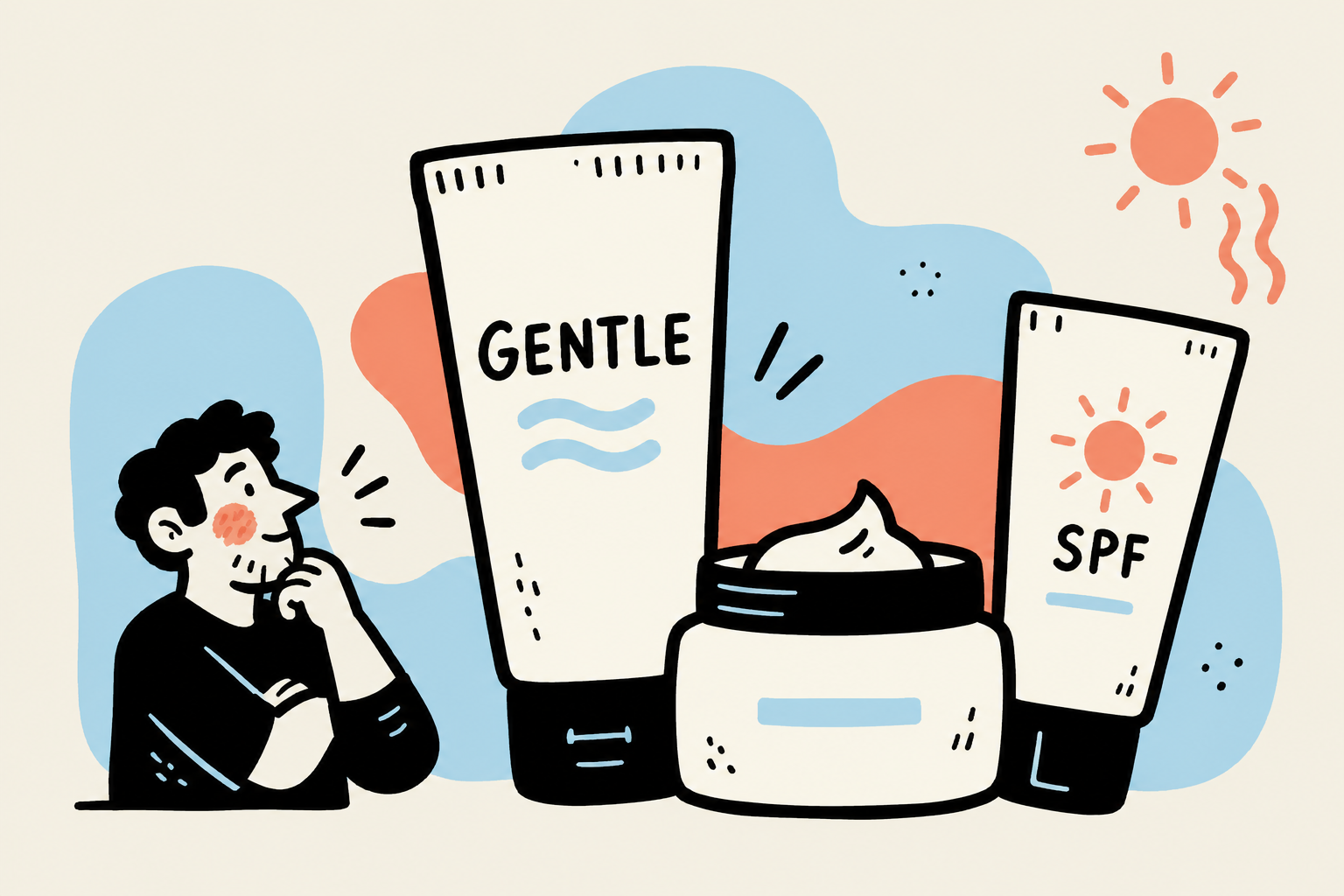
Sensitive skin reacts more readily to products, weather and touch than average skin, so every product choice is worth checking for irritation risk before efficacy. Korean skincare’s barrier-first approach, discussed throughout this blog, puts irritation avoidance first, which is a useful starting idea for this skin type, though a Korean label is not a guarantee that a product is gentle.
This article is general information, not medical advice. If you’re dealing with persistent acne, rosacea, eczema or another skin condition, please see a dermatologist.
In short
A gentle routine with a short ingredient list and one new product at a time is a reasonable starting point for sensitive skin. Rosacea is a medical condition, and its treatment belongs with a dermatologist rather than a skincare routine.
Understanding Sensitive and Rosacea-Prone Skin
Sensitive skin broadly describes skin that reacts more readily to products, environmental factors, or physical stimuli than average, while rosacea specifically refers to a chronic inflammatory condition causing persistent redness, visible blood vessels, and sometimes bumps, typically requiring dermatologist involvement for proper management. This routine addresses general sensitivity and can complement (but should not replace) dermatological treatment for diagnosed rosacea.
Core Principles for This Skin Type
- Minimal ingredient lists, fewer ingredients means fewer potential triggers, a philosophy already central to brands like COSRX and Anua covered elsewhere on this blog
- Fragrance-free formulations, added fragrance is one of the most common irritant triggers, even in otherwise gentle products
- Gradual introduction of any new product, patch testing and single-product introduction, discussed in our skin barrier repair guide, matters even more for reactive skin
- Avoiding physical and aggressive chemical exfoliation, both discussed in our PHA/AHA/BHA guide, with PHA being the gentlest option if exfoliation is tolerated at all
Step-by-Step Routine
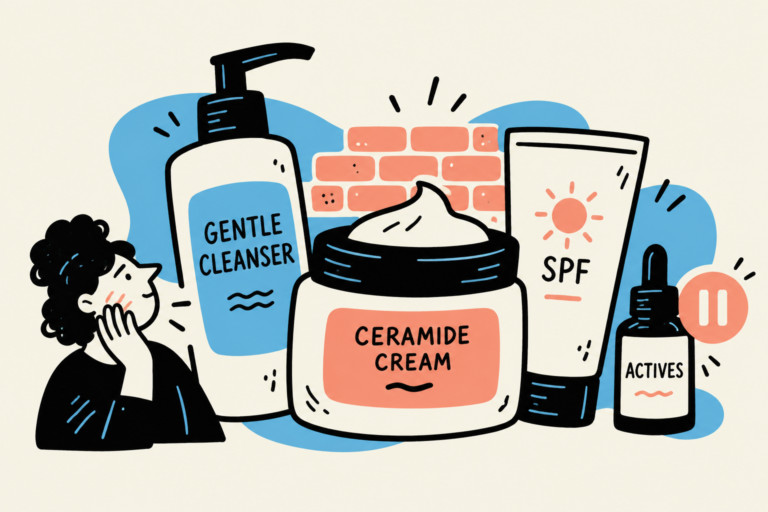
I have used some of the products recommended here during my military service in Korea. Cleanser, moisturizer and sunscreen are the core of this routine. The toner and serum steps are optional, and you can skip both.
1. Ultra-Gentle Cleanser
Double cleansing is optional here. Whether you need a first cleanse depends on what you have to remove, such as sunscreen or makeup, and on how your skin reacts. One gentle cleanse with a fragrance-free, low-pH cream or gel cleanser is often enough and keeps product exposure down. A first oil or balm step only makes sense if one cleanse leaves residue behind and your skin tolerates it.
Recommended: Pyunkang Yul Low pH Pore Deep Cleansing Foam, or an even gentler cream cleanser if foam still feels stripping.
2. Optional Hydrating Toner
The American Academy of Dermatology (AAD) advises people with rosacea to skip astringents and toners, so treat this step as optional rather than part of core rosacea care. If you already use a fragrance-free, alcohol-free hydrating toner without stinging, this is where it goes.
Recommended: If you want one, Anua Heartleaf 77% Soothing Toner is reviewed in our dedicated post, which covers its short ingredient list. This post cites no evidence that it helps rosacea, so it is not a treatment recommendation.
3. Optional Serum (Only If Tolerated)
Many sensitive skin routines skip a dedicated treatment serum during flare-ups and rely on cleanser, moisturizer and sunscreen. If you want a serum and your skin tolerates it, a fragrance-free Centella asiatica product is one soothing option, but this post cites no evidence that it is safer than other fragrance-free options.
Recommended: SKIN1004 Madagascar Centella Ampoule is the example covered in our skin barrier repair guide as a calming option. It is a cosmetic ampoule, not a rosacea treatment.
4. Ceramide-Rich Moisturizer
The AAD recommends a rosacea-friendly moisturizer or barrier repair cream after cleansing and suggests creams over lotions or gels. Ceramide-containing creams are a common way to support the skin barrier.
Recommended: Illiyoon Ceramide Ato Concentrate Cream is one ceramide cream to consider. Check the ingredient list for fragrance and alcohol first, and patch test it.
5. Mineral-Leaning Sunscreen
Sun exposure is the most commonly reported trigger in the National Rosacea Society survey cited below, which makes sunscreen the most important step here. Some people find that chemical filters sting or flush their skin, and tolerance differs from person to person.
Recommended: A mineral-forward Korean sunscreen if chemical filters cause issues, though some people with sensitive skin tolerate chemical filter sunscreens, such as Round Lab’s Birch Juice Moisturizing Sun Cream, covered in our sunscreen guide, which did not sting my eyes or burn my skin. Individual tolerance varies significantly here.
Is Centella Good for Rosacea?
It may work as a soothing, fragrance-free base layer, but it is not a rosacea treatment. Centella is widely used in Korean products marketed for calming skin, but this post cites no rosacea trial of a centella product, so I make no claim that it helps rosacea or that it is safer than other fragrance-free options. Nothing here suggests it stops flushing, clears papules or shortens a flare.
Two practical cautions. First, “cica” on the front of a bottle says nothing about which form of the plant is inside or how much, the word covers everything from a dilute leaf water to an isolated compound, as I went through in the piece on what cica actually means. Second, some centella products carry fragrance or a high alcohol content, which works against the reason you reached for it. Read the back.
Can You Use Niacinamide With Rosacea?
Possibly, but the evidence is thin and tolerance varies. One small randomized, investigator-blinded study of 50 people with rosacea found that a niacinamide-containing moisturizer improved skin barrier function and was followed by improvement in rosacea signs and symptoms over four weeks (Draelos et al., 2005). That tested a finished moisturizer, not niacinamide on its own, so it does not show that a niacinamide serum helps.
Some people sting or flush on niacinamide, and with rosacea-prone skin that reaction is worth avoiding. If you want to try it, patch test first, as the AAD recommends for any new product, and stop if it stings.
Evidence for cosmetic niacinamide in rosacea comes from small studies like this one, so treat it as optional.
Where Azelaic Acid Fits
Azelaic acid is one of the prescription topical treatments dermatologists use for the papules and pustules of rosacea (the AAD also lists metronidazole and ivermectin), and choosing among them is a conversation for a doctor rather than a shelf. A 2006 systematic review of five randomized trials (873 patients) found that azelaic acid 15 percent gel and 20 percent cream reduced inflammatory lesions and redness compared with vehicle in four of the five studies, and the authors concluded it was as effective as, if not better than, metronidazole gel. None of the studies showed a reduction in visible small blood vessels.
The trials included in the cited review evaluated a 15 percent gel and a 20 percent cream. Those results cannot be assumed to apply to products with other concentrations or formulations. Whether to try an azelaic acid product on rosacea-prone skin is a question for your dermatologist.
Is Double Cleansing Bad for Rosacea?
Double cleansing is a choice rather than a rule. If you wear sunscreen daily, it needs removing, and some people find an oil or balm first step gentler than scrubbing with a foaming cleanser, while others do fine with one gentle cleanse. Choose by what you need to remove and how your skin reacts.
What flares rosacea is everything around the method: water that is too hot, a long vigorous massage, a high-pH second cleanser that leaves skin squeaking, and cloths or brushes. On the days you do double cleanse, keep the water lukewarm, keep it brief, use a mildly acidic second cleanser, and use your hands. I set out the standard method in the post on double cleansing; for this skin type, treat every instruction in it as “gentler and shorter”.
On days you wore nothing on your face, one gentle cleanse in the evening is usually enough. The AAD suggests a mild cleanser in the morning and before bed, so water-only mornings are a personal choice rather than a rule.
Choosing a Sunscreen When You Have Rosacea
Sun is one of the most consistently reported rosacea triggers, which makes sunscreen the highest-value product in this entire routine. In a National Rosacea Society survey of 1,066 people with rosacea, 81 percent named sun exposure as a trigger. The American Academy of Dermatology recommends a broad spectrum sunscreen of SPF 30 or higher every day, and says zinc oxide or titanium dioxide formulas without fragrance suit sensitive skin. If you only get one thing right, get this one right.
Mineral filters are often better tolerated, mostly because they are less likely to sting on application. That said, modern Korean chemical filters are far lighter and more elegant than the older generation, and some people with rosacea wear them without trouble, the comparison is in the post on physical versus chemical filters. Test on a small area first rather than assuming either category is safe for you.
What to avoid regardless of filter type: fragrance, a high alcohol content near the top of the ingredient list, and anything marketed on a cooling or tingling sensation. And reapply when your exposure is high. The general guidance is about every two hours when you are outdoors, and after sweating, swimming, or rubbing your face. I added a midday top-up as a precaution.
What to Avoid Entirely
- Physical scrubs and harsh exfoliating tools
- Alcohol-forward toners marketed as “purifying” or “clarifying”
- Fragranced products of any kind, including “natural” essential oil fragrances, which can be equally or more irritating than synthetic fragrance
- Frequent product switching, sensitive skin benefits significantly from routine stability, since constant change makes identifying triggers far more difficult
- Hot water cleansing, which can trigger flushing and worsen redness in rosacea-prone skin specifically
The American Academy of Dermatology also lists camphor, menthol, glycolic acid, lactic acid, sodium lauryl sulfate and urea among ingredients to avoid with rosacea.
Managing Flare-Ups
During an active flare (increased redness, stinging, visible irritation), the skin fasting approach covered in our barrier repair guide is a common cautious approach. Keep to the most minimal routine you can (gentle cleanser, moisturizer, sunscreen) and pause new products. Persistent or worsening flares are a reason to see a dermatologist rather than adjust products alone.
In the same survey, emotional stress (79 percent), hot weather (75 percent), wind, heavy exercise, alcohol and hot baths were also common triggers. Triggers differ between people, so a diary of what you used and did before a flare is more useful than any fixed list.
I do not have rosacea, but my skin does get red, and I know what a damaged barrier feels like. After a glycolic acid toner over-exfoliated my skin, my cheeks turned red and small whiteheads appeared. What helped was cutting back to a gentle cleanser and a barrier cream, and adding new products one at a time. The details are in my barrier recovery diary.
When to See a Dermatologist
Given rosacea’s status as a genuine medical condition rather than purely a cosmetic concern, professional dermatological involvement is appropriate for:
- Persistent, worsening, or new-onset redness and visible blood vessels
- Bumps or pustules resembling acne but not responding to typical acne treatment
- Any symptoms significantly affecting quality of life or self-confidence
A dermatologist may recommend prescription creams or gels (the AAD lists azelaic acid, metronidazole and ivermectin) and, for visible blood vessels, laser or light treatments.
Still Wondering?
Can sensitive skin still achieve “glass skin” or “chok-chok” hydration?
Yes, though it may take longer and require more careful product selection, the underlying hydration principles covered in our chok-chok skin post apply, just with a narrower set of well-tolerated ingredient options.
Is Korean skincare inherently better for sensitive skin than other traditions?
Not inherently. Korean brands often market gentle, minimal-irritant formulas, but marketing is not a guarantee, and a fragranced Korean product can irritate as easily as any other.
How long should I wait between introducing new products?
Many guides suggest adding one new product at a time and waiting about one to two weeks before judging it, though there is no fixed rule. Patch testing, as the AAD recommends, helps catch obvious reactions first.
Sources
- National Rosacea Society, Rosacea Triggers Survey
- American Academy of Dermatology, 7 rosacea skin care tips dermatologists recommend
- Liu et al., Azelaic Acid in the Treatment of Papulopustular Rosacea: A Systematic Review of Randomized Controlled Trials, Archives of Dermatology, 2006
- Draelos et al., Niacinamide-containing facial moisturizer improves skin barrier and benefits subjects with rosacea, Cutis, 2005
- American Academy of Dermatology, Rosacea: Diagnosis and treatment
Read Next
How to Repair a Damaged Skin Barrier: A Korean-Style Recovery Routine
“피부장벽” (pibu jangbyeok, “skin barrier”) is one of the most frequently used terms in Korean…
How Many Actives Is Too Many? A Simple Rule for Layering
There is a stage in most people’s skincare that I think of as the accumulation…
Choosing Skincare by Moisture Weight, Not Marketing Claims
Why the real reason a product does or does not work for your skin often comes down to a simple 1-to-3 moisture-weight mismatch, not the ingredient list.
K-Beauty Routine for Oily/Acne-Prone Skin
A Korean-style routine for oily or acne-prone skin can be simple: gentle cleansing, a moisturizer…
Morning vs Night K-Beauty Routine: What’s the Difference?
A lot of beginners assume a Korean skincare routine is identical morning and night, just…
Seeing a GP After Glycolic Acid Barrier Damage (My Barrier Recovery Diary, Part 2)
After months of slow recovery from glycolic acid damage, I saw a GP on October 9. Here is what I was told, what my routine looks like now, and how the first week of treatment has gone.