K-Beauty Routine for Oily/Acne-Prone Skin
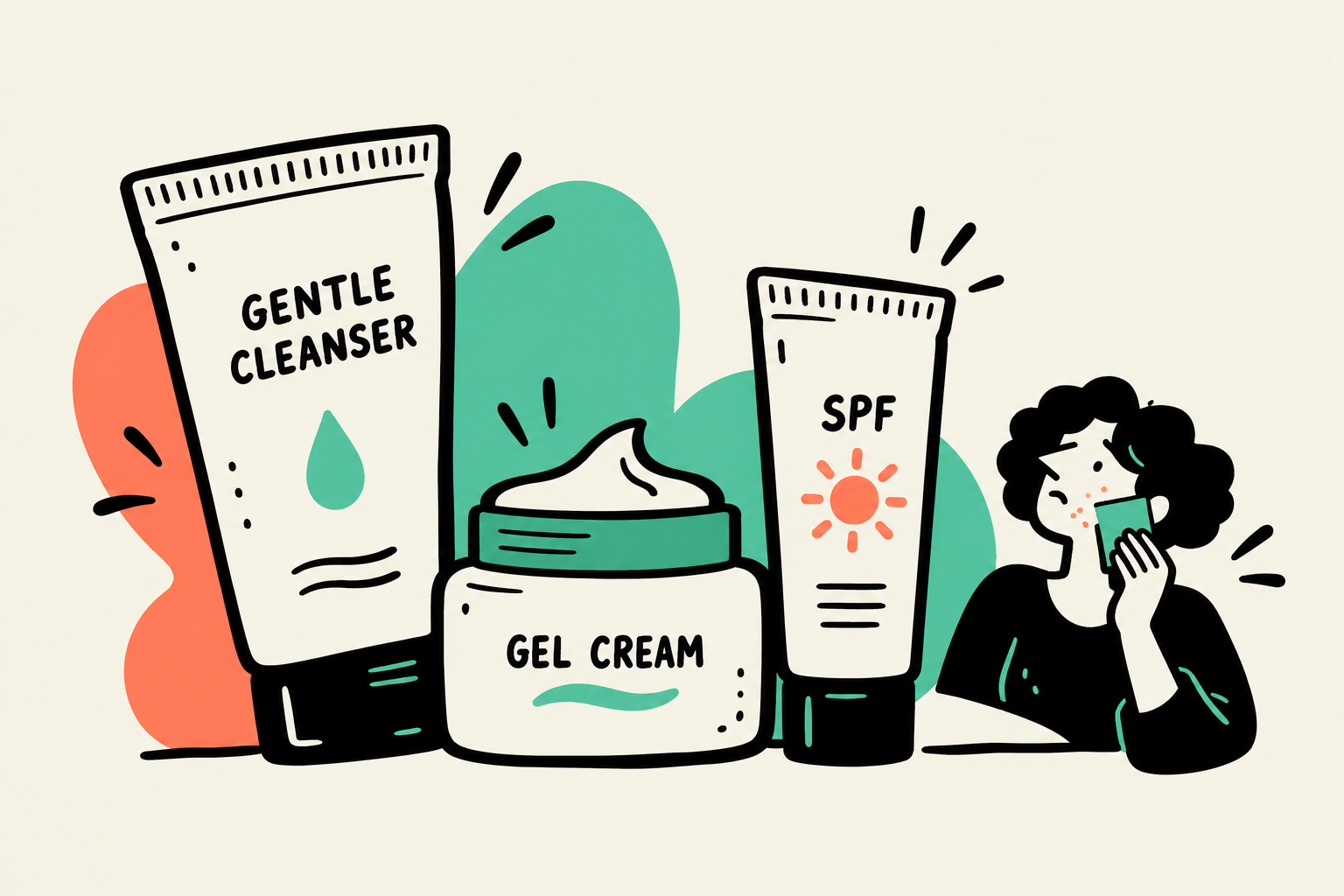
A Korean-style routine for oily or acne-prone skin can be simple: gentle cleansing, a moisturizer you tolerate and sunscreen in the morning. Toners, serums, masks and exfoliants are optional additions. You do not need six products to start, and skincare is not a substitute for acne treatment when treatment is needed.
This guide separates everyday care from optional actives and product examples. It does not claim that Korean skincare treats acne better than products from another country. I have not tested every product mentioned here on acne-prone skin.
A Simple AM and PM Routine
| Step | Morning | Evening | Essential or optional? |
|---|---|---|---|
| Cleanse | A gentle cleanse suited to your skin. | Remove makeup and cleanse gently; add a separate remover only if needed. | Core step, adjusted to your skin. |
| Moisturize | A comfortable lightweight moisturizer. | Moisturizer after cleansing. | Core step. |
| Sun protection | Broad-spectrum sunscreen and other sun protection. | Not a nighttime step. | Core daytime step. |
| Toner or serum | Only if it serves a clear purpose and is tolerated. | Optional; avoid starting several new actives. | Optional. |
| Exfoliant or acne treatment | Follow the specific product or clinician’s directions. | Do not add a fixed weekly acid schedule to every routine. | Individual decision, not a compulsory Korean step. |
Oily Does Not Mean You Should Strip the Skin
The American Academy of Dermatology’s oily-skin guide recommends gentle cleansing, moisturizer and avoiding harsh scrubbing. Look for oil-free or noncomedogenic options, while recognizing that your response to a finished product still matters.
Oily skin can also feel tight or uncomfortable. That does not establish that every breakout is caused by dehydration, or that hydrating toner will switch off excess sebum. Oil production and acne have several influences. Describe the symptom you observe rather than diagnosing a single “compensation” mechanism.
The useful aim is a routine that cleans without persistent discomfort. If skin stings, feels tight or becomes more irritated, review the products and frequency instead of adding more layers automatically.
Do You Need an Oil Cleanser?
No. An oil cleanser is a makeup-removal option, not a requirement for oily skin. If a gentle cleanser removes your products adequately, a second cleansing step may add unnecessary exposure. The AAD oily-skin guide advises against oil-based cleansers; that is another reason not to prescribe one to everyone.
If you already tolerate a cleansing balm or oil, follow its instructions and rinse thoroughly. Stop using a product that consistently makes the routine less comfortable. See the double-cleansing guide for the distinction between removing makeup and automatically washing twice.
Banila Co Clean It Zero Original is discussed there as a source-based product guide, not evidence that it is suitable for every acne-prone reader. Its fragrance and exact variant need checking.
What a Toner or Serum Adds
A hydrating toner is optional. If a moisturizer already gives comfortable hydration, a toner is not needed to complete the routine. For a product example with separate observations and version notes, read the Round Lab toner review.
A niacinamide serum is also optional. Choose it for a specific purpose rather than treating it as the single best ingredient for all acne-prone skin. Do not buy a serum from the ingredient name in its marketing alone; check the current full formula. See the niacinamide and vitamin C comparison.
Introduce one change at a time and keep the rest of the routine familiar. A lower-cost routine you can repeat is more useful than a collection of overlapping products whose individual effects you cannot distinguish.
BHA Is a Product Choice, Not a Mandatory Second Step
For the commonly discussed COSRX BHA Blackhead Power Liquid, the official list names betaine salicylate and niacinamide. This is not the same ingredient list as a salicylic-acid treatment. COSRX describes it for users with acid experience, so I would not call it a universal beginner recommendation.
Read the current instructions and avoid applying a blanket frequency from a routine article to a different acid product. If you use prescribed acne treatment, check with your clinician before adding an exfoliant. The acid comparison guide explains why the whole formula matters.
How to Choose Moisturizer and Sunscreen
Compare the exact version, full ingredient list and texture you tolerate. “Gel,” “Korean” or “non-greasy” is not a guarantee that a formula suits every oily face. A comfortable moisturizer should not require another five products to make it wearable.
For sunscreen, consider broad-spectrum protection, the labelled application directions and whether you will use it consistently. A dewy finish is not an objective failure, but it may not suit your preference. Conversely, a matte label does not prove acne compatibility. Avoid ranking Beauty of Joseon or another brand as the best oily-skin sunscreen without a matched wear test.
Use reviews to understand observations, not as a substitute for the label on the version you can buy. A reformulation or regional product can make an older ingredient description inaccurate.
If Your T-Zone Is Oily but Your Cheeks Are Dry
Adjust the amount of moisturizer by area rather than building two full routines. Use a lighter amount where it feels heavy and add comfort where needed. Do not assume the oily zone needs a harsher cleanser.
A separate hydrating serum on the cheeks is an option if your existing moisturizer is not enough, not a requirement. Keep sunscreen application even; a zone-specific preference is not a reason to leave part of the face unprotected.
Masks, Patches and When to Get Help
Clay masks and sheet masks are optional. A routine does not need a scheduled mask day, and tightness afterwards is not a sign that the skin has been successfully “purified.” Do not add tea tree oil or several spot products simply because they are marketed as natural.
Pimple patches are a separate product category, not a treatment for every type of acne. Follow their directions and avoid treating the entire face with a patch product or a spot treatment.
For persistent, painful or scarring acne, a dermatologist can assess treatment options. The AAD’s acne skin-care guidance is a useful companion to this article. Hydration and Korean product shopping should not delay appropriate care.
Read Next
Seeing a GP After Glycolic Acid Barrier Damage (My Barrier Recovery Diary, Part 2)
After months of slow recovery from glycolic acid damage, I saw a GP on October 9. Here is what I was told, what my routine looks like now, and how the first week of treatment has gone.
How Many Actives Is Too Many? A Simple Rule for Layering
There is a stage in most people’s skincare that I think of as the accumulation…
The 10-Step Korean Skincare Routine, Explained Simply (and the 3 Steps I Actually Use)
The “10-step Korean skincare routine” is probably the single most famous export of K-beauty culture,…
Building a K-Beauty Routine From Scratch: A 4-Week Plan
Starting Korean skincare from zero can feel overwhelming given how much information (and how many…
How to Repair a Damaged Skin Barrier: A Korean-Style Recovery Routine
“피부장벽” (pibu jangbyeok, “skin barrier”) is one of the most frequently used terms in Korean…
I Over-Exfoliated With a Glycolic Acid Toner: My Barrier Recovery Diary (Part 1)
In April a 7% glycolic acid toner left my cheeks red and bumpy within a week. Five months on, here is everything I have tried, what did and did not help, and the barrier routine I use now.