Round Lab Birch Juice Moisturizing Toner Review: What Real Users Found
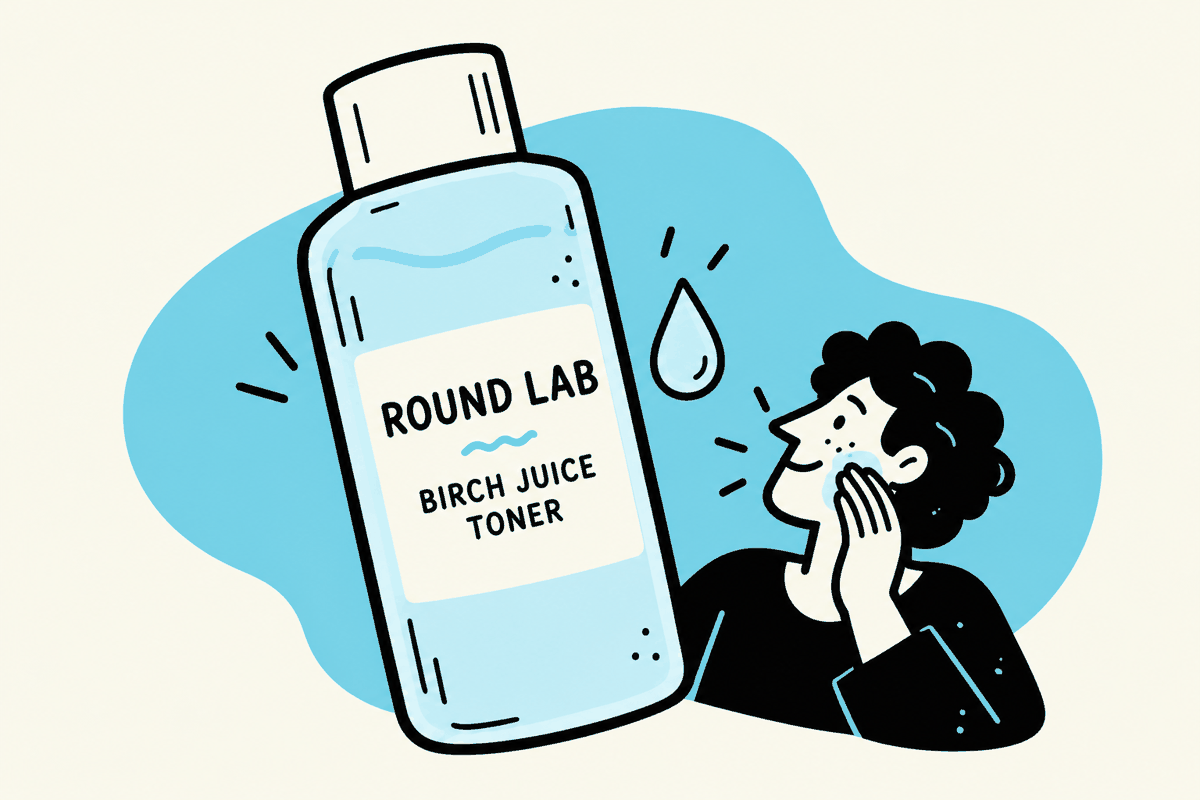
Round Lab built its brand around a specific storytelling angle: skincare inspired by the natural ingredients and environment of Korea’s Gangwon-do region, particularly birch sap harvested from its forests. The Birch Juice Moisturizing Toner is the product that carried this story to international audiences, and it appears in several posts on this blog. Here is a closer look at how it held up for me and for one outside reviewer.
This article is general information, not medical advice. If you’re dealing with persistent acne, rosacea, eczema or another skin condition, please see a dermatologist.
How we put this review together: I’ve used this toner and a range of other Round Lab products myself, and that section is below. We also went through the full ingredient list and summarized the experience of a creator with very oily skin who bought it herself, credited and linked further down. Results vary from person to person, so patch test anything new.
Quick answer
In my own month of use and in one outside reviewer’s trial, Round Lab’s Birch Juice Moisturizing Toner worked as an easy hydrating step. Both accounts are small and personal, so this is not proof that it suits every skin type.
The Birch Sap Story
Birch sap (자작나무 수액, jajaknamu suaek) has a long tradition in Korean folk wellness, historically consumed as a spring tonic believed to support hydration and detoxification, particularly in the mountainous Gangwon-do region where white birch forests are common. Round Lab’s marketing draws directly on this regional, seasonal harvesting tradition, positioning the brand around a specific sense of place rather than a purely lab-driven ingredient story.
What’s in the Formula
Birch sap is described as containing minerals and amino acids, and the brand markets it as hydrating. I did not find independent data on how much it contributes in this toner, and most versions also contain ingredients such as hyaluronic acid and panthenol. The ingredient list is relatively short, consistent with Round Lab’s “no unnecessary additives” positioning.
Texture and Application
In my use the texture was a little thicker than water, closer to a first essence than a splash toner (see my notes below). The toner appears in our oily/acne-prone routine guide and our minimalist routine guide, which are recommendations rather than tests.
Does It Deliver?
Hydration: This is the toner’s main job. The outside reviewer and I both found it a comfortable hydrating step, and neither of us measured skin hydration.
Versatility across skin types: This post covers only my slightly oily, sensitive skin and the reviewer’s very oily skin. The brand markets the toner for dry and dehydrated skin, and I have not tested it there.
Barrier support: I did not test this toner during barrier recovery, so I make no claim here.
How It Felt on My Skin
I used this product during my military service in Korea, before I moved to Australia.
The Birch Juice toner is a little thicker than water, closer to a first essence than a splash toner. It feels slightly slippery as it goes on, then sinks in without leaving any oiliness. My skin is slightly oily and sensitive, and I used it for about four weeks as the toner step in my usual routine (toner, then serum or ampoule, then moisturizer), alongside the rest of the Birch Juice line. A few things stood out:
- Birch Juice Moisturizing Ampoule (the renewed version of the old pump serum): on my skin it felt almost the same as the toner. Both are hydrating products, so I don’t see a reason to use both. That is about this hydrating ampoule overlapping with the toner, not about serums in general.
- Birch Juice Moisturizing Cream: has small capsules you need to roll in with your fingers. If your skin is sensitive, that rubbing may bother it.
- Birch Juice Moisturizing Sun Cream: a moisturizing chemical sunscreen that goes on like a moisturizer. No eye sting or burning for me, and it was my second-favorite Round Lab product overall.
Other Round Lab Products (Brief Notes)
- 1025 Dokdo Toner: a cotton-pad toner for a mild wipe-off exfoliating step.
- 1025 Dokdo Lotion: my top pick for value (400 ml pump bottle, light).
- Pine Calming Cica Pad: large, thick pads that work well for wiping.
- Pine Calming Cica Ampoule: slippery finish, no dramatic calming effect noticed.
- Pine Calming Cica Cream Plus: absorbs fast with a fresh finish.
Where the Birch Juice toner fits: if you want one hydrating step that feels like an essence, it does that job well. If you want a toner that also exfoliates gently, the Dokdo Toner on a cotton pad is the better match.
How It Worked on Very Oily Skin
Round Lab markets this toner for dry and dehydrated skin. That makes Lenchanie’s review useful, because she has very oily skin and bought the 300 ml bottle herself from Olive Young Global.
- The texture is slightly thicker than typical watery toners, closer to a light ampoule, and it felt hydrating straight away.
- She layered it up to four times and it still absorbed quickly and felt lightweight on oily skin.
- She had no irritation. She notes the formula skips fragrance, essential oils and drying alcohols, but says anyone sensitive to birch-derived ingredients should be cautious.
- She would recommend it to anyone who wants to add moisture to their routine.
Our read: this is a short, first-hand review rather than a long-term test. It shows the toner worked for one person with very oily skin, not that it works for every skin type. If you have oily skin that feels tight or dehydrated, it may be worth trying.
What I Saw Using It in the Military
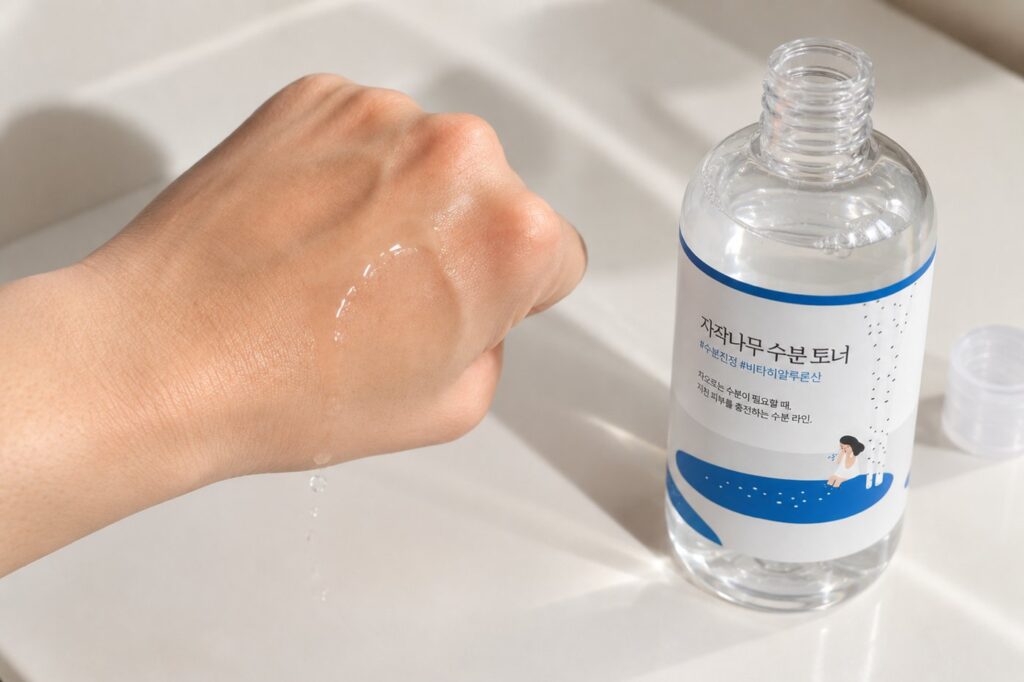
This was one of the toners I came across most often during my military service in Korea. It was very popular, the price was fair, and it was often sold in large sizes, so a lot of the guys bought the big bottles.
That fits how many men treat skincare. Some of them do not want to spend time on it, so they pick one large bottle and use it for a long time. For me it felt similar to the Anua toner in terms of how it feels on the skin.
Who Should Use It
This post covers my slightly oily, sensitive skin and one reviewer’s very oily skin. Other skin types are not tested here, and the brand markets the toner for dry and dehydrated skin. Patch test before committing to a large bottle.
Price and Value
Price varies by retailer and region. The outside reviewer bought the 300 ml bottle from Olive Young Global, and large bottles were common where I was in Korea, so compare the price per ml across sizes.
Quick Answers
Is birch sap the same as birch bark extract used in some Western skincare? No. Birch sap (the liquid tapped from the tree, similar to maple syrup harvesting) is distinct from birch bark extract, which is a different part of the plant with different properties.
Can this replace a serum? For plain hydration it overlaps with a hydrating serum or ampoule, so using both may be redundant. It does not replace a serum chosen for a separate purpose, such as brightening or acne, which a toner is not designed to do, as covered in our 10-step routine guide.
Read Next
Torriden Dive-In Low Molecule Hyaluronic Acid Serum Review: What Long-Term Users Found
Torriden’s Dive-In serum is the best-known product from a brand that centers its line on…
The Ordinary Azelaic Acid Suspension 10%: An Honest Four-Week Review
This article is general information, not medical advice. Persistent or severe acne and rosacea are…
Anua Heartleaf 77% Soothing Toner Review: What a One-Month Trial Showed
Few Korean toners have generated as much sustained buzz over the past few years as…
Best Korean Sunscreens for 2026: Whitecast, Finish and PA Ratings Compared
Korean sunscreens built their international reputation on solving a problem Western sunscreens have struggled with…
Some By Mi AHA-BHA-PHA 30 Days Miracle Toner Review: What a 35-Day Trial Showed
Few Korean toners generated as much viral before-and-after content as Some By Mi’s AHA-BHA-PHA 30…
COSRX Advanced Snail 96 Mucin Power Essence Review (After 2 Months of Use)
Few products are as closely tied to the international rise of K-beauty as this one….