Best Korean Sunscreens for 2026: Whitecast, Finish and PA Ratings Compared
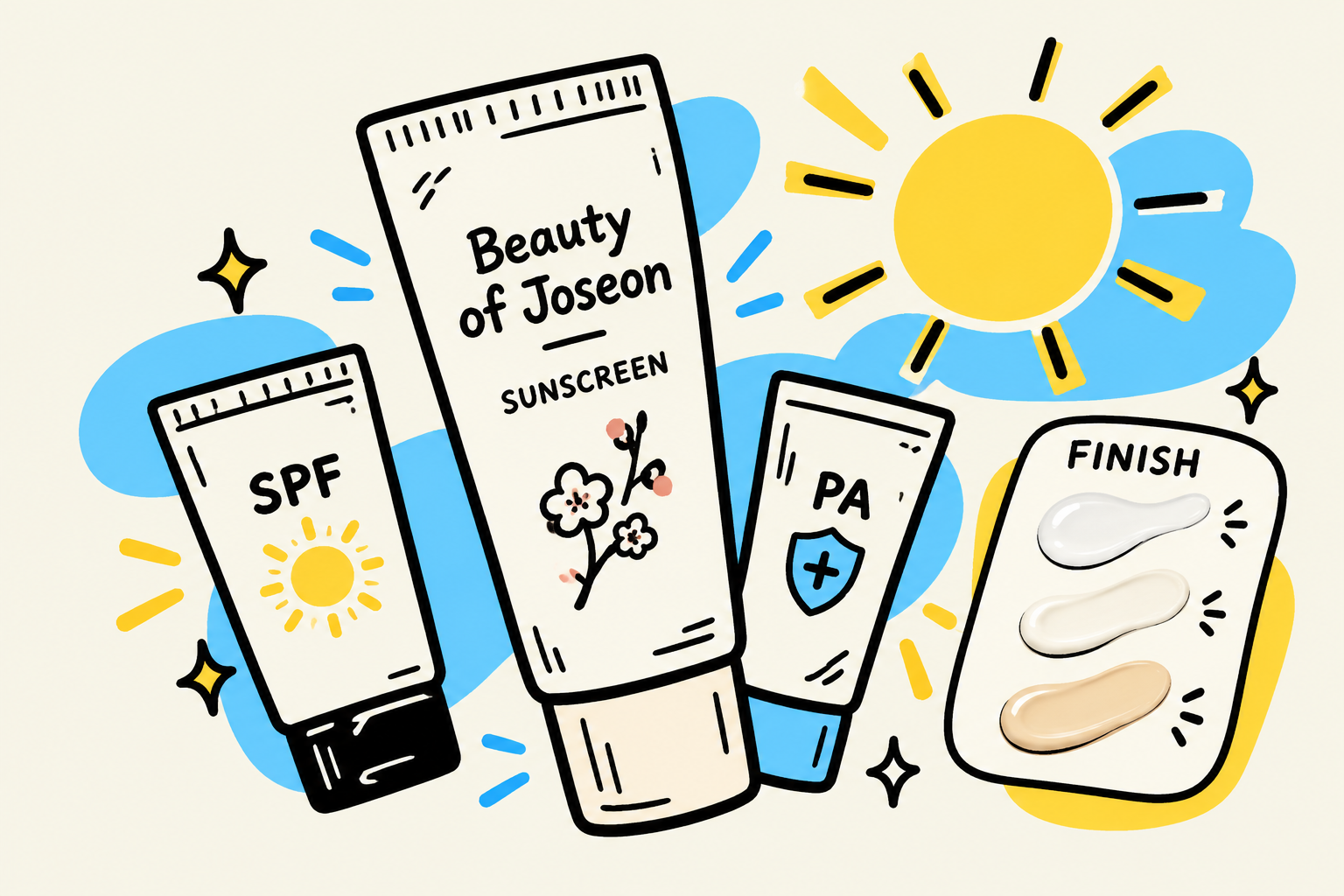
Korean sunscreens built their international reputation on solving a problem Western sunscreens have struggled with for decades: cosmetic elegance. Where many traditional mineral and even chemical sunscreens leave a heavy, greasy, or ashy “whitecast” finish, Korean formulations have become known for lightweight, nearly invisible textures, a direct result of Korea’s regulatory environment (which allows a wider range of UV filters than the US FDA permits) and a domestic beauty culture that treats daily SPF as completely non-negotiable, requiring formulas people will actually want to reapply.
In short
Korean sunscreens have earned their strong international reputation largely through superior cosmetic elegance, driven by both a wider available filter palette and a domestic beauty culture that treats daily, reapplied SPF as essential rather than optional. Beauty of Joseon’s Relief Sun remains the most consistently recommended entry point for whitecast-free protection across skin tones, though the broader category offers strong options across nearly every texture preference and skin type.
Why Whitecast Matters So Much in This Category
“Whitecast” refers to the grayish or purplish film some sunscreens, particularly mineral (zinc oxide/titanium dioxide) formulas, leave behind, especially noticeable on medium-to-deep skin tones. Korean sunscreen R&D has invested heavily in solving this specific problem, partly because Korean beauty standards place enormous emphasis on an even, luminous complexion (the “glass skin” aesthetic), making any visible cast on the skin a significant cosmetic dealbreaker for the domestic market, which in turn pushed Korean formulators toward chemical and hybrid filters with better blending properties.
What to Look For in a Korean Sunscreen
- UV filter type: Korean sunscreens frequently use chemical filters like Uvinul A Plus, Tinosorb S, and Uvinul T 150, filters that have long been approved in Korea and much of the rest of the world (the FDA approved Tinosorb S, also called bemotrizinol, in June 2026, so US products may start to use it, but most US sunscreens on shelves today were formulated before that, and Uvinul A Plus and Uvinul T 150 are still not approved in the US), which is part of why Korean sunscreens often outperform US-formulated ones on texture and whitecast specifically.
- SPF and PA rating: Korean sunscreens use the PA (Protection Grade of UVA) rating system alongside SPF, with PA+ to PA++++ indicating increasing UVA protection. Look for at least PA+++ for strong daily protection.
- Texture category: Korean sunscreens broadly fall into “essence-type” (very lightweight, almost toner-like), “cream-type” (more traditional, still generally lighter than Western equivalents), and “cushion-type” (compact, buildable, makeup-adjacent formats).
Top Picks
Beauty of Joseon Relief Sun: Rice + Probiotics SPF50+ PA++++
Arguably the single most internationally famous Korean sunscreen of the past several years, and for good reason. It combines a lightweight, no-whitecast finish with skincare-adjacent ingredients (rice extract, probiotics) that leave skin feeling hydrated rather than stripped. It became a viral sensation on social media specifically because of how well it blended on a wide range of skin tones without the grayish cast common to many sunscreens, chemical or mineral.
Round Lab Birch Juice Moisturizing Sun Cream SPF50+ PA++++
From the brand behind the Birch Juice Toner. This is a moisturizing chemical sunscreen, and in my own use it went on like a light moisturizer, with no eye sting or burning. It’s a good pick for normal to dry skin that wants SPF and hydration in one step.
Anessa Perfect UV Sunscreen Skincare Milk (Note: Japanese, Frequently Grouped With K-Beauty)
While technically a Japanese brand, Anessa is worth mentioning since it’s commonly sold alongside Korean sunscreens in Asian beauty retailers and often gets folded into “K-beauty sunscreen” recommendation lists due to shared regional formulation philosophy and overlapping fan bases.
Isntree Hyaluronic Acid Watery Sun Gel SPF50+ PA++++
A favorite among oily and combination skin users specifically for its watery, almost gel-like texture that dries down with minimal residue, a strong option for anyone who finds even lightweight cream sunscreens too heavy.
Torriden Dive-In Watery Moisture Sun Cream SPF50+ PA++++
Part of the same family as Torriden’s hyaluronic acid serum, and one of the most moisturizing sunscreens I’ve used. On my slightly oily, sensitive skin, though, it caused a hot, flushed feeling after application. Plenty of people use it without problems, but patch test it first if your skin is reactive. Torriden also makes a mineral sun cream in the Dive-In line. I found it moist, with a slight tone-up whitecast.
Whitecast Comparison: General Findings
Based on widespread consumer and reviewer consensus across a range of skin tones:
- Best for minimal to no whitecast: Beauty of Joseon Relief Sun, Isntree Hyaluronic Acid Watery Sun Gel, both consistently rated among the least likely to leave any visible cast, even on deeper skin tones.
- Slight cast possible depending on application amount: Round Lab Birch Juice Moisturizing Sun Cream, generally well-reviewed but can show minor cast if over-applied or not blended thoroughly.
- Chemical-filter-dominant formulas (most of the above) generally outperform mineral-only Korean sunscreens on whitecast specifically, since mineral filters are the primary driver of the effect regardless of country of origin.
A Note on Korean Sunscreen Regulations vs. US Regulations
It’s worth understanding why this category performs so differently depending on where a sunscreen is formulated. Korea’s Ministry of Food and Drug Safety (MFDS) approves a considerably broader range of UV filters than the US FDA, including several, like Uvinul A Plus, that have strong safety and efficacy track records in Europe and Asia but remain unapproved in the US. Tinosorb S was the exception: the FDA approved it in June 2026 after a long review. This regulatory gap is the primary technical reason Korean sunscreens often achieve better textures than their US counterparts. It’s not that Korean chemists are inherently more skilled, but that they have access to a wider formulation toolkit.
How to Properly Apply Korean Sunscreen for Best Results
- Apply as the final step of your morning skincare routine, after moisturizer and before makeup.
- Use roughly a quarter-sized amount (or the “two-finger rule” commonly cited in Korean skincare guidance) for full-face coverage. Most people apply significantly less than needed.
- Allow 1-2 minutes to set before applying makeup to avoid pilling.
- Reapply every 2 hours if in direct sun for extended periods, using a cushion-type or spray sunscreen over makeup for convenience.
One caveat on all of the above, because the rules in this section are the ones that put people off sunscreen entirely. The SPF number on a bottle comes from a standardized laboratory test that uses a fixed, fairly generous amount of product, so the protection you get with a thinner layer in daily life is usually lower than the label suggests. Reapplication is a separate piece of usage guidance: the FDA sunscreen guidance says to reapply at least every two hours, and more often if you are swimming or sweating. In ordinary daily life, such as commuting, working indoors and walking between buildings, many people manage with one careful morning application, but it is not a precisely measured standard, and long periods outdoors, sweating, swimming or rubbing your face call for reapplying.
The reason this matters is adherence. Somebody who believes sunscreen only counts when it is done perfectly tends to end up doing it rarely. Applying a reasonable amount most mornings is better than skipping it, even though it will not match the label exactly, and the strict version is worth saving for the days it is most needed: long stretches outdoors, water, snow, or strong midday sun.
How to Read PA Ratings on Korean Sunscreen
Almost every Korean sunscreen on this list shows a PA rating alongside SPF. Here is what that rating means and how much it matters.
PA Stands for “Protection Grade of UVA”
While SPF (Sun Protection Factor) measures protection specifically against UVB rays (the type primarily responsible for sunburn). It says nothing about UVA protection, which is more associated with premature aging, deeper skin damage, and long-term photoaging. PA is a separate rating system, developed in Japan and widely adopted across Korea and other Asian markets, specifically measuring UVA protection strength.
Understanding the Plus Sign Scale
PA ratings run from PA+ to PA++++:
- PA+. Some UVA protection
- PA++. Moderate UVA protection
- PA+++. High UVA protection
- PA++++. The highest available UVA protection rating
More plus signs means stronger UVA protection, in a similar (though separate) logic to how higher SPF numbers indicate stronger UVB protection.
Does PA Rating Actually Matter for Everyday Use?
Yes, meaningfully. UVA rays penetrate more deeply into skin and are present at consistent levels throughout daylight hours (unlike UVB, which varies more by time of day and season), contributing significantly to premature aging, hyperpigmentation, and long-term skin damage even without causing visible sunburn. A sunscreen with high SPF but low PA rating could technically prevent sunburn while still allowing significant UVA-driven aging damage over time.
Still Wondering?
Are Korean sunscreens legal to buy and use outside Korea?
Yes, they’re widely sold internationally through retailers specializing in Korean beauty products, though importing large quantities for resale may involve different regulatory considerations depending on your country.
Do Korean sunscreens expire faster than Western ones?
Not inherently, though like all sunscreens, they should generally be replaced annually or per the expiration date, since UV filter efficacy can degrade over time.
Is SPF50+ actually better than SPF30 in Korean sunscreens?
The jump from SPF30 to SPF50 provides modestly better protection (about 97% vs 98% UVB blocking) but the bigger practical factor is proper application amount and consistent reapplication, regardless of SPF number.
Why do some Korean sunscreens feel sticky while others don’t?
This usually comes down to the specific filter combination and any added skincare ingredients (like hyaluronic acid). Essence and gel-type formulas tend to feel the least sticky, while some cream-type sunscreens can feel heavier depending on skin type and climate.
Korean label tip: every sunscreen on this list carries its SPF and PA rating as part of a Korean 기능성화장품 (“functional cosmetic”) registration. If the Korean back label is missing on a product sold as Korean, check where it came from before trusting the rating. More on reading the functional label.
Read Next
Anua Heartleaf 77% Soothing Toner Review: What a One-Month Trial Showed
Few Korean toners have generated as much sustained buzz over the past few years as…
Heimish All Clean Balm Review: A Reality Check for Acne-Prone Skin
Alongside Banila Co’s Clean It Zero, Heimish’s All Clean Balm is one of the other…
Round Lab Birch Juice Moisturizing Toner Review: What Real Users Found
Round Lab built its brand around a specific storytelling angle: skincare inspired by the natural…
Purito Centella Green Level Buffet Serum Review: What Real Testers Found
Purito built its brand around gentle, simply formulated products that avoid unnecessary additives. The Centella…
Torriden Dive-In Low Molecule Hyaluronic Acid Serum Review: What Long-Term Users Found
Torriden’s Dive-In serum is the best-known product from a brand that centers its line on…
The Ordinary Azelaic Acid Suspension 10%: An Honest Four-Week Review
This article is general information, not medical advice. Persistent or severe acne and rosacea are…