I Over-Exfoliated With a Glycolic Acid Toner: My Barrier Recovery Diary (Part 1)
In April I added The Ordinary’s Glycolic Acid 7% Exfoliating Toner to my evening routine. About a week later, the skin over my cheekbones had turned red and small whiteheads had come up across the same area. It’s now late September, and my skin still hasn’t fully recovered. This post is part one of a diary: what happened, everything I’ve tried since, and the routine I’m using now. I’ll add updates as things change.
This is a personal account, not medical advice or a treatment plan. I’m not a dermatologist. If your skin is irritated and not improving, please see a GP or dermatologist.
Where things stand (late September)
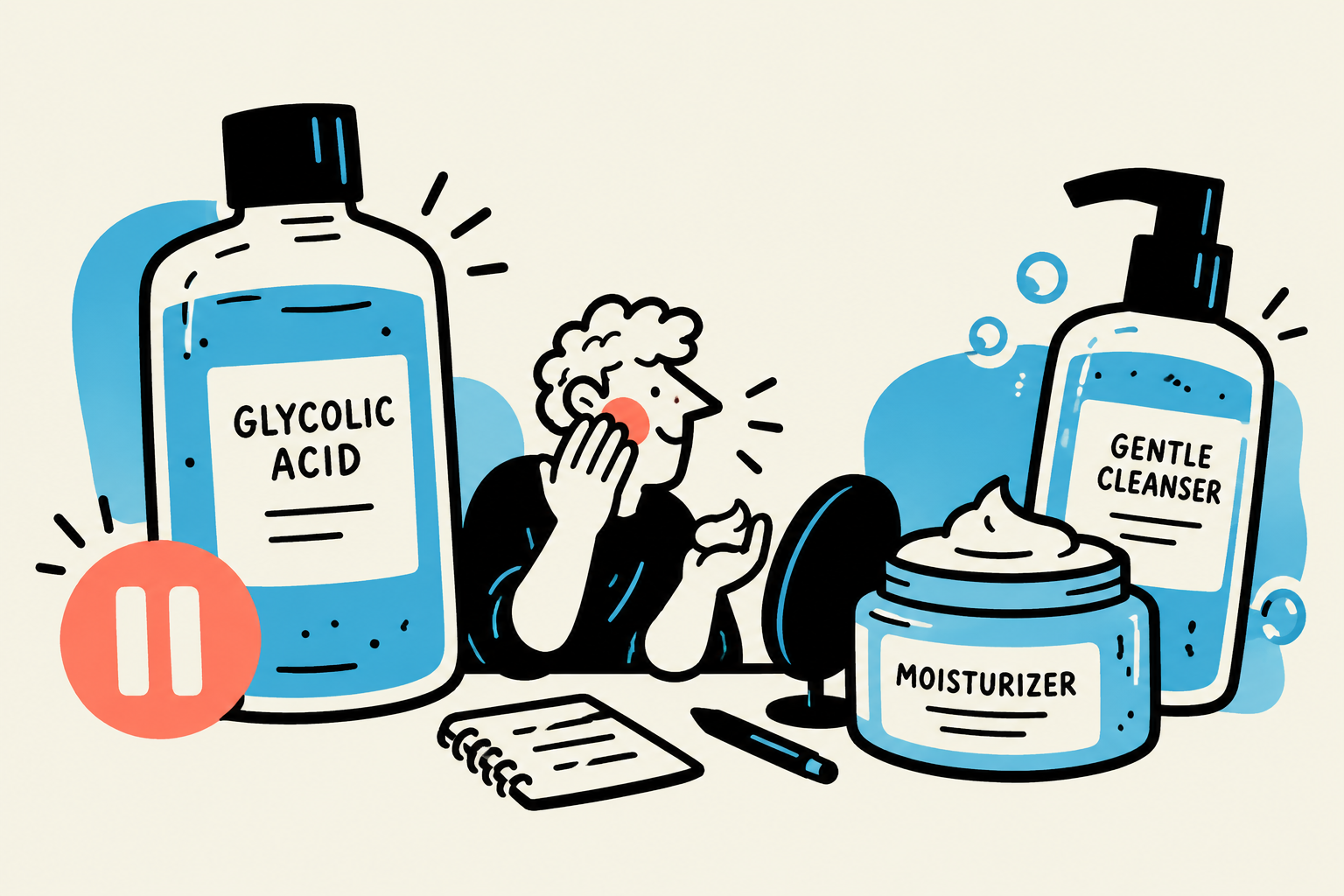
- What caused it: a 7% glycolic acid toner, used every evening from the first night.
- What happened: redness over my cheekbones and whiteheads within about a week.
- Now, around five months later: the redness is slowly fading, but my skin is still a long way from normal.
- Current routine: a gentle cream cleanser, two barrier serums, a ceramide cream and sunscreen. No acids.
How this post was put together: everything here is my own experience. Product details come from the brands’ own pages, and the sources are linked at the end. For context, my skin is slightly oily and sensitive.
What Happened
Glycolic acid is an alpha hydroxy acid (AHA) that dissolves the bonds holding dead skin cells together. It’s one of the most popular exfoliating acids, and The Ordinary’s toner is one of the easiest ways to try it. I used it once every evening, starting from the first night.
Within about a week, the area over my cheekbones went red and small whiteheads appeared. I stopped using the toner, but stopping didn’t bring my skin back the way I expected it to.
Looking back, the brand’s own directions were clear. The Ordinary says to use the toner once a day in the evening, but that people new to chemical exfoliants should start with two or three times a week and build up. It also says not to use it on sensitive, peeling or compromised skin. My skin is sensitive, and I went straight to every night.
Everything I’ve Tried Since April
| Stage | What I used | What happened |
|---|---|---|
| Week 1 (April) | Glycolic Acid 7% Exfoliating Toner, every evening | Redness over the cheekbones and whiteheads, so I stopped |
| The next month | A niacinamide serum and Aestura Atobarrier MD Cream, nothing else | No stinging, but the redness and bumps stayed |
| Cutting right back | Cetaphil Gentle Skin Cleanser and Atobarrier only, for more than a week | Calmer to use, but no clear change |
| Adding barrier support | The Ordinary Glycolipid Cream Cleanser and Soothing & Barrier Support Serum | No stinging at any point |
| Pharmacist visit | An over-the-counter 1% hydrocortisone cream for one week | No visible change, so I stopped |
| Now | Added The Ordinary Hyaluronic Acid 2% + B5 | Redness slowly fading |
The hydrocortisone week taught me something. When a mild steroid cream from the pharmacy doesn’t help, that’s a sign to see a doctor rather than keep experimenting. Steroid creams on the face are meant for short periods only, and using them for longer can trigger other rashes around the mouth, nose and eyes.
My Current Routine
I work out first thing in the morning, so my morning skincare is split around it.
| When | Steps |
|---|---|
| Before a morning workout | Rinse with lukewarm water, then a thin layer of Atobarrier MD Cream |
| After the workout shower | Glycolipid Cream Cleanser → Hyaluronic Acid 2% + B5 → Soothing & Barrier Support Serum → Atobarrier MD Cream → Round Lab Birch Juice Moisturizing Sun Cream |
| Midday | Sunscreen again |
| Evening | Glycolipid Cream Cleanser → Hyaluronic Acid 2% + B5 → Soothing & Barrier Support Serum → Atobarrier MD Cream |
What’s missing matters as much as what’s there: no exfoliating acids of any kind, no retinol and no scrubs.
Why These Products
- Aestura Atobarrier MD Cream (Korean, which I brought back from Korea): part of Aestura’s Atobarrier barrier-care line, which is built around ceramides and other skin-barrier lipids. It’s been the one constant since April.
- The Ordinary Soothing & Barrier Support Serum: a pink serum with vitamin B12, a ceramide complex, centella asiatica derivatives, bisabolol and niacinamide, aimed at redness linked to irritation and dryness. It never stung, even at the worst point.
- The Ordinary Hyaluronic Acid 2% + B5 (with Ceramides): a light water-based serum for hydration. It goes on first, before the pink serum.
- The Ordinary Glycolipid Cream Cleanser: a cream cleanser that doesn’t foam.
- Round Lab Birch Juice Moisturizing Sun Cream: a sunscreen I already knew didn’t sting my eyes or burn, which matters more than usual right now.
The Part Nobody Warned Me About: Dark Patches
As the redness has faded, some darker patches on my cheeks have become more noticeable. They were probably there under the redness all along. This is called post-inflammatory hyperpigmentation: skin can darken after irritation or inflammation, and the American Academy of Dermatology notes that aggressive exfoliation can lead to dark spots, especially in darker skin tones.
It’s tempting to reach for brightening products to fix this, but adding more actives to irritated skin can cause more inflammation and more darkening. For now I’m relying on daily sunscreen, reapplied at lunch, and giving the barrier time to recover first.
What I’d Do Differently
- Follow the directions for beginners. Two or three times a week to start, not every night.
- Take “sensitive skin” warnings seriously. If a label says not to use a product on sensitive skin and your skin is sensitive, that applies to you.
- Patch test first. A few days on a small area would likely have shown the problem before it covered both cheeks.
- Treat redness as a stop sign. Redness and a crop of new whiteheads after starting an acid is a signal to stop, not something to push through.
- See a doctor sooner. If irritation hasn’t settled a couple of weeks after stopping the product, get it checked rather than trying one product after another.
If your skin is reactive but not damaged, the guide to Korean skincare for sensitive and rosacea-prone skin covers gentle product choices.
What’s Next
Since over-the-counter treatment hasn’t made a clear difference, my next step is a GP appointment, possibly by telehealth, which is often quicker to book in Australia. I’ll share what I learn in part two, along with how the redness and dark patches are looking.
If you’ve had a similar reaction, the main things that have helped me so far are stopping all acids, keeping the routine short, and being patient. Skin recovery takes weeks to months, not days.
Sources
- The Ordinary: Glycolic Acid 7% Exfoliating Toner (directions and warnings)
- The Ordinary: Introducing Soothing & Barrier Support Serum (key ingredients)
- American Academy of Dermatology: How to safely exfoliate at home
- DermNet: Periorificial dermatitis (including topical steroid use on the face)
Related reading: Some By Mi AHA-BHA-PHA 30 Days Miracle Toner Review: What a 35-Day Trial Showed
Read Next
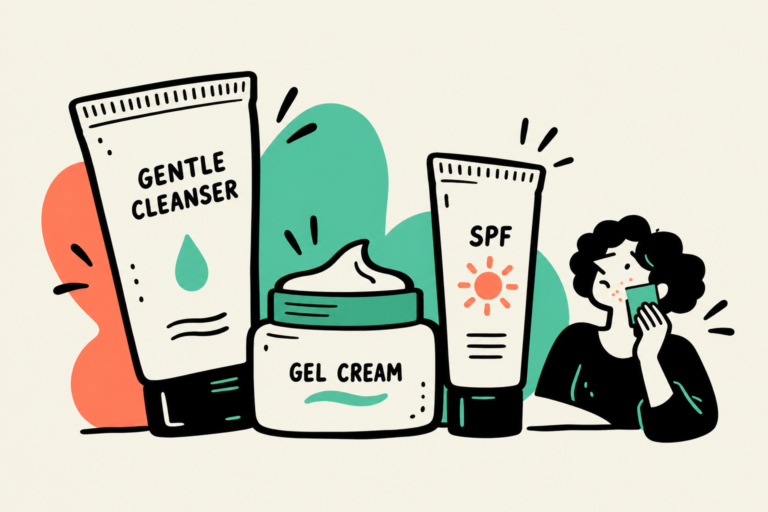
K-Beauty Routine for Oily/Acne-Prone Skin
A Korean-style routine for oily or acne-prone skin can be simple: gentle cleansing, a moisturizer…
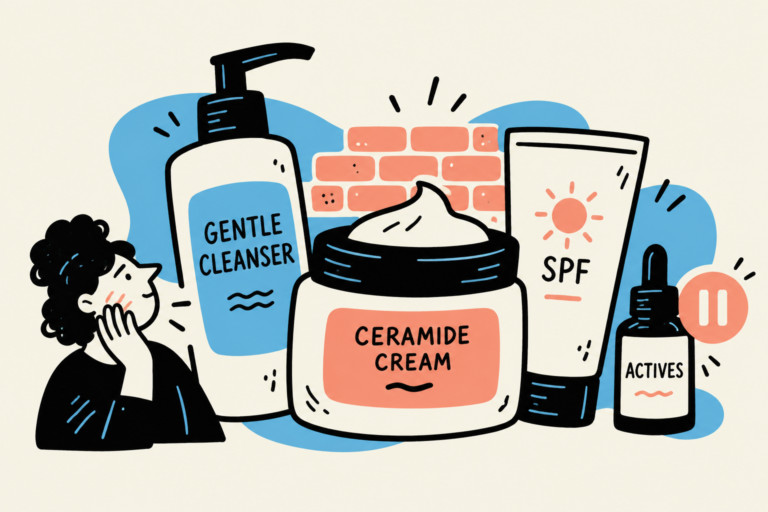
How to Repair a Damaged Skin Barrier: A Korean-Style Recovery Routine
“피부장벽” (pibu jangbyeok, “skin barrier”) is one of the most frequently used terms in Korean…
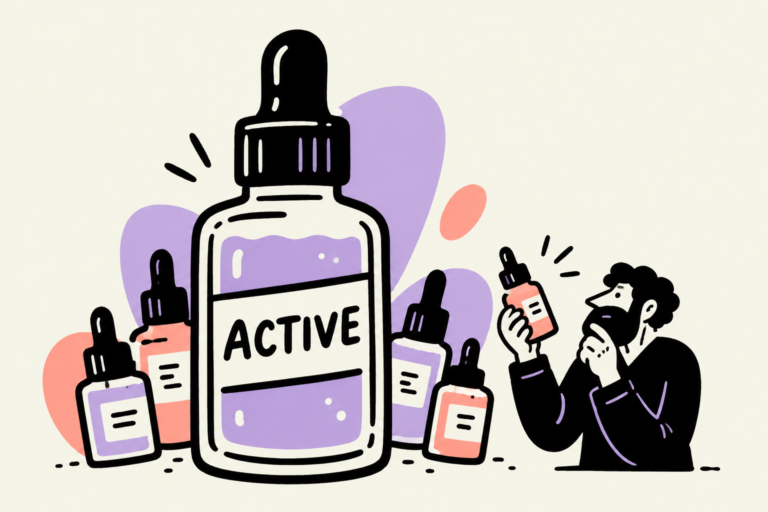
How Many Actives Is Too Many? A Simple Rule for Layering
There is a stage in most people’s skincare that I think of as the accumulation…
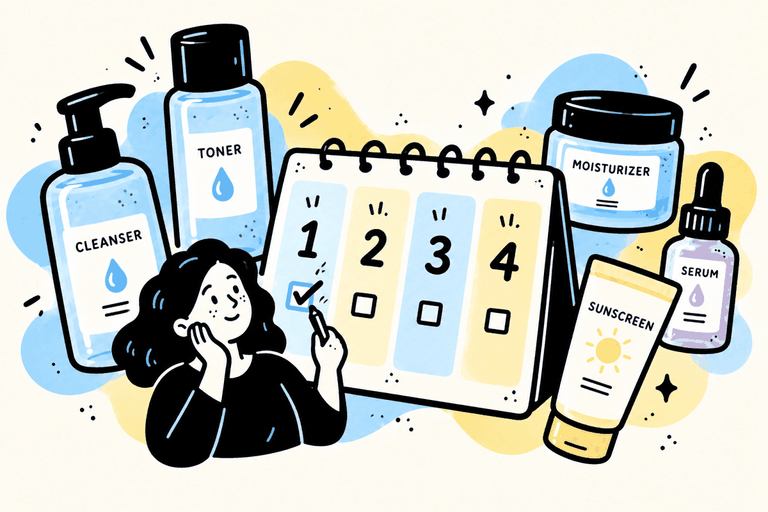
Building a K-Beauty Routine From Scratch: A 4-Week Plan
Starting Korean skincare from zero can feel overwhelming given how much information (and how many…
Morning vs Night K-Beauty Routine: What’s the Difference?
A lot of beginners assume a Korean skincare routine is identical morning and night, just…
Choosing Skincare by Moisture Weight, Not Marketing Claims
Why the real reason a product does or does not work for your skin often comes down to a simple 1-to-3 moisture-weight mismatch, not the ingredient list.