Morning vs Night K-Beauty Routine: What’s the Difference?
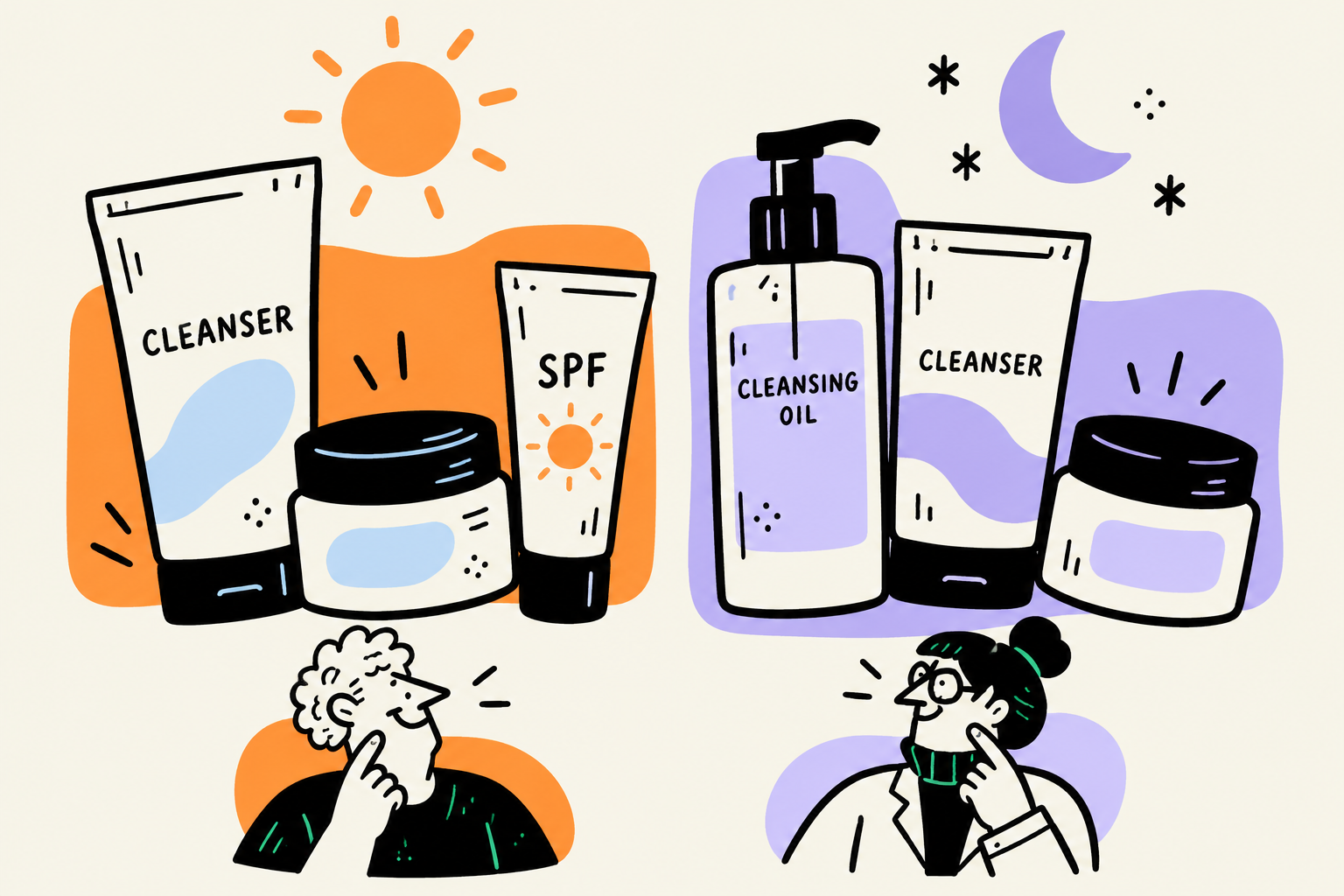
A lot of beginners assume a Korean skincare routine is identical morning and night, just repeated twice. In reality, Korean skincare philosophy treats AM and PM routines as serving different purposes (protection and prevention during the day, repair and treatment at night) and the product choices and steps reflect that distinction clearly. Here’s how they actually differ and why.
The Core Philosophy: Protect by Day, Repair by Night
Korean dermatology and skincare education consistently frames the daytime routine around defense: shielding skin from UV rays, pollution, and environmental stress. The nighttime routine, by contrast, is framed around treatment and recovery, taking advantage of the skin’s natural repair processes that are most active during sleep. This division isn’t unique to Korean skincare, but Korean routines apply it unusually consistently across product formulation and marketing. You’ll frequently see Korean products explicitly labeled “AM” or “PM” on packaging in a way that’s less common in Western skincare marketing.
Morning Routine: Built Around Protection
Typical AM Steps
- Gentle cleanser (or water rinse only). Many Korean routines skip a full cleanser in the morning entirely, since skin doesn’t accumulate much overnight beyond natural oils, and a water rinse or very mild cleanser is considered sufficient. This is a notable contrast to routines that double cleanse both morning and night.
- Toner. Hydration and pH-balancing before the rest of the routine
- Antioxidant serum (often vitamin C). Specifically timed for morning because its free-radical-neutralizing properties are most useful against daytime environmental stressors like UV and pollution
- Moisturizer. Often a lighter texture than the evening version to sit comfortably under makeup and sunscreen
- Sunscreen. The single most non-negotiable step in the entire Korean skincare philosophy, applied as the final layer before makeup
Why Vitamin C Specifically Belongs in the Morning
Korean skincare education frequently emphasizes that Seoul’s air quality, specifically “미세먼지” (fine dust particles, a genuine and widely discussed environmental concern in Korea), makes daytime antioxidant protection especially relevant. Vitamin C’s ability to neutralize free radical damage from pollution and UV makes it functionally most useful when applied before you’re exposed to those stressors, rather than after the fact at night.
Night Routine: Built Around Repair and Treatment
Typical PM Steps
- Double cleanse. Oil cleanser followed by water-based cleanser, usually recommended in the evening if you wore makeup or a long-wear or water-resistant sunscreen, and optional on lighter days or when your skin is irritated
- Exfoliant (2-4x weekly, not nightly). Chemical exfoliation is generally reserved for evenings since AHAs in particular increase photosensitivity
- Toner. Same pH-balancing function as morning
- Treatment serum. This is where stronger, more targeted actives typically live: retinoids, higher-concentration niacinamide, peptides, or other treatment-focused ingredients that either aren’t UV-stable or work best without competing with sunscreen and makeup application
- Sheet mask (2-3x weekly). A popular evening ritual in Korean skincare culture, often treated as a relaxing wind-down activity as much as a skincare step
- Eye cream. Frequently reserved for evening in Korean routines, both for the perceived benefit of overnight absorption and simply as a matter of routine sequencing
- Night cream/sleeping pack. A richer, more occlusive moisturizer than the AM version, designed to support overnight barrier repair without needing to accommodate makeup application
Why Retinoids and Stronger Actives Belong at Night
Beyond the well-known photosensitivity concerns with retinoids, Korean skincare culture also emphasizes that nighttime is when skin cell turnover and repair processes are naturally most active, making it a more “receptive” window for treatment-focused ingredients to have maximum effect, a rationale frequently cited in Korean dermatology-adjacent skincare content.
Side-by-Side Comparison
| Step | Morning | Evening |
|---|---|---|
| Cleansing | Light/water rinse or single cleanse | Double cleanse |
| Exfoliation | Skipped | 2-4x weekly |
| Key active | Antioxidant (vitamin C) | Treatment (retinoid, stronger niacinamide) |
| Sheet mask | Rare | 2-3x weekly |
| Moisturizer texture | Lighter, makeup-friendly | Richer, occlusive |
| Final step | Sunscreen (mandatory) | Sleeping pack/night cream |
Products That Cross Over Between AM and PM
Not everything needs to be time-specific. Several Korean skincare staples work equally well in both routines:
- Hydrating toners (like Round Lab Birch Juice Toner) are useful any time of day
- Niacinamide serums at standard concentrations. Stable and non-photosensitizing, safe for AM or PM use
- Centella asiatica (Cica) products. Soothing benefits are equally relevant regardless of time of day
- Basic moisturizers. Many Korean gel-creams work fine in both routines, though richer creams are usually reserved for evening
Common Mistakes When Splitting Routines
- Using vitamin C only at night out of habit from other skincare traditions, missing its daytime antioxidant benefit
- Applying retinoids in the morning, significantly increasing sun sensitivity risk without adequate protection
- Skipping sunscreen because the evening routine “already treated the skin”. Sunscreen and treatment serums serve entirely different, non-overlapping functions
- Double cleansing in the morning unnecessarily, which can be excessive for skin that hasn’t been exposed to makeup or heavy product overnight
A Sample Full Day
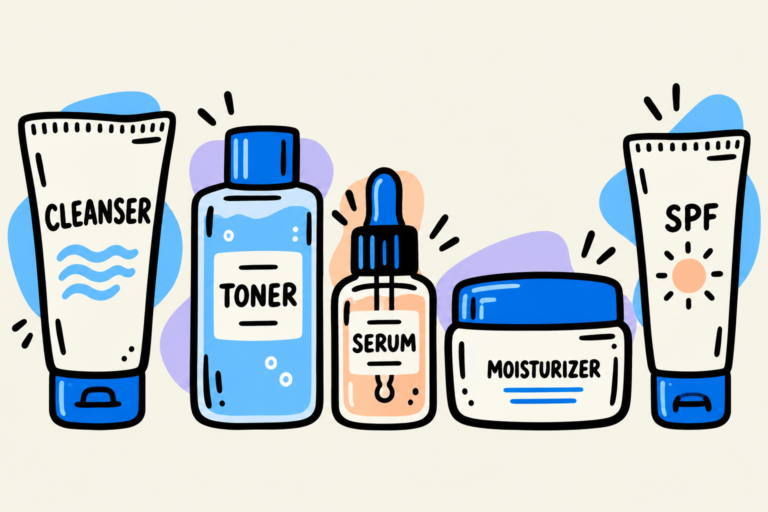
Morning: Water rinse or gentle cleanser → toner → vitamin C serum → light moisturizer → sunscreen
Evening: Double cleanse → (2-4x weekly: BHA/AHA toner) → hydrating toner → treatment serum (niacinamide or retinoid) → eye cream → night cream or sleeping pack
Can I use the exact same products morning and night if I want a simpler routine?
You can, and it’s not “wrong,” but you’ll miss some of the targeted benefits of time-specific formulation, particularly around sunscreen (AM-only, non-negotiable) and photosensitizing treatments like retinoids (PM-only, for safety).
Is double cleansing really necessary every single night?
Not always. If you wore makeup or a long-wear or water-resistant sunscreen, a double cleanse is usually recommended, because the oil cleansing step targets that kind of residue, which water-based cleansers alone often miss. On lighter days, or when your skin is irritated, a single gentle cleanse can be enough.
Why do Korean night routines emphasize sheet masks so much more than morning routines?
Partly practical (sheet masks require 15-20 minutes of stillness, more feasible in an evening wind-down than a rushed morning) and partly cultural, since sheet masking has become associated with relaxation and self-care rituals in Korean beauty culture, which fits an evening context more naturally.
Do I need a separate night cream if my regular moisturizer works fine?
Not strictly, though richer night creams and “sleeping packs” (a distinctly Korean product category, essentially a leave-on overnight mask) are formulated to support the skin’s overnight repair processes more intensively than a standard daily moisturizer.
Korean AM and PM routines aren’t identical for a reason: mornings prioritize protection against environmental stressors, while evenings prioritize treatment and repair, taking advantage of the skin’s natural overnight recovery processes. Understanding this distinction helps explain why certain Korean products are explicitly marketed for one time of day and not the other, and helps you build a routine that’s actually doing the right job at the right time.
Read Next
The Real Reason Your Ampoule Didn’t Work (It’s Probably Not the Ingredients)
If you’ve ever bought a well-reviewed ampoule and had your skin break out, feel tight,…
The 10-Step Korean Skincare Routine, Explained Simply (and the 3 Steps I Actually Use)
The “10-step Korean skincare routine” is probably the single most famous export of K-beauty culture,…
How Many Actives Is Too Many? A Simple Rule for Layering
There is a stage in most people’s skincare that I think of as the accumulation…
Korean Skincare for Rosacea: What Helps, What Flares, and What to Skip
Sensitive skin reacts more readily to products, weather and touch than average skin, so every…
Minimalist K-Beauty Routine: 5 Steps for Beginners
The 10-step routine gets all the international attention, but it can be intimidating for beginners,…
I Over-Exfoliated With a Glycolic Acid Toner: My Barrier Recovery Diary (Part 1)
In April a 7% glycolic acid toner left my cheeks red and bumpy within a week. Five months on, here is everything I have tried, what did and did not help, and the barrier routine I use now.