How to Repair a Damaged Skin Barrier: A Korean-Style Recovery Routine
“피부장벽” (pibu jangbyeok, “skin barrier”) is one of the most frequently used terms in Korean skincare culture, far more central to everyday skincare conversation in Korea than the equivalent concept has traditionally been in Western beauty media, though that’s been changing. When your barrier is compromised, a routine that used to work suddenly stings, tingles, or makes skin worse instead of better. Here’s how to recognize it and recover, using the same barrier-first philosophy that underlies most Korean skincare thinking.
This article is general information, not medical advice. If you’re dealing with persistent acne, rosacea, eczema or another skin condition, please see a dermatologist.
The short answer
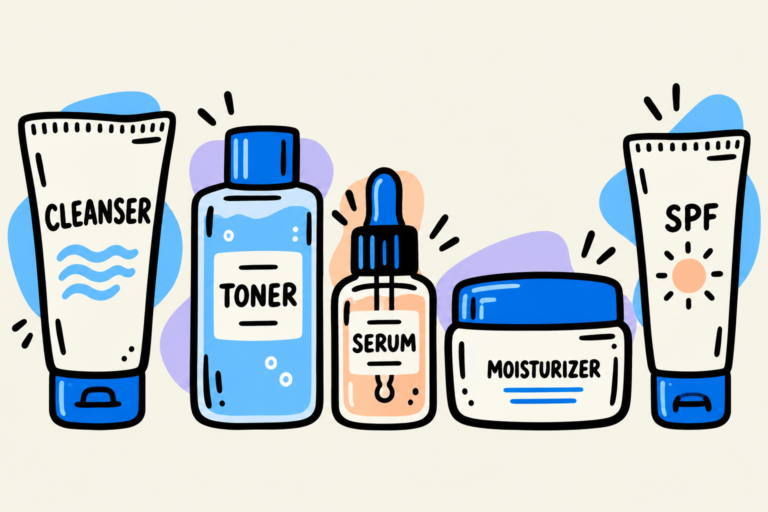
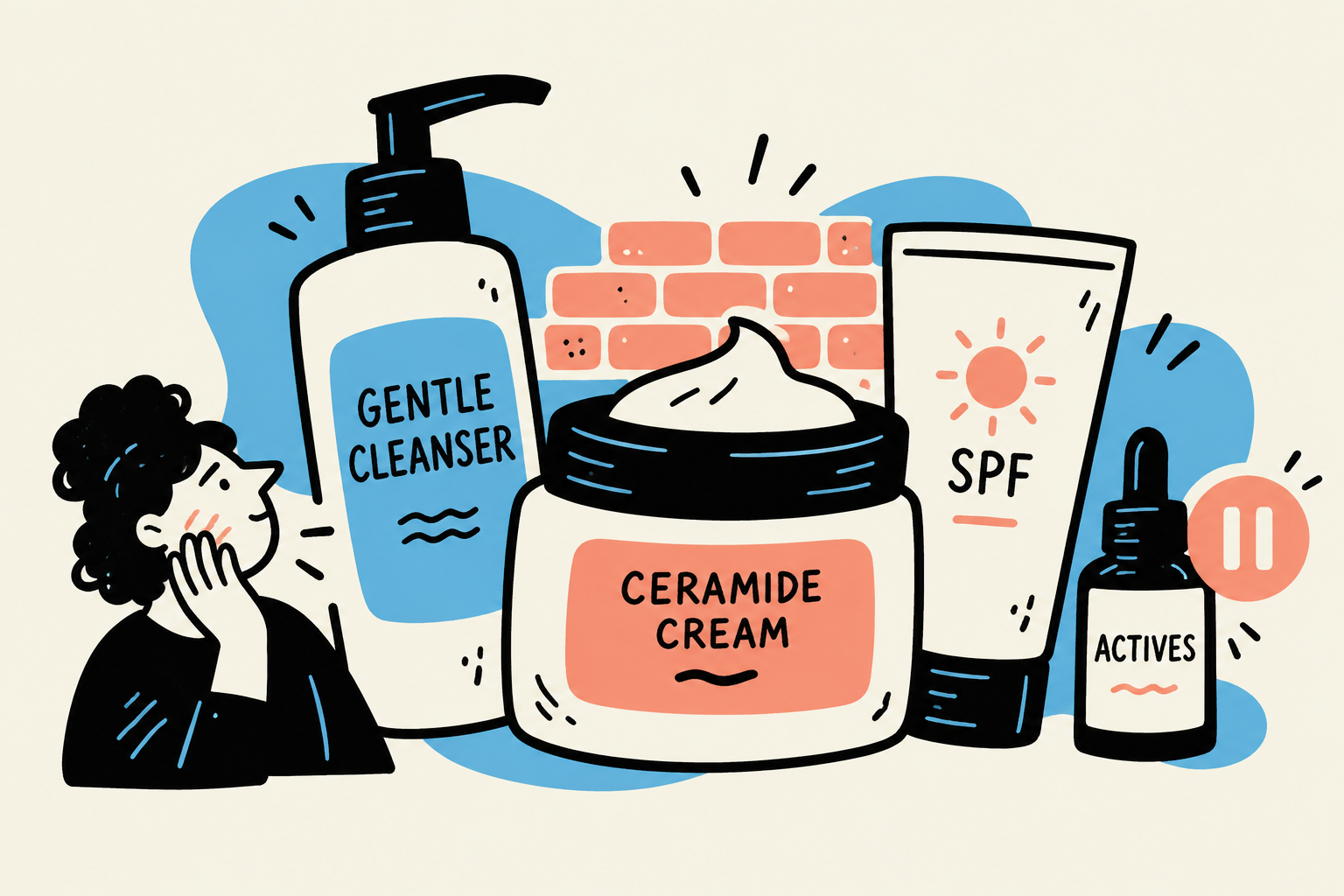
A damaged skin barrier calls for radical simplicity, not more targeted treatment, a philosophy Korean skincare culture applies consistently through concepts like skin fasting and barrier-first recovery routines. Strip back to gentle cleansing, Centella asiatica, ceramide-rich moisturizer, and sunscreen, give it several weeks of consistency, and resist the urge to reintroduce actives before your skin is ready.
What the Skin Barrier Actually Is
The skin barrier refers to the outermost layer of skin (the stratum corneum), often described using the “brick and mortar” model: skin cells act as bricks, held together by lipids (ceramides, cholesterol, and fatty acids) that act as mortar. This structure’s job is to keep moisture in and irritants, allergens, and pathogens out. When it’s intact, skin looks smooth, feels comfortable, and tolerates active ingredients well. When it’s damaged, that protective seal breaks down.
Signs Your Barrier Is Damaged
- Stinging or burning with products that never used to bother you. Including previously well-tolerated toners, serums, or even plain water
- Persistent tightness or flaking, even shortly after moisturizing
- New or worsening redness, sometimes with visible small bumps or rough texture
- Increased sensitivity to sun, wind, or temperature changes
- Breakouts appearing in unusual patterns, sometimes as a direct consequence of a weakened barrier allowing more bacteria and irritants through
Common Causes
Korean skincare education tends to point to a fairly consistent list of barrier-damaging culprits, many of which are common mistakes:
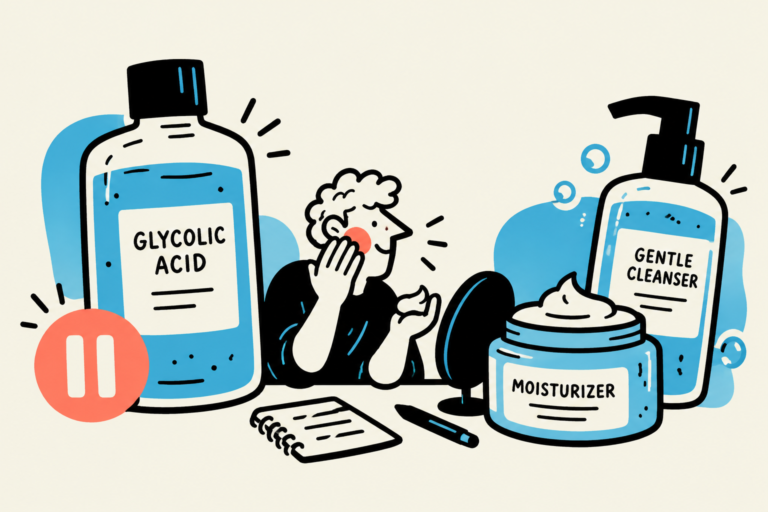
- Over-exfoliation. Using AHA, BHA, or physical scrubs too frequently, or stacking multiple exfoliating products without realizing it
- Over-cleansing. Washing too often, with water that’s too hot, or with a high-pH cleanser that strips natural oils
- Introducing too many actives at once. A classic beginner mistake, especially when several new products (retinoid, vitamin C, acids) are added simultaneously rather than one at a time
- Environmental stress. Harsh winter air, excessive sun exposure, or Seoul’s notorious fine dust (“미세먼지”) pollution, which Korean skincare culture treats as a significant daily barrier stressor
- Retinoid or acid “purging” mismanaged as a full-blown reaction rather than adjusting frequency
The Korean Concept of “Skin Fasting” (피부 단식)
When a barrier is significantly compromised, Korean skincare culture has a specific, well-recognized response: radically simplifying the routine, sometimes called “skin fasting” or “저자극 루틴” (low-irritation routine). The idea is to strip the routine down to only what’s necessary, removing every active ingredient temporarily, and giving the barrier uninterrupted time to rebuild before slowly reintroducing anything else.
This is a notably different instinct than the Western tendency to reach for a new “solution” product when skin reacts badly. Korean skincare philosophy generally treats a damaged barrier as a signal to do less, not to add a new targeted treatment on top of an already-stressed system.
The Recovery Routine, Step by Step
1. Cleanse Minimally
Switch to a single, very gentle, low-pH cleanser. Skip double cleansing and any exfoliating cleanser entirely during active recovery. If you’re not wearing makeup or sunscreen, a lukewarm water rinse alone is sometimes sufficient.
Recommended: Pyunkang Yul Low pH Pore Deep Cleansing Foam, or an even gentler cream cleanser if foam feels stripping.
2. Skip Toner If It Stings
This is a genuine departure from the standard Korean routine structure. During active barrier repair, even a normally gentle hydrating toner can sting on compromised skin. If your usual toner causes any discomfort, skip this step entirely until the barrier improves.
3. Centella Asiatica (Cica) Serum or Essence
This is where Cica earns its reputation as Korean skincare’s go-to barrier-repair ingredient, discussed in more depth in our dedicated Centella asiatica post. Its anti-inflammatory and soothing properties make it one of the most consistently recommended additions during a recovery period.
Recommended: SKIN1004 Madagascar Centella Ampoule, Anua Heartleaf 77% Soothing Toner (used here as a light serum-like layer rather than a traditional toner step), Dr. Jart+ Cicapair Tiger Grass Treatment.
4. Ceramide-Rich Moisturizer
Since ceramides are literally the “mortar” holding barrier cells together, replenishing them directly supports structural repair rather than just symptom relief.
Recommended: Illiyoon Ceramide Ato Concentrate Cream, a widely recommended Korean option specifically formulated around barrier-repair ceramide content, often recommended by Korean dermatology clinics for patients with eczema-prone or compromised skin.
5. Occlusive Seal (At Night, If Needed)
For particularly severe barrier damage, an occlusive layer, something that physically seals in moisture and blocks water loss, can meaningfully speed recovery. Korean skincare culture has its own version of the “slugging” trend (sealing in moisturizer with a thin layer of an occlusive balm), sometimes using products like Vaseline or a dedicated Korean sleeping pack formulated for this purpose.
Recommended: A thin layer of plain petroleum jelly, or, for a lighter option, a fragrance-free sleeping pack (check the ingredient list, because many popular sleeping masks, including Laneige Water Sleeping Mask, contain fragrance).
6. Sunscreen, Always
Especially during barrier recovery, sun protection remains non-negotiable, since compromised skin is often more UV-sensitive, not less. Choose a gentle, mineral-leaning formula if chemical filters seem to sting.
Recommended: Round Lab Birch Juice Moisturizing Sun Cream. It uses chemical filters, but it did not sting my eyes or burn my skin. If chemical filters bother you, choose a mineral formula instead.
What to Avoid During Recovery
- All chemical and physical exfoliation. A full pause, not just reduced frequency
- Retinoids and other strong actives. Vitamin C, retinol, high-percentage niacinamide serums should all be paused
- Fragranced products, even ones you’ve used without issue before, since a compromised barrier can develop new sensitivities temporarily
- Hot water cleansing or showering with the face directly under hot water
- New products in general. This is not the time to test something new, however gentle it claims to be
How Long Recovery Takes
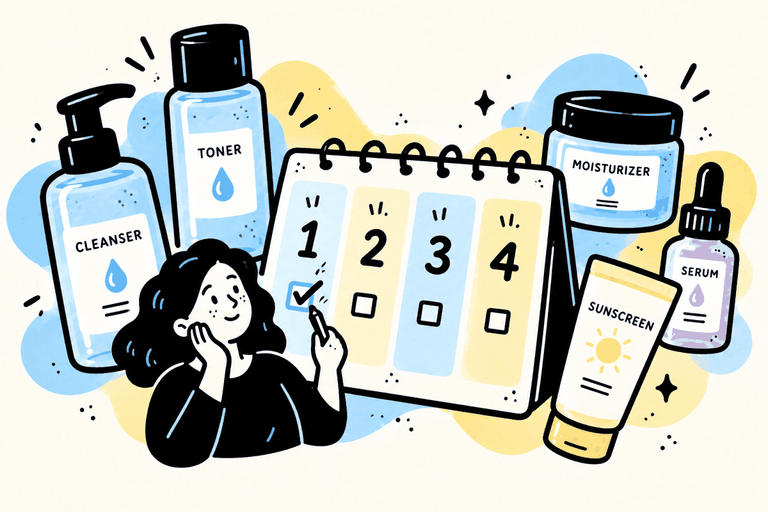
Korean dermatology guidance generally suggests a minimum of 2-4 weeks of consistent minimal, barrier-focused care before reintroducing any actives, though more severe damage can take 6-8 weeks or longer. Reintroduce one product at a time, waiting at least a week between each addition, watching closely for any return of stinging, redness, or discomfort.
When to See a Dermatologist Instead
Home barrier repair is appropriate for mild-to-moderate irritation, but it’s worth seeking professional care if:
- Symptoms don’t improve after 2-3 weeks of a minimal routine
- You notice signs of infection (increasing warmth, swelling, pus)
- The reaction is severe, widespread, or accompanied by significant pain
- You suspect a true allergic reaction rather than general irritation
Korea’s dermatology clinics, particularly in areas like Apgujeong’s “beauty belt,” are known internationally for barrier-focused treatment protocols, and many of the ingredient philosophies covered in Korean skincare content (Cica, ceramides, minimal routines) originate from or are reinforced by that clinical environment specifically.
If Your Skin Is Dry Rather Than Damaged
Dry skin and a damaged barrier often look similar, but they are not the same thing. If your skin is simply dry, these points matter most.
Understanding Dry Skin in the Korean Framework
As discussed in our chok-chok skin post, Korean skincare treats adequate hydration as a non-negotiable baseline for every skin type, but dry skin specifically requires a more deliberate, richer layering approach than oilier skin types need, without tipping into the over-occlusive territory that can feel heavy or trigger breakouts on other skin types.
What to Avoid for Dry Skin
- Frequent or high-strength chemical exfoliation. As covered in our PHA/AHA/BHA guide, dry skin should favor gentle PHA formulations over more aggressive AHA/BHA options, and limit frequency to 1-2x weekly rather than the 2-4x range suitable for other skin types
- Alcohol-forward toners, which can worsen dryness significantly
- Skipping moisturizer in humid weather, a mistake covered in our oily-skin guide from the opposite direction. Dry skin especially shouldn’t reduce moisturizer use seasonally without genuine need
For skin that is red and reactive, see also our guide to Korean skincare for rosacea.
Frequently Asked Questions
Can I still wear makeup while my barrier heals? It’s best minimized if possible, but if necessary, choose mineral-based, fragrance-free products and remove them as gently as possible, ideally with a very mild cleansing balm rather than harsh makeup remover wipes.
Will my barrier fully recover, or is damage permanent? In the vast majority of cases caused by product overuse or environmental stress, the barrier fully recovers with consistent, appropriate care. Permanent damage is uncommon outside of chronic skin conditions or severe, repeated injury.
Is “skin fasting” the same as using no products at all? Not quite. It specifically means stripping down to only necessary, gentle, barrier-supportive products (cleanser, Cica, moisturizer, sunscreen) rather than using zero products, which can leave skin unprotected from environmental stress during an already vulnerable period.
Can oily or acne-prone skin have a damaged barrier too? Yes. This is a common misconception. Oily and acne-prone skin can absolutely have a compromised barrier, often from over-treating acne with harsh, stripping products, and the same gentle recovery principles apply regardless of underlying oiliness.
Read Next
The Real Reason Your Ampoule Didn’t Work (It’s Probably Not the Ingredients)
If you’ve ever bought a well-reviewed ampoule and had your skin break out, feel tight,…
Minimalist K-Beauty Routine: 5 Steps for Beginners
The 10-step routine gets all the international attention, but it can be intimidating for beginners,…
Building a K-Beauty Routine From Scratch: A 4-Week Plan
Starting Korean skincare from zero can feel overwhelming given how much information (and how many…
Choosing Skincare by Moisture Weight, Not Marketing Claims
Why the real reason a product does or does not work for your skin often comes down to a simple 1-to-3 moisture-weight mismatch, not the ingredient list.
I Over-Exfoliated With a Glycolic Acid Toner: My Barrier Recovery Diary (Part 1)
In April a 7% glycolic acid toner left my cheeks red and bumpy within a week. Five months on, here is everything I have tried, what did and did not help, and the barrier routine I use now.
Korean Skincare for Rosacea: What Helps, What Flares, and What to Skip
Sensitive skin reacts more readily to products, weather and touch than average skin, so every…