The Real Reason Your Ampoule Didn’t Work (It’s Probably Not the Ingredients)

If you’ve ever bought a well-reviewed ampoule and had your skin break out, feel tight, or simply do nothing, the instinct is to blame an ingredient. Was it the fragrance? The alcohol? Something buried halfway down the list? Most of the time the real issue is less dramatic: the ampoule was the wrong weight for your skin, not the wrong formula.
Moisture Weight: The 1-2-3 Scale
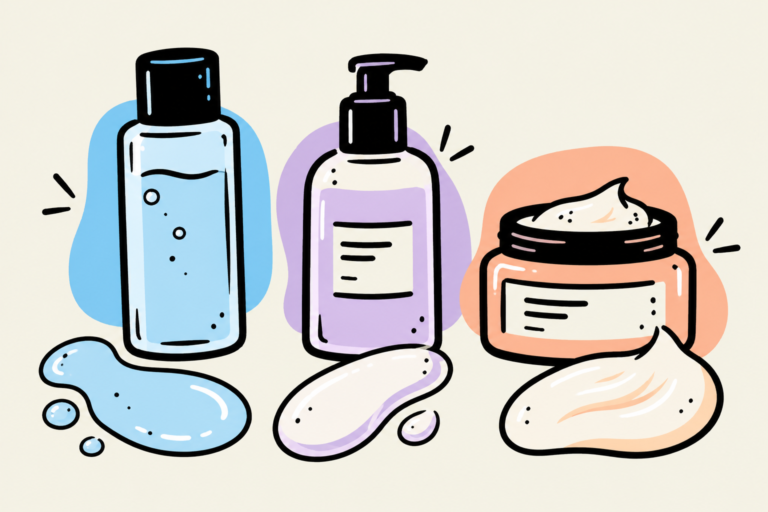
Korean skincare creators often sort leave-on products into three rough “weights” of moisture. It isn’t an official classification, but it’s a useful way to shop:
- Weight 1 (light). Watery, fast-absorbing textures. Suits oily skin, humid summers, and anyone who dislikes a film on their face.
- Weight 2 (medium). Slightly viscous or milky. Suits combination skin and most in-between seasons.
- Weight 3 (rich). Thick, cushiony or oil-containing. Suits dry skin, cold dry winters and heated indoor air.
Matching weight to your skin type and the season tends to matter more than how many star ingredients a bottle lists. A simple ampoule at the right weight usually outperforms an ingredient-dense one at the wrong weight.
How a Weight Mismatch Looks Like an Ingredient Problem
An oily or combination-skin person using a rich, weight-3 ampoule built for dry winter skin may see congestion or small breakouts and conclude “this ingredient doesn’t agree with me.” Often the product was simply too heavy to sit under a moisturizer on that skin.
Flip it around: a dry-skin person reaching for a light, watery “soothing” ampoule may find it does nothing for tightness or flaking. The soothing ingredients aren’t useless; the product was never rich enough to address the actual moisture deficit, and skin that stays dry and under-supported is more likely to feel stingy and reactive.
In both cases the formula was fine. The weight was wrong. Genuine ingredient reactions do happen, so if you get itching, hives or swelling, stop using the product regardless of weight.
Two Kinds of Ampoules, Two Different Jobs
It helps to split ampoules (and serums, which are largely the same category in practice) into two groups:
| Basic ampoule | Concern-specific ampoule | |
|---|---|---|
| Job | Hydration, soothing, barrier support | Pores, brightening, anti-aging |
| Choose by | Moisture weight (1, 2 or 3) | Your one main concern right now |
| Texture | Varies by weight | Usually a middle weight most skin types tolerate |
| How often | Daily, AM and PM | A few times a week, or PM only |
| Where it goes | Foundation layer after toner | On top of the basic ampoule |
The basic ampoule is your everyday foundation: the leave-on step doing the moisture-balancing work. A concern-specific ampoule layers on top of it, not instead of it.
What This Looks Like for Common Concerns
Pores and oil. Niacinamide remains one of the most broadly tolerated, well-studied options, and it’s often paired with a small amount of zinc PCA for extra oil-control support. The Ordinary’s Niacinamide 10% + Zinc 1% is a familiar example of the combination. One detail that’s easy to miss: a “pore care” product with a heavy, rich texture can undercut its own sebum-control claim. For this concern, a light texture is part of the product doing its job.
Anti-aging. Here the trade-off is strength rather than texture. Bakuchiol is a gentle, plant-derived option that suits daily use and reactive skin. Retinal (retinaldehyde) works faster on fine lines, texture and pigmentation but is more likely to irritate than bakuchiol. Most people start retinal on two or three nights a week and build up, and some buffer it by applying it over or mixed into moisturizer. Our retinol vs. retinal vs. bakuchiol comparison goes deeper on choosing between them.
The Layering Rules That Prevent Most Problems
- Toner, then ampoule, then cream. The ampoule is a middle step, not a replacement for either.
- Thin before thick. When layering more than one leave-on product, apply watery textures first and richer ones last.
- One concern at a time. Stacking pore, brightening and anti-aging ampoules together makes it hard to tell which one caused a reaction.
- Two or three specialty products, maximum. Beyond that, a routine gets hard to manage and harder to troubleshoot.
Quick Questions
How do I know which weight I need? Notice how your skin feels an hour after your routine. Shiny or congested usually means go lighter; tight or flaky usually means go richer. Expect to shift weights between seasons.
Can one ampoule be both basic and concern-specific? Yes. Many hydrating formulas include a little niacinamide or peptides. Choose those by weight first, then treat the extras as a bonus.
Do I need an ampoule at all? No. A minimalist routine with a well-matched toner and moisturizer covers the basics for many people. An ampoule is worth adding when you want extra hydration or a targeted active.
Wrapping Up
Before writing off an ampoule, or an ingredient, check its weight against your skin and the season, and check where it sits in your layering order. Often the fix isn’t buying something new; it’s using what you already own in the right place.
About the author: Seoul Skin Diary Editor
Seoul Skin Diary is written by a Korean-born, Sydney-based editor who is bilingual in Korean and English. That means reading Korean-language sources most English sites can’t: Korean product listings, ingredient databases and community reviews. Every post translates that information into plain English, with sources linked. We’re not dermatologists. For persistent or medical skin concerns, please see a qualified professional.
Read Next
How to Repair a Damaged Skin Barrier: A Korean-Style Recovery Routine
“피부장벽” (pibu jangbyeok, “skin barrier”) is one of the most frequently used terms in Korean…
Morning vs Night K-Beauty Routine: What’s the Difference?
A lot of beginners assume a Korean skincare routine is identical morning and night, just…
Korean Skincare for Rosacea: What Helps, What Flares, and What to Skip
Sensitive skin reacts more readily to products, weather and touch than average skin, so every…
Choosing Skincare by Moisture Weight, Not Marketing Claims
Why the real reason a product does or does not work for your skin often comes down to a simple 1-to-3 moisture-weight mismatch, not the ingredient list.
K-Beauty Routine for Oily/Acne-Prone Skin
A Korean-style routine for oily or acne-prone skin can be simple: gentle cleansing, a moisturizer…
I Over-Exfoliated With a Glycolic Acid Toner: My Barrier Recovery Diary (Part 1)
In April a 7% glycolic acid toner left my cheeks red and bumpy within a week. Five months on, here is everything I have tried, what did and did not help, and the barrier routine I use now.