COSRX The 6 Peptide Skin Booster Review: A Gentle First Step, Not a Miracle
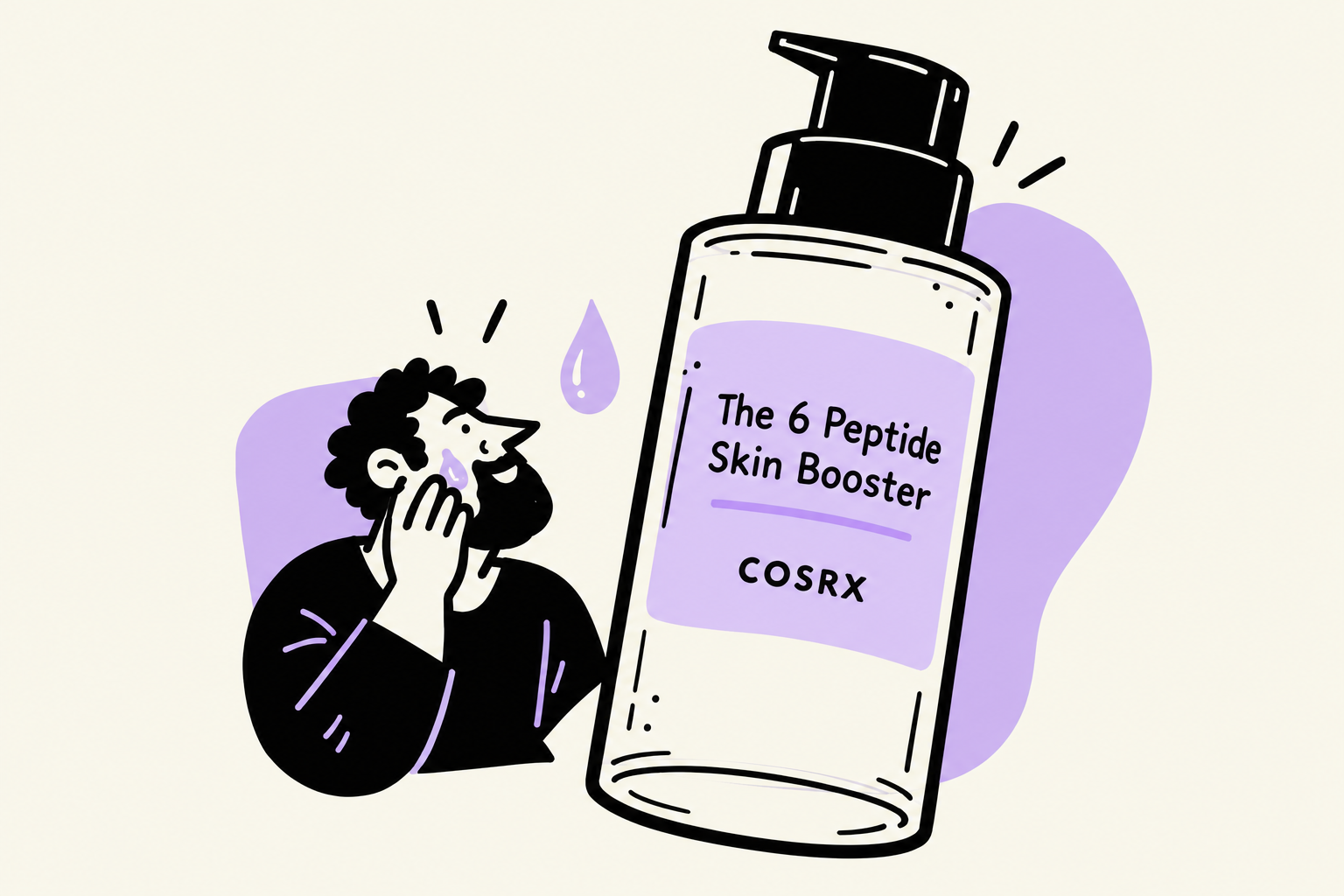
Most peptide products are sold as anti-ageing treatments. COSRX took a different angle with The 6 Peptide Skin Booster: it’s a large 150ml pump bottle meant to be used as your very first step after cleansing, the way many people use a hydrating toner. I used it for about four weeks in the same routine I always follow (toner, then serum or ampoule, then moisturizer), with this taking the toner slot. For context, my skin is slightly oily and sensitive. Here is how it went.
This article is general information, not medical advice. If you’re dealing with persistent acne, rosacea, eczema or another skin condition, please see a dermatologist.
The short answer
- What it is: a light, water-based “first step” serum with six peptides, niacinamide, hyaluronic acid and a few soothing ingredients.
- What I noticed over four weeks: smoother, more moisturized skin with no stinging. The change was gradual and gentle rather than dramatic.
- Good for: anyone who wants an easy, low-effort way to add peptides without adding a separate treatment step.
- Skip it if: you’re expecting visible wrinkle reduction in a few weeks, or your skin has reacted to niacinamide before.
How this review was put together: I used this serum myself as part of my regular routine, and everything under “How I Use It” and “What I Noticed” comes from that. The ingredient details come from COSRX’s own listing, and the research section links to the studies it draws on. Results vary from person to person, so patch test anything new.
What’s in the Bottle
The serum comes in a 150ml (5.07 fl oz) pump bottle, which is roughly five times the size of a typical dropper serum. At the time of writing it lists for US$25 on COSRX’s US store, though prices vary a lot between retailers and regions. The formula is fragrance-free.
Niacinamide sits sixth on the ingredient list, directly ahead of the six peptides. COSRX doesn’t publish the percentage of any of them, so the order is the best clue available. Here is what each peptide is usually included for:
| Peptide | What it is usually included for | How much independent evidence |
|---|---|---|
| Acetyl Hexapeptide-8 (often sold as Argireline) | Softening expression lines | Several small human trials |
| Copper Tripeptide-1 (a copper peptide) | Supporting skin repair and firmness | Lab work and a handful of small human studies |
| sh-Polypeptide-121 | A lab-made peptide modelled on a human growth factor | Very little outside supplier data |
| Dipeptide Diaminobutyroyl Benzylamide Diacetate | Expression lines, similar pitch to Argireline | Mostly supplier data |
| Oligopeptide-68 | Brightening and evening out tone | Mostly supplier data |
| Palmitoyl Tripeptide-8 | Calming redness and irritation | Mostly supplier data |
The supporting cast is where a lot of the day-to-day feel comes from: glycerin, sodium hyaluronate (hyaluronic acid), acetyl glucosamine, allantoin, betaine and a group of amino acids. Adenosine, another ingredient Korean brands use for wrinkle claims, appears near the end of the list, so it’s likely present in a small amount.
How I Use It
- Where it goes: first, straight after cleansing, in place of a toner.
- How long: about four weeks.
- How much: patted over the face, then a second layer once the first has sunk in.
- What comes after: my usual serum or ampoule, then moisturizer, plus sunscreen in the morning.
- What I keep it apart from: vitamin C. I use one in the morning and the other at night rather than stacking them.
Keeping it apart from vitamin C is a precaution rather than a hard rule. Pure vitamin C (L-ascorbic acid) needs a low pH to work, and it’s commonly recommended to keep copper peptides away from it, so separating them by time of day avoids the question altogether.
What I Noticed
I used this product during my military service in Korea, before I moved to Australia.
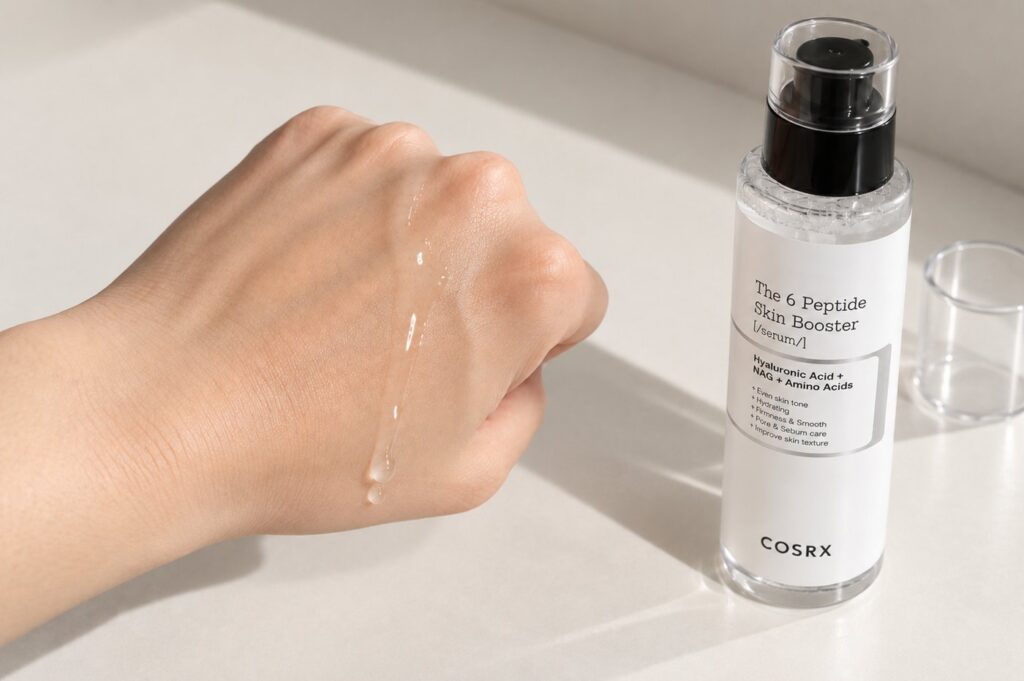
The texture is the first thing you notice. It’s light and watery, closer to a thin essence than a gel serum, and it sinks in quickly without a sticky layer. I apply two layers, letting the first sink in before the second.
Over the four weeks my skin felt smoother and more moisturized, and I never had any stinging or redness from it, which matters to me because my skin is sensitive. What I didn’t see was a dramatic change in fine lines. “Comfortable” is the word I’d use for it. It’s the kind of product you notice more when you run out than on any single day of using it.
The 150ml pump bottle is practical for a step you apply twice, since you go through it faster than a normal serum.
What the Research Can and Can’t Tell You
Peptides are one of the better-studied anti-ageing ingredient groups, but the evidence is still modest. A 2025 literature review in the Journal of Drugs in Dermatology looked at 10 studies of acetyl hexapeptide-8, covering 312 participants. All 10 reported that wrinkles or scars looked less prominent, although how significant the change was varied between studies, and none reported significant side effects. These were small studies, though, and many used formulas with other active ingredients as well.
Copper peptides (GHK-Cu) have a longer research history, much of it from lab and gene-expression studies rather than large clinical trials. The other four peptides in this formula are backed mainly by data from the companies that supply them.
The bigger unknown is dose. Studies test specific concentrations, and COSRX doesn’t disclose the amount of each peptide in this serum. That fits my own experience: this is a gentle, supportive product, not something that should be compared with retinoids or in-clinic treatments.
Things to Watch
- Reactions do happen. Some users report redness or breakouts after starting this serum. If your skin reacts, stop using it rather than pushing through.
- Niacinamide sensitivity. If niacinamide has made you flush before, patch test this first.
- Soybean oil. It’s listed near the end of the formula, which is worth knowing if you avoid soy.
- Introduce it alone. Add it without changing anything else for a couple of weeks, so you can tell what caused any change.
Who It Suits (and Who Should Skip It)
| Worth trying if you… | Probably skip if you… |
|---|---|
| Want to add peptides without an extra treatment step | Want visible wrinkle reduction quickly |
| Like light, watery layers you can apply twice | Prefer one rich serum to several thin layers |
| Have skin that dislikes strong actives | Have had reactions to niacinamide |
| Go through a lot of toner and want a larger bottle | Already use a peptide serum you’re happy with |
If you’re still deciding whether peptides are worth adding at all, our guide to peptides in Korean skincare covers how the different types work and where they fit alongside retinoids.
Common Questions
Is it a toner or a serum?
COSRX calls it a serum, but it’s designed to be used like a toner, as the first step after cleansing. In practice it can replace your toner rather than sit alongside it.
Can I use it with retinol?
Peptides are generally considered compatible with retinoids, and a light hydrating layer before retinol is a common approach. If your skin is sensitive to retinol, add one new product at a time so you can see how your skin responds.
How long until I notice anything?
The texture and hydration are noticeable straight away. Any smoothing is gradual, and the peptide studies mentioned above typically ran for several weeks or longer.
Sources
- COSRX: The 6 Peptide Skin Booster Serum (product listing and key ingredients)
- INCIDecoder: COSRX The 6 Peptide Skin Booster Serum full ingredient list
- Journal of Drugs in Dermatology: Acetyl hexapeptide-8 as a topical alternative to botulinum toxin, a review of the literature
- Pickart and Margolina (2018), Regenerative and protective actions of the GHK-Cu peptide in the light of the new gene data, International Journal of Molecular Sciences
- Cosmetic Ingredient Review: Safety assessment of acetyl hexapeptide-8 amide as used in cosmetics
Read Next
Anua Heartleaf 77% Soothing Toner Review: What a One-Month Trial Showed
Few Korean toners have generated as much sustained buzz over the past few years as…
Some By Mi AHA-BHA-PHA 30 Days Miracle Toner Review: What a 35-Day Trial Showed
Few Korean toners generated as much viral before-and-after content as Some By Mi’s AHA-BHA-PHA 30…
Heimish All Clean Balm Review: A Reality Check for Acne-Prone Skin
Alongside Banila Co’s Clean It Zero, Heimish’s All Clean Balm is one of the other…
Best Korean Sunscreens for 2026: Whitecast, Finish and PA Ratings Compared
Korean sunscreens built their international reputation on solving a problem Western sunscreens have struggled with…
Round Lab Birch Juice Moisturizing Toner Review: What Real Users Found
Round Lab built its brand around a specific storytelling angle: skincare inspired by the natural…
Torriden Dive-In Low Molecule Hyaluronic Acid Serum Review: What Long-Term Users Found
Torriden’s Dive-In serum is the best-known product from a brand that centers its line on…