Beauty of Joseon vs Anua, a Product Pick Guide
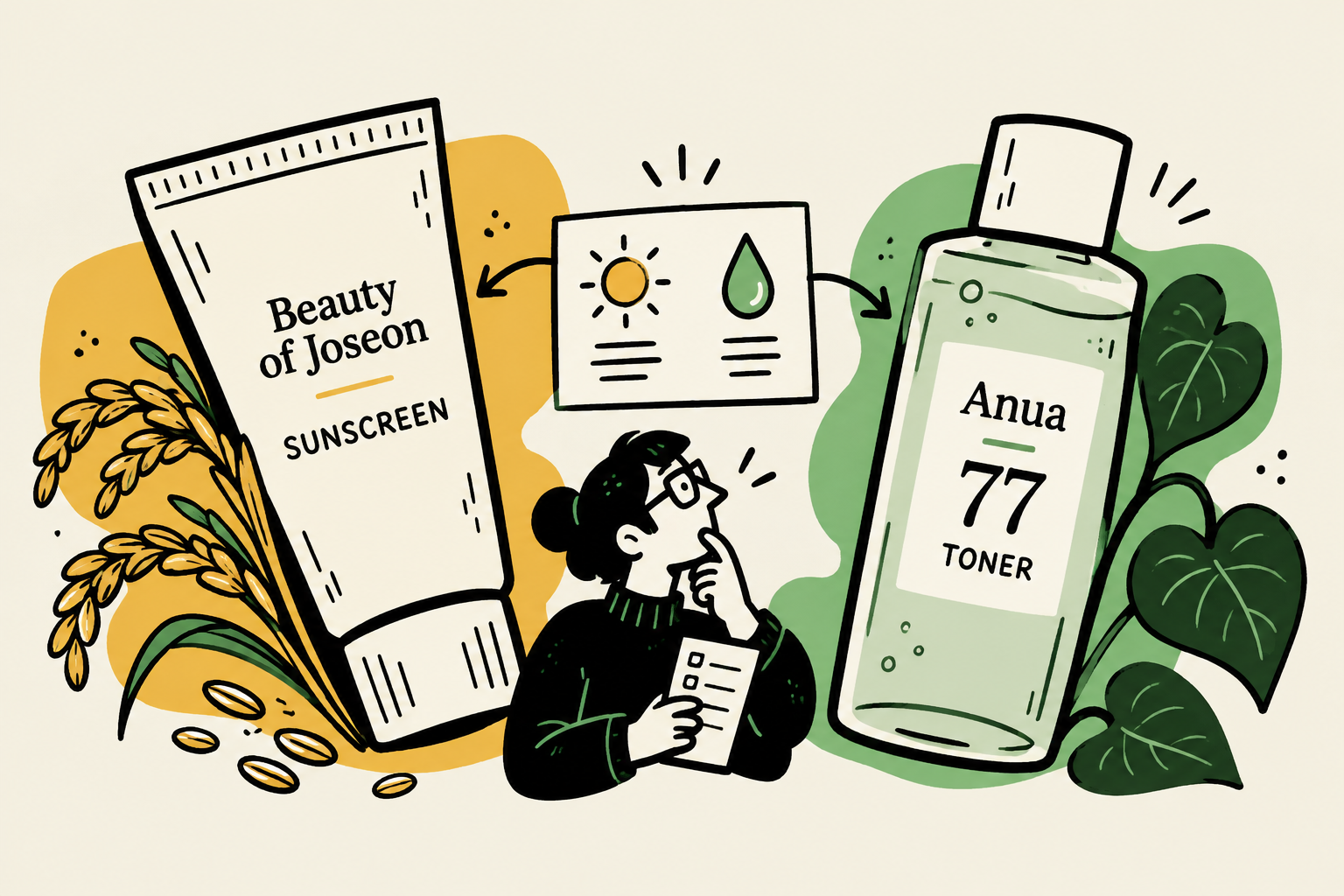
This is a pick guide rather than a verdict on which brand is better. It is based only on the Beauty of Joseon and Anua products covered on this blog, and it matches each product to the job it does.
This article is general information, not medical advice. If you’re dealing with persistent acne, rosacea, eczema or another skin condition, please see a dermatologist.
In short
Pick by job, because few of these products do the same thing. For sunscreen, Beauty of Joseon’s Relief Sun is the one covered here. For a toner, the options covered are Anua’s Heartleaf 77% Soothing Toner (reviewed in its own post) and Beauty of Joseon’s Ginseng Essence Water or Glow Replenishing Rice Milk. For a brightening serum, Beauty of Joseon’s Glow Serum is the one covered. For a pore-care cleanser, Anua’s Heartleaf Quercetinol Pore Deep Cleansing Foam is the one covered. How any of them feels depends on your own skin, so patch test a new product first.
Brand Background
Beauty of Joseon
Founded with a distinct branding concept: drawing on traditional Korean hanbok imagery and the historical Joseon dynasty (1392-1897) as an aesthetic and philosophical reference point, positioning itself around the idea of blending traditional Korean beauty ingredients, like rice, ginseng, and hanbang (Korean herbal medicine) botanicals, with modern skincare science. This traditional-meets-modern branding is distinctive in a market often dominated by minimalist or clinical-looking packaging.
Anua
A newer brand with a plainer, more clinical-looking presentation. Its rise has been tied to a small number of viral products, particularly the Heartleaf line, which the brand markets as soothing.
Signature Ingredients and Philosophy
Beauty of Joseon leans heavily into hanbang-inspired ingredients. Rice extract and rice bran water appear across much of the line (most famously in their Relief Sun sunscreen), alongside ginseng in their more anti-aging-focused products. This reflects a broader philosophy of connecting modern formulation to traditional Korean beauty wisdom, a positioning built around cultural heritage.
Anua centers its identity around heartleaf, a botanical related to but distinct from Centella asiatica that the brand markets as soothing, and a “barrier-first” philosophy with short ingredient lists. Whether a given product is low-irritant depends on its own formula and on your skin, so this post does not treat the whole Anua catalog as safe for sensitive skin.
Products Covered, by Job
Sunscreen
Beauty of Joseon’s Relief Sun: Rice + Probiotics SPF50+ is the only sunscreen covered here, and it is marketed as lightweight with no whitecast. See our Korean sunscreens guide for more options.
Toner
Beauty of Joseon’s Ginseng Essence Water and Glow Replenishing Rice Milk and Anua’s Heartleaf 77% Soothing Toner are all toners. Anua lists heartleaf extract as 77% of its formula, which describes the formula base rather than potency. Which one suits you depends on the feel you want and on your own skin’s reaction.
Serum
Beauty of Joseon’s Glow Serum (propolis + niacinamide) targets brightening and hydration together. For pore care, the Anua product covered here is the Heartleaf Quercetinol Pore Deep Cleansing Foam, which is a cleanser rather than a serum.
Night Cream and Sleeping Mask
Beauty of Joseon’s Dynasty Cream is a moisturizing cream, and the brand also sells sleeping masks, which are a separate product type. Only the cream is covered here.
Which Products Fit Which Priority
Beauty of Joseon may be worth a look if you want:
- Brightening and glow-focused products
- A sunscreen with a lightweight, no-whitecast finish (Relief Sun)
- Traditional or hanbang-inspired ingredients
- A richer moisturizing cream (Dynasty Cream)
Anua may be worth a look if you want:
- A soothing-focused toner (Heartleaf 77%). If your skin is highly sensitive or reactive, check the full ingredient list and patch test first
- A minimal, short-ingredient-list approach
- Pore care, such as the Heartleaf cleansing foam covered here
- Simpler, shorter ingredient lists over multi-benefit formulas
Price
Prices vary by product, retailer and region, so check current prices at the store you plan to use. This post does not compare the two brands’ prices product by product.
Availability
Both brands are sold through a range of online retailers, but which retailers carry them differs by country and changes over time, so check availability where you shop.
Can You Use Both Brands Together?
Yes, there is no rule that you must stay within one brand. One example from the products covered here would be Anua’s Heartleaf toner, Beauty of Joseon’s Glow Serum, and Beauty of Joseon’s Relief Sun for the day. This is an illustration rather than a tested routine, so introduce new products one at a time.
Where COSRX Fits In
COSRX is a third budget brand shoppers often weigh. It is not needed to choose between these two, so this guide keeps it short. Its Snail Mucin Essence is covered in its own review, and its BHA and pimple patch products appear in our oily/acne-prone routine guide.
A Few More Questions
Which brand is more “authentic” Korean skincare? Both are Korean-founded and formulated brands. The “authenticity” question sometimes raised online usually reflects marketing style preferences (traditional/heritage vs. minimalist/clinical) rather than any real difference in how Korean or legitimate either brand is.
Which brand is better for beginners to K-beauty? Neither brand is a clear beginner pick on the evidence in this post. Anua’s shorter ingredient lists may feel simpler to some people, and Beauty of Joseon’s products are widely discussed online, which makes reviews easy to find. Whichever you try, introduce one product at a time and patch test.
Is one brand more “clean” or natural than the other? Both use a mix of naturally derived and synthetic ingredients, as is typical of cosmetic formulation. This post has not compared their ingredient lists in full, so check the list of the specific product you are considering.
Do both brands test on animals? I could not confirm either brand’s animal-testing policy or any cruelty-free certification from an official source, so this post does not say yes or no. Check the brand’s own statement or a certifier’s list such as Leaping Bunny or PETA before buying, since policies can differ by market.
Read Next
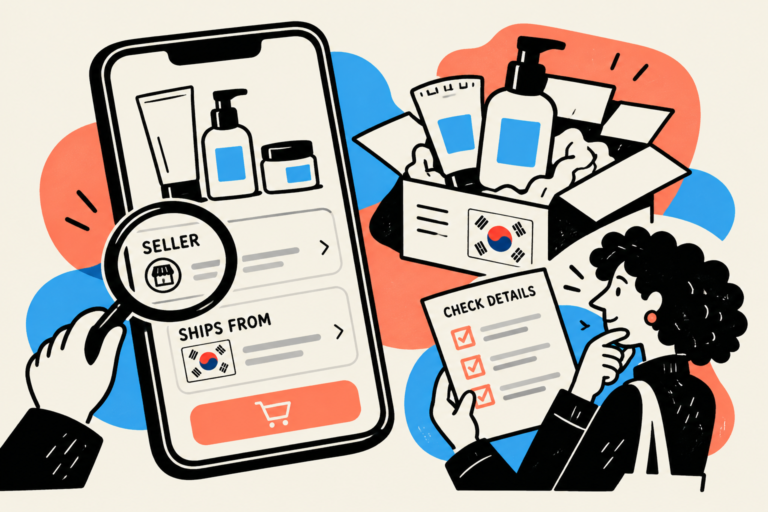
Where to Buy Authentic K-Beauty Products Online (Avoiding Fakes)
For US shoppers, start with a brand’s official website or its country-specific authorized retailer list….
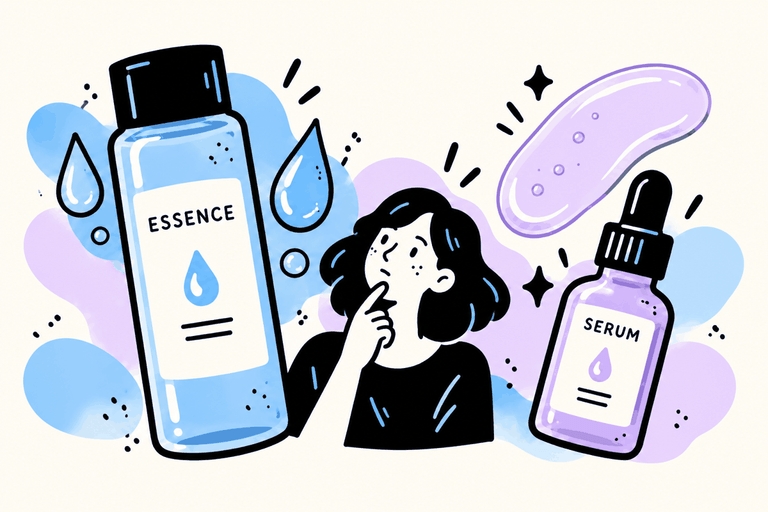
Essence vs. Serum: What’s Actually the Difference?
Few Korean skincare terms confuse beginners as consistently as “essence” versus “serum.” Both sit in…
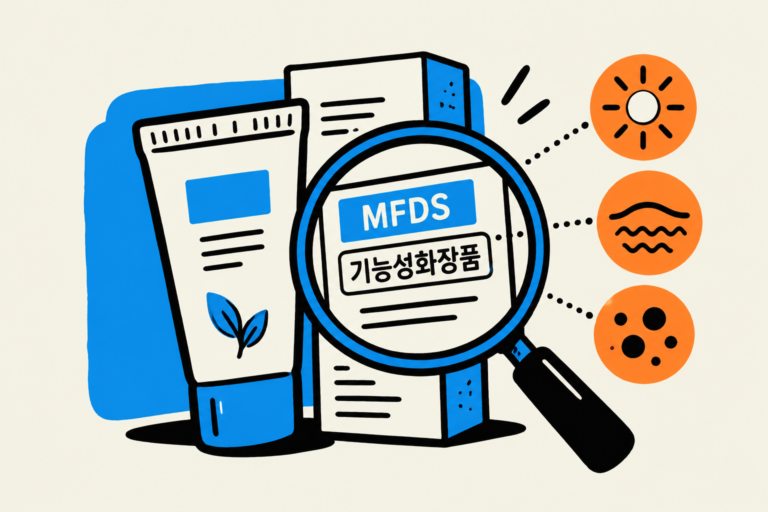
What “기능성화장품” on a Korean Label Actually Means
Korea’s “functional cosmetic” label means a product’s brightening, anti-wrinkle or UV claim has been checked by the MFDS. Here’s what it covers, how products earn it, and what it doesn’t promise.
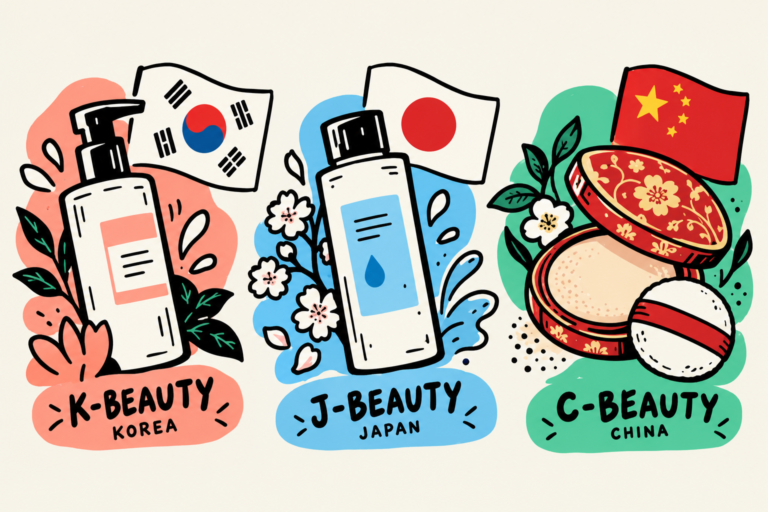
K-Beauty vs J-Beauty vs C-Beauty: Market Comparison
K-beauty means Korean beauty, J-beauty Japanese beauty and C-beauty Chinese beauty. These labels identify markets…
Why Sheet Masks Are Everywhere in Korea (And How to Actually Use Them)
Sheet masks are one of the most immediately recognizable K-beauty exports, thin, essence-soaked sheets sold…
Olive Young Shopping Guide for First-Time Visitors
Olive Young is Korea’s dominant beauty and health retail chain, and for anyone visiting Korea…