K-Beauty vs J-Beauty vs C-Beauty: Market Comparison
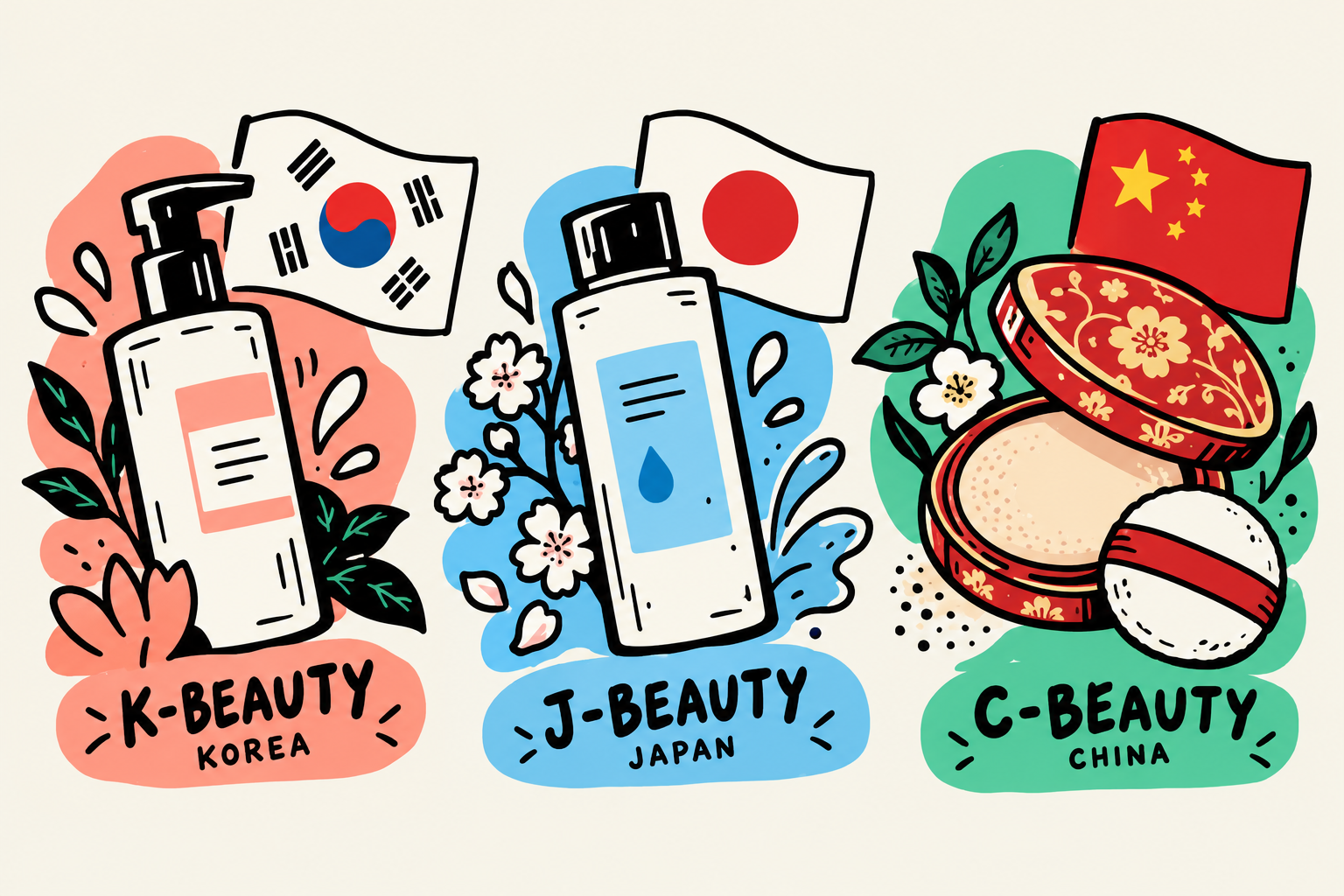
K-beauty means Korean beauty, J-beauty Japanese beauty and C-beauty Chinese beauty. These labels identify markets and brand origins, not three fixed rules for skincare. All three include different prices, textures, routines and product types. Choose a specific product rather than assuming a country determines performance.
Korea, Japan and China: Clear Labels, Useful Comparisons
| Market | Examples to investigate | What not to assume |
|---|---|---|
| 🇰🇷 Korea / K-beauty | COSRX skincare; Laneige complexion makeup | That every product is gentle, dewy or part of a ten-step routine. |
| 🇯🇵 Japan / J-beauty | Hada Labo hydration products; Shiseido skincare and makeup | That every formula is minimalist or more scientifically proven. |
| 🇨🇳 China / C-beauty | Florasis colour cosmetics | That one makeup brand represents Chinese skincare or every product uses traditional botanicals. |
These are examples rather than a sales ranking. Brand origin, manufacturing location and the country where a product is sold are separate facts. A product can also have regional versions. Country flags make the categories easy to follow; they do not establish where every ingredient was sourced.
History Without Ranking One Country Above Another
Shiseido’s company history dates its founding in Japan to 1872. Amorepacific’s cushion history dates IOPE Air Cushion’s launch to 2008. These are specific company milestones, not evidence that one country has a longer or better beauty tradition.
Korean, Japanese and Chinese beauty practices each have histories beyond today’s international marketing labels. The most useful evidence in a shopping article is usually a dated product page or a brand history source, rather than a sweeping claim about a national personality.
A Product-Level Comparison, Not a Country-Level Winner
| Example | Official listing shows | What that example can establish |
|---|---|---|
| 🇰🇷 COSRX BHA Blackhead Power Liquid | An exfoliating liquid listing betaine salicylate. | An example of a targeted Korean skincare product; not proof all K-beauty is mild. |
| 🇯🇵 Hada Labo Gokujyun Hyaluronic Acid Lotion | Rohto’s Japanese listing for a hydration-focused lotion. | An example to inspect for hydration; not a head-to-head result against COSRX. |
| 🇨🇳 Florasis Fairy Peach Blossom Ultra-light Setting Powder | A colour-cosmetic powder listing. | An example of Chinese makeup, not a substitute for a skincare comparison. |
The examples deliberately serve different purposes. It would be misleading to score an exfoliating liquid, a hydrating lotion and a setting powder as if they were interchangeable. For a real comparison, match the category and purpose first, then the size, version and buying market. These descriptions come from manufacturers, not my own comparative testing.
Ingredients Over National Stereotypes
Hyaluronic acid, niacinamide and botanical extracts are not exclusive to one country. A traditional ingredient name also does not establish the evidence for a finished cosmetic. Check what the actual formula contains and which claims have supporting tests.
Do not assume Japanese products have fewer ingredients or Korean products are automatically experimental. Nor should Chinese brands be treated as a single traditional-medicine category. Specific products can make those comparisons concrete; national labels cannot.
A useful comparison records the full ingredient list, the version and source date. Different translation conventions or an old listing can make two lists look different even before a reformulation is considered. The Korean ingredient-list guide covers the reading process.
Routine Length Is Your Decision
The ten-step Korean routine is one way of organizing product categories, not a requirement to use all ten. The minimalist guide shows another approach. Likewise, a Japanese brand can sell several layering steps, and a Chinese brand can sell a single-purpose product.
In Japanese beauty listings, “lotion” can refer to a watery skincare step rather than the creamy body lotion an English reader might expect. Read the product’s actual directions. Do not assign the meaning from an English category name alone.
You can mix products from different countries. That does not guarantee the combined routine is comfortable: ingredients, treatment strength and your response still matter. Mixing national categories is less important than avoiding unnecessary overlap.
Texture and Finish: Compare Versions Within a Brand
Korean makeup is not all dewy. Laneige’s international range includes Neo Cushion The Matte and Neo Cushion The Glow, checked on October 8, 2026. Different versions within one brand can answer different finish preferences.
Likewise, a watery Japanese lotion does not establish how every Japanese serum feels, and a Chinese setting powder cannot establish how Chinese skincare behaves. Look for product-specific observations and distinguish a manufacturer’s finish claim from an independent wear test.
Price, Availability and Regional Versions
Compare price per millilitre or gram for matching sizes, then add delivery, taxes and any return costs. A prestige Japanese example and a budget Korean example do not establish an average national price difference. Each market includes a range of price points.
Availability depends on the brand and your destination. Use official regional sites and authorized-retailer links rather than assuming a familiar marketplace always has the version you read about. The authentic shopping guide explains seller and shipping checks.
If the same product appears different in Korea and the US, compare matched names, generations and ingredient lists before concluding that the country caused a formula change. Brand origin is not the same thing as the market version.
Which Should You Choose?
Choose by purpose: cleansing, hydration, sun protection, an optional targeted product or makeup. Then compare exact formulas and versions in that category. A preference for packaging, texture or brand style is valid, but it is not evidence that one national industry is objectively better.
Is J-beauty a type of K-beauty? No. They refer to different markets, although international shops may group them together.
Are Korean or Japanese sunscreens better? Compare the exact regional sunscreen, labelled protection, directions and your use. This article does not establish a national winner.
Where does C-beauty fit? It is another market with its own brands and product categories. The Florasis example here is makeup; it should not be generalized into a verdict about all Chinese skincare.
Read Next
Niacinamide or Vitamin C: Which Should You Start With for Uneven Tone?
This is a common question when starting a Korean routine, and it usually comes up…
Olive Young Shopping Guide for First-Time Visitors
Olive Young is Korea’s dominant beauty and health retail chain, and for anyone visiting Korea…
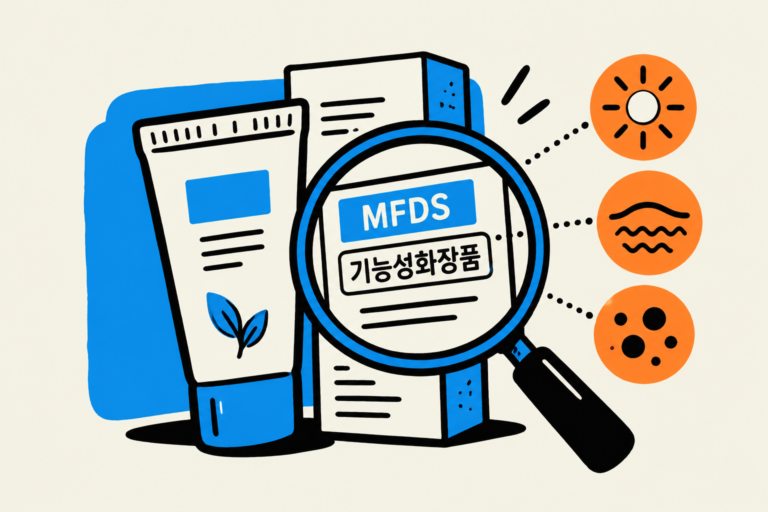
What “기능성화장품” on a Korean Label Actually Means
Korea’s “functional cosmetic” label means a product’s brightening, anti-wrinkle or UV claim has been checked by the MFDS. Here’s what it covers, how products earn it, and what it doesn’t promise.
Essence vs. Serum: What’s Actually the Difference?
Few Korean skincare terms confuse beginners as consistently as “essence” versus “serum.” Both sit in…
What Does “Cruelty-Free” Mean for Korean Beauty Brands?
“Cruelty-free” labeling is more complicated for Korean cosmetics brands than for many Western brands, due…
Physical vs. Chemical Sunscreen: The Korean Perspective
The physical-versus-chemical sunscreen debate plays out differently in Korean skincare culture than in many Western…