Choosing Skincare by Moisture Weight, Not Marketing Claims
Most skincare advice sorts products by what is in them. Hyaluronic acid for hydration, ceramides for the barrier, niacinamide for oil. That sorting is useful, but it skips the question that decides whether a product works on your face: how heavy is it, and is that weight right for your skin this week?
I started thinking in weights after a run of products that were, on paper, exactly what my skin needed and that my skin nonetheless rejected. The ingredient lists were not the problem. The texture was. Once I started choosing by weight first and ingredient second, my hit rate went up sharply, and I stopped buying things twice.
What “Moisture Weight” Actually Means
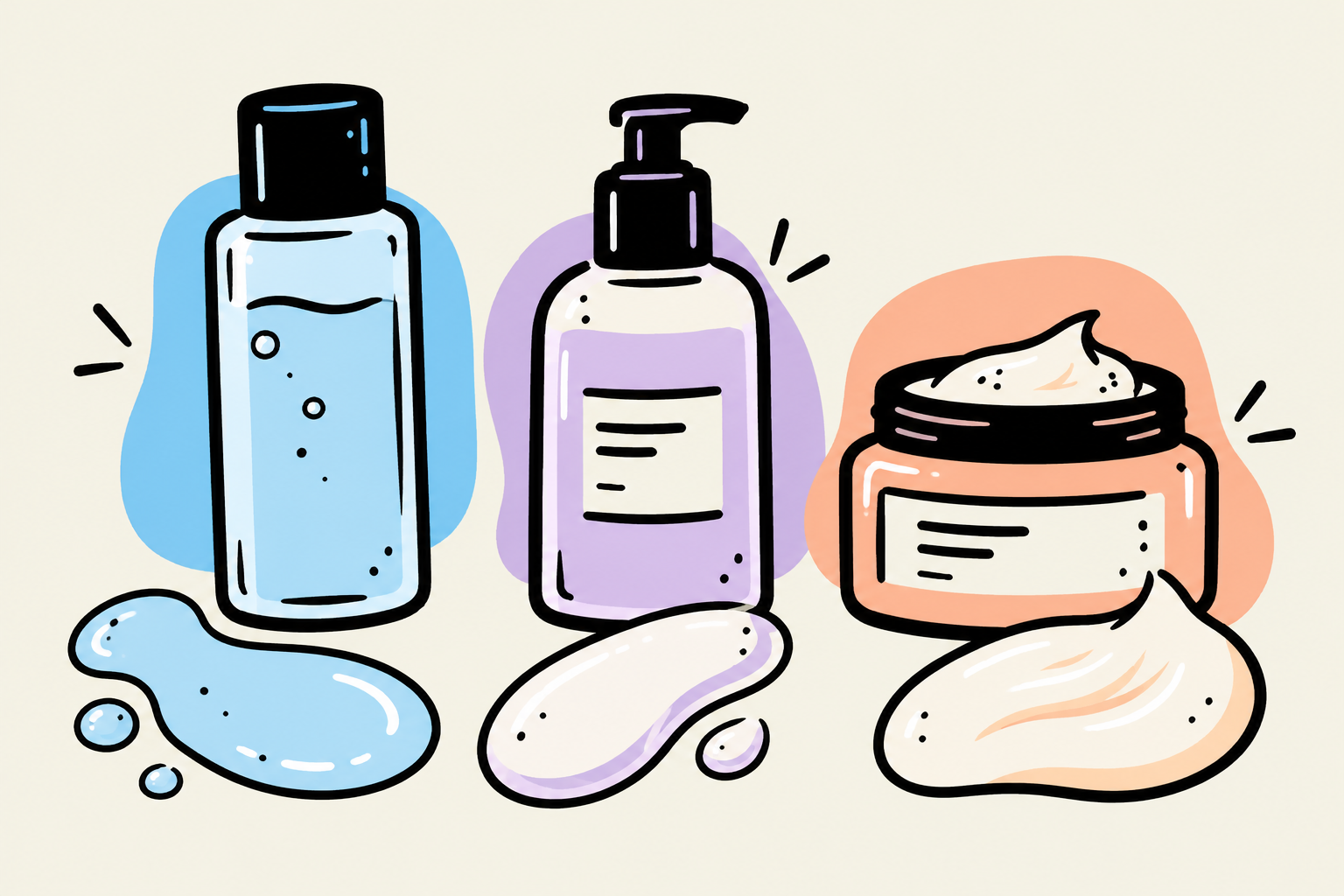
Moisture weight is how much occlusive and emollient material a product leaves sitting on your skin after it absorbs. A watery essence leaves almost nothing and evaporates fast. A balm leaves a film you can still feel an hour later. Everything else sits somewhere between those two. It is not a marketing term and it will not appear on any label, but it is the single most useful thing to judge before you look at anything else.
Weight is not the same as hydration. A thin, watery layer can deliver plenty of water and still leave your skin dry twenty minutes later, because nothing is holding that water in. A heavy cream can feel deeply moisturising while containing very little water, because it is mostly sealing what is already there. Good routines do both jobs, and the weight decides how much sealing you get.
The 1-2-3 Scale
Three bands cover almost everything you will ever pick up. The numbers are mine, not an industry standard, but they map cleanly onto how Korean routines are actually built.
| Weight | What it feels like | Typical formats | Who it suits |
|---|---|---|---|
| 1 (Light) | Absorbs in seconds, no residue, skin feels bare | Watery toners, gel essences, aqua gels | Oily skin, humid summers, layering under makeup |
| 2 (Medium) | Slight cushion, absorbs in a minute, faintly dewy | Lotions, emulsions, gel-creams, most ampoules | Combination skin, most people most of the year |
| 3 (Rich) | Stays on the surface, you can feel it later | Creams, sleeping masks, balms, facial oils | Dry skin, dry winters, a compromised barrier |
The scale describes the product, not you. You are not “a 2.” Your skin needs a 2 on a mild October evening and a 3 in a heated room in July back home in Sydney winter, and the product that was perfect in one situation is the wrong answer in the other.
How to Find Your Number This Week
Wash your face with a gentle cleanser, pat it dry, and then do nothing for fifteen minutes. What your skin does in that window is your answer.
- Comfortable, maybe a little shine at the T-zone: you are in weight 1 territory.
- Fine at first, then mildly tight around the cheeks: weight 2.
- Tight, papery, or stinging when you apply anything: weight 3, and possibly a barrier problem rather than a moisture problem.
Redo this whenever the season turns or you move somewhere with different humidity. I check mine roughly at the start of each season and after any long flight, because both reliably move me up a band for a week or two.
Building a Routine at Each Weight
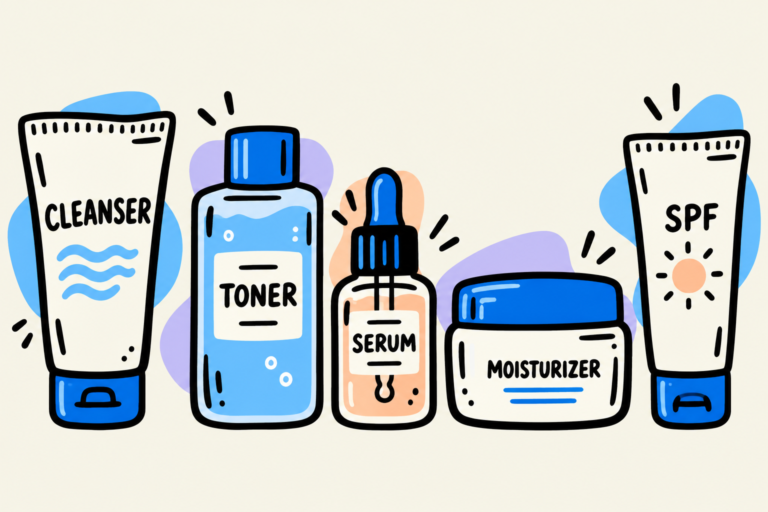
The structure stays the same at every weight. Toner, then an ampoule or serum, then a moisturiser. What changes is how heavy each of those three steps is, and occasionally whether you need all three.
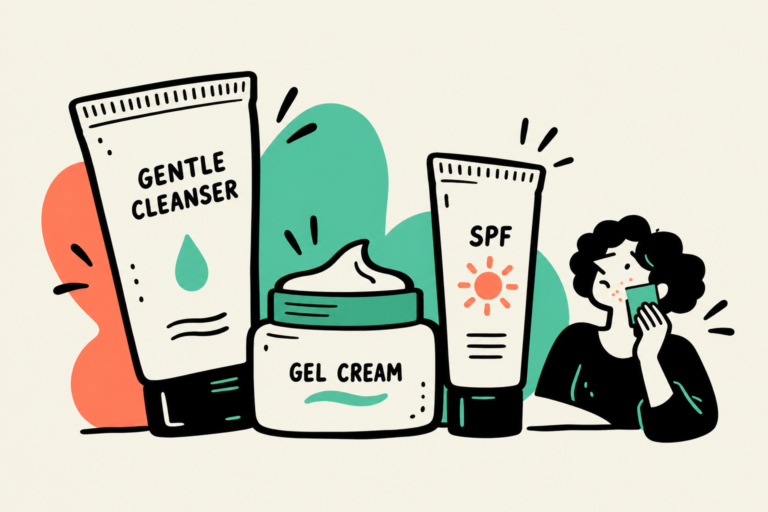
At weight 1, a hydrating toner and a light gel moisturiser are often the whole routine. The ampoule is optional, and if you use one it should be watery. Adding a cream here is the classic mistake, because oily skin reads the heaviness as congestion rather than care.
At weight 2, the three-step routine earns its keep. Toner for water, a medium ampoule for whatever you are actually treating, and a lotion or gel-cream to hold it. This is where most people live for most of the year, and it is also where the widest range of products will work for you.
At weight 3, you are not adding more steps, you are making the last one heavier. Same toner, same ampoule, but a proper cream instead of a lotion, and a sleeping mask on the nights your skin feels worst. Piling on extra serums at this weight tends to make things worse, not better, because the problem is retention rather than supply.
Where Ingredients Actually Come In
Weight gets you to the right shelf. Ingredients decide which bottle you take off it. Once you know you need a medium-weight ampoule, then it is worth asking whether you want peptides, niacinamide, or centella, and at that point the ingredient list matters enormously.
Doing it in the other order is what produces the drawer of half-used bottles that were all, individually, well formulated. I wrote about that failure mode in more detail in the post on why your ampoule did not work, because ampoules are where the mismatch shows up most often.
One exception is worth flagging. If your skin is stinging, flaking, or reacting to products it used to tolerate, no amount of weight-matching will fix that, and moving straight to a heavy cream can trap the irritation rather than soothe it. That is a barrier problem, and it needs a recovery routine rather than a shopping decision.
The Mistakes I Made Before I Thought in Weights
I bought a rich barrier cream in the middle of a humid February because the reviews were extraordinary, and spent three weeks assuming the congestion along my jaw was a purge. It was not a purge. It was a weight 3 product on weight 1 skin, and it cleared within days of swapping to a gel.
I also did the opposite, which is less dramatic but wastes more money. Through a dry winter I kept layering more of a light essence, reasoning that if a little hydration helped, more would help more. My skin stayed tight all season. The water was going in and straight back out, because nothing on top of it was heavy enough to keep it there.
Both mistakes came from the same habit of reading the label and ignoring the texture. The fix costs nothing: press a little on the back of your hand, wait a minute, and notice whether anything is still there.
Quick Questions
Can I mix weights in one routine?
Yes, and you should. The rule is to go from light to heavy as you move outward. A watery toner under a medium ampoule under a rich cream is a normal, well-built routine. Reversing that order means the heavier layer blocks the lighter one.
Is a heavier product always more hydrating?
No. Heavier usually means better at sealing, not better at supplying. A rich balm with no humectants will lock in whatever moisture is already there and add none of its own, which is why balms work best over a damp face rather than a dry one.
What about oily skin that also feels tight?
That combination usually means you need more water and roughly the same amount of oil, so stay at weight 1 or 2 but add a hydrating layer rather than a richer cream. Skin that is short on water often produces more oil to compensate, and loading it with heavy product tends to worsen both halves of the problem.
Do I need to buy different products for summer and winter?
Usually only one. Keep your toner and ampoule, and own two moisturisers. Swapping the last step is enough to move a whole routine up or down a band, and it is much cheaper than rebuilding the routine twice a year.
Wrapping Up
Ingredient lists are worth reading, and this blog spends a lot of time reading them. But they answer the second question, not the first. Before anything else, decide how much your skin needs left on its surface right now, and shop inside that band.
The test takes fifteen minutes and costs nothing. Do it at the start of each season, pick a weight, and let the ingredient list decide between the three or four products that already pass. It is a duller way to shop than chasing a hero ingredient, and it has been considerably more reliable.
Read Next
Morning vs Night K-Beauty Routine: What’s the Difference?
A lot of beginners assume a Korean skincare routine is identical morning and night, just…
Minimalist K-Beauty Routine: 5 Steps for Beginners
The 10-step routine gets all the international attention, but it can be intimidating for beginners,…
How to Repair a Damaged Skin Barrier: A Korean-Style Recovery Routine
“피부장벽” (pibu jangbyeok, “skin barrier”) is one of the most frequently used terms in Korean…
Korean Skincare for Rosacea: What Helps, What Flares, and What to Skip
Sensitive skin reacts more readily to products, weather and touch than average skin, so every…
Seeing a GP After Glycolic Acid Barrier Damage (My Barrier Recovery Diary, Part 2)
After months of slow recovery from glycolic acid damage, I saw a GP on October 9. Here is what I was told, what my routine looks like now, and how the first week of treatment has gone.
K-Beauty Routine for Oily/Acne-Prone Skin
A Korean-style routine for oily or acne-prone skin can be simple: gentle cleansing, a moisturizer…