Essence vs. Serum: What’s Actually the Difference?
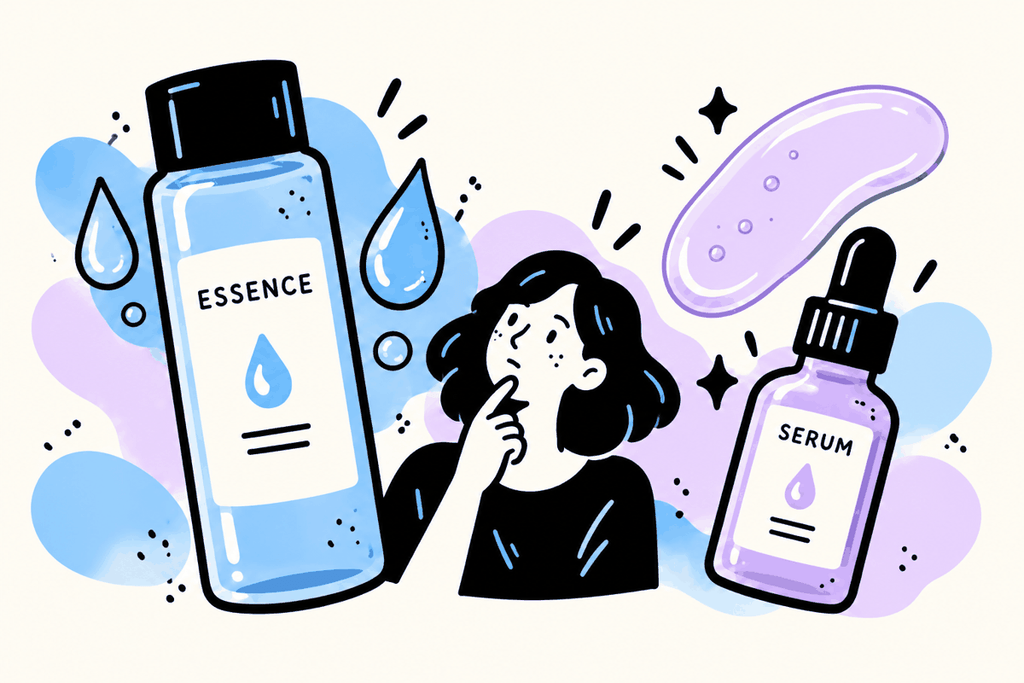
Few Korean skincare terms confuse beginners as consistently as “essence” versus “serum.” Both sit in a similar spot in a routine, both are marketed with similarly concentrated, treatment-oriented language, and the line between them is blurrier than most product marketing admits. Here’s the clearest possible breakdown.
This article is general information, not medical advice. If you’re dealing with persistent acne, rosacea, eczema or another skin condition, please see a dermatologist.
Where the Confusion Comes From
Unlike more universally standardized skincare categories (cleanser, moisturizer, sunscreen), “essence” and “serum” don’t have strict, universally agreed-upon technical definitions even within the Korean cosmetics industry. Brands apply the labels somewhat inconsistently, and a product one brand calls an “essence” might be formulated similarly to what another brand calls a “serum.” That said, some genuine, useful distinctions do generally hold.
Essence: The General Pattern
Essences, as discussed in our 10-step routine guide, generally sit earlier in a routine (right after toner) and tend toward:
- Thinner, more water-like textures
- Broader, less targeted benefits. Typically general hydration and “skin prep” rather than addressing one specific concern
- Lower active ingredient concentrations. Designed to be used liberally and frequently without overloading the skin
- A functional role of improving how well subsequent products absorb, sometimes described as “priming” the skin
The classic example, SK-II’s Facial Treatment Essence, established much of the international perception of what an essence should be, meaning extremely thin, almost water-like, with a broad hydration and “skin conditioning” purpose rather than one specific targeted claim.
Serum: The General Pattern
Serums, by contrast, tend toward:
- Thicker, more concentrated textures, though this varies significantly by specific product
- A specific, named target concern. Brightening, hydration, anti-aging, pore care
- Higher concentrations of one or a few active ingredients, positioned as the routine’s primary treatment step
- More deliberate, often twice-daily rather than “as needed” use
Most of the product reviews on this blog (Torriden’s hyaluronic acid serum, Purito‘s Centella serum) fall into this more targeted, concentrated category.
Where the Line Blurs
Some products marketed as “essence” are functionally closer to a light serum, and vice versa. A few genuine examples of this ambiguity:
- COSRX’s Advanced Snail 96 Mucin Power Essence, reviewed in depth in our dedicated post, has a notably more substantial, treatment-oriented formulation than the “thin, general hydration” essence archetype suggests, blurring toward serum territory
- Some brands use “essence” simply as a marketing term to differentiate a product from competitors’ “serums,” without a meaningful formulation distinction
Does the Order Actually Matter?
Within Korean routine philosophy, yes, generally. Thinner products go before thicker ones to ensure proper absorption, a principle covered throughout our 10-step routine guide. In practice, this means:
- Toner (thinnest)
- Essence (thin-to-medium)
- Serum/ampoule (medium-to-thick, most concentrated)
- Moisturizer (thickest, sealing layer)
If you’re unsure whether a specific product functions more like an essence or serum, texture is the most practical guide. Apply thinner, more watery products before thicker, more concentrated ones regardless of how the product is labeled.
Do You Need Both an Essence AND a Serum?
Not necessarily. As covered in our minimalist routine guide, many effective routines skip a dedicated essence step entirely, relying on a well-chosen serum (and sufficiently hydrating toner) to cover both hydration-priming and targeted treatment functions. The full essence-then-serum sequence is more associated with the complete 10-step routine than a genuine universal requirement.
How to Decide What You Actually Need
- If your skin is generally healthy with no acute concern: a hydrating essence alone may be sufficient, without needing an additional targeted serum
- If you have a specific concern (brightening, acne, anti-aging): prioritize a well-formulated serum targeting that concern; an essence becomes a nice-to-have hydration layer rather than essential
- If budget or routine simplicity matters: skip essence and rely on a versatile serum plus a sufficiently hydrating toner, as covered in our minimalist and 4-week beginner routine guides
A Few More Questions
Can I use an essence and serum from different brands together? Yes, without issue. There’s no requirement to stick to one brand’s product line, and many Korean routines intentionally mix brands based on each product’s specific strengths.
Is ampoule the same as serum? Ampoules are generally understood as an even more concentrated version of a serum, often meant for shorter-term, intensive use rather than daily long-term application, though this distinction is also inconsistently applied across brands.
Should essence or serum go closer to my skin in the routine? Essence generally goes first (closer to toner), with serum following, based on the thin-to-thick layering principle, though if a specific “essence” product is actually formulated thicker than your serum, apply based on actual texture rather than the product category label.
To see how an essence behaves in daily use, read my review of the COSRX Advanced Snail 96 Mucin Power Essence.
Choosing Between Essence and Serum
The essence-versus-serum distinction is a useful organizing concept in Korean skincare philosophy, but it’s not a strictly enforced technical standard. Texture and concentration matter more than the specific label a brand chooses. When building or simplifying a routine, focus on what each product actually does and how it feels, rather than getting caught up in whether something is “correctly” categorized as one or the other.
Related reading: COSRX The 6 Peptide Skin Booster Review: A Gentle First Step, Not a Miracle
Read Next
Double Cleansing Method: Why Koreans Wash Their Face Twice
Double cleansing means using a makeup-removal step, often a cleansing oil or balm, followed by…
Why Sheet Masks Are Everywhere in Korea (And How to Actually Use Them)
Sheet masks are one of the most immediately recognizable K-beauty exports, thin, essence-soaked sheets sold…
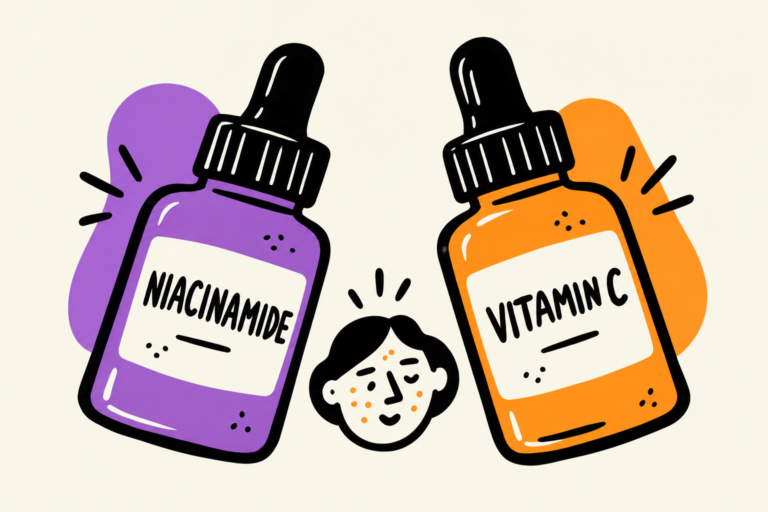
Niacinamide or Vitamin C: Which Should You Start With for Uneven Tone?
This is a common question when starting a Korean routine, and it usually comes up…
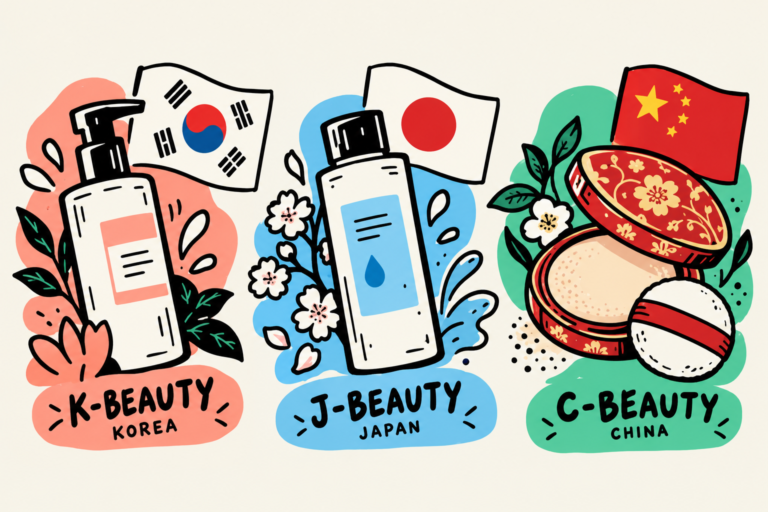
K-Beauty vs J-Beauty vs C-Beauty: Market Comparison
K-beauty means Korean beauty, J-beauty Japanese beauty and C-beauty Chinese beauty. These labels identify markets…
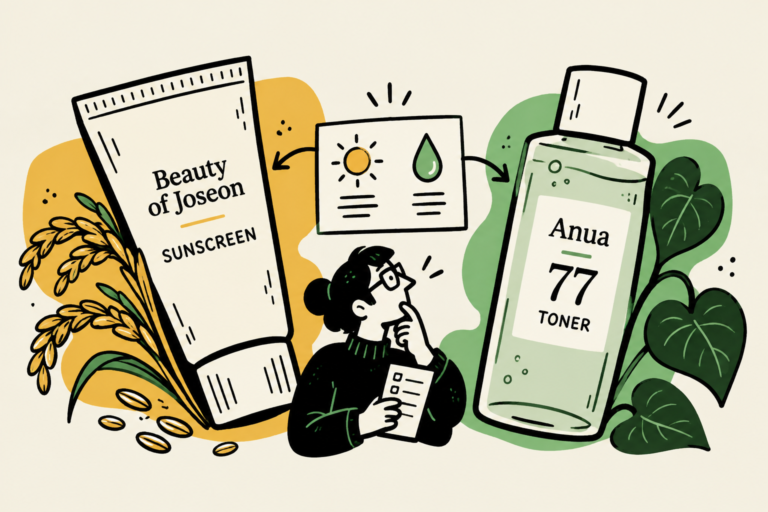
Beauty of Joseon vs Anua, a Product Pick Guide
This is a pick guide rather than a verdict on which brand is better. It…
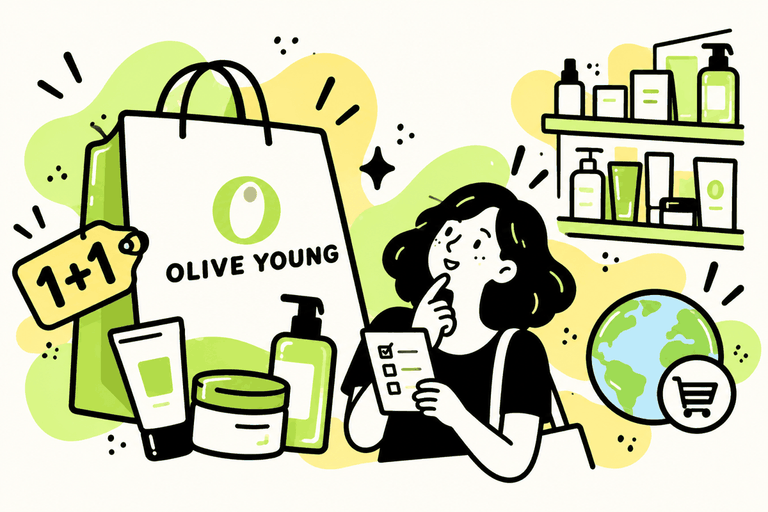
Olive Young Shopping Guide for First-Time Visitors
Olive Young is Korea’s dominant beauty and health retail chain, and for anyone visiting Korea…