Ceramides Explained: The Ingredient Behind Every Barrier Cream
Ceramides don’t generate viral hype the way snail mucin or Centella asiatica do, but they’re arguably more fundamental to skin health than either. They’re literally the structural “mortar” holding the skin barrier together, a concept covered throughout our skin barrier repair guide. Understanding ceramides helps explain why so many Korean moisturizers list them prominently, even in products not specifically marketed around barrier repair.
This article is general information, not medical advice. If you’re dealing with persistent acne, rosacea, eczema or another skin condition, please see a dermatologist.
What Ceramides Actually Are
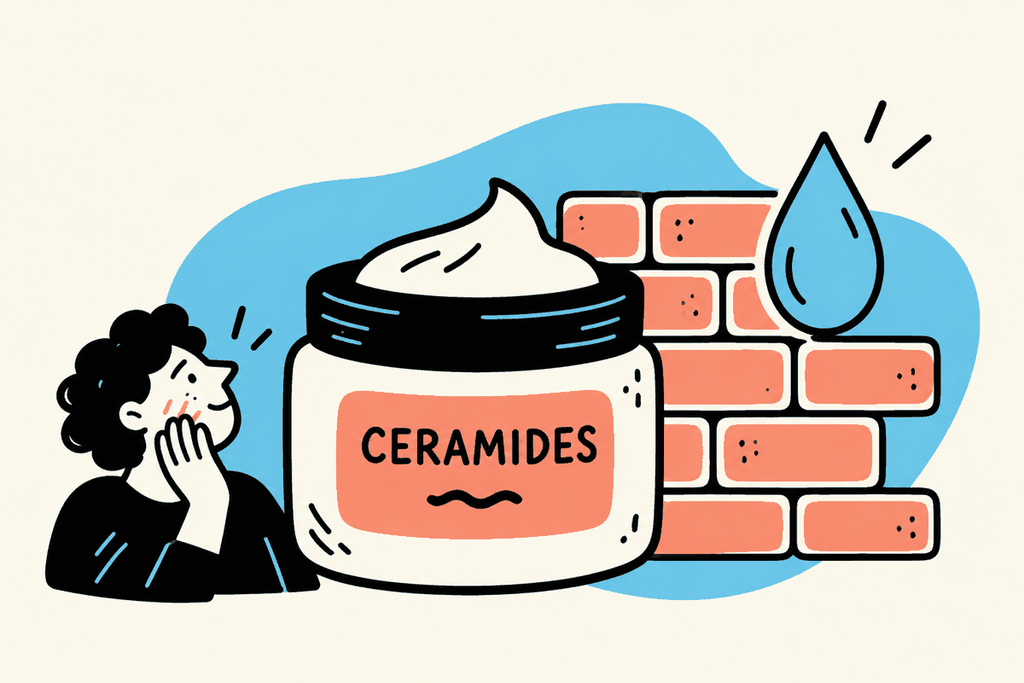
Ceramides are a family of lipid (fat) molecules naturally present in the outermost layer of skin, making up a significant portion of the skin barrier’s structure alongside cholesterol and fatty acids. In the widely-used “brick and mortar” model of skin structure, skin cells are the bricks and ceramides (along with the other lipids) are the mortar holding them together, sealing in moisture and keeping irritants out.
Why Skin Loses Ceramides Over Time
Natural ceramide levels decline with age, and can also be depleted more immediately by over-cleansing, over-exfoliation, harsh weather, and excessive use of drying actives, all factors discussed in our double cleansing and skin barrier repair posts. This depletion is a major reason aging and compromised skin often feels drier and more reactive: the structural “mortar” holding the barrier together is simply less abundant.
Why Korean Formulations Emphasize Ceramides So Heavily
Korean skincare’s barrier-first philosophy, discussed throughout this blog, makes ceramides a natural fit for heavy formulation emphasis, since barrier health is treated as the foundation everything else depends on, directly replenishing the barrier’s structural lipids is treated as more fundamentally important than many trend-driven active ingredients. This is part of why ceramide-forward products are recommended so consistently for both prevention (general daily use) and recovery (active barrier damage), rather than being positioned as a niche, specific-concern ingredient.
Types of Ceramides in Skincare
Cosmetic ceramides are typically labeled with a number-letter code (Ceramide NP, Ceramide AP, Ceramide EOP, and so on), reflecting different specific lipid structures. For most consumers, the specific type matters less than the overall formulation quality and concentration. A well-formulated multi-ceramide product with supporting cholesterol and fatty acids tends to outperform a single-ceramide product regardless of which specific type is used, since the “brick and mortar” structure requires several lipid types working together.
Does the Science Hold Up?
Yes, more robustly than many trending K-beauty ingredients. Ceramide research has decades of dermatological backing, including clinical use in prescription barrier-repair treatments for conditions like eczema and severe dryness. This makes ceramides one of the more scientifically uncontroversial ingredients covered on this blog.
Popular Korean Ceramide Products
- Illiyoon Ceramide Ato Concentrate Cream. Widely recommended by Korean dermatology-adjacent sources specifically for barrier-compromised and eczema-prone skin, referenced in several routine guides on this blog
- Dr. Jart+ Ceramidin Cream. A more premium option pairing ceramides with the brand’s broader barrier-repair positioning
- COSRX Balancium Comfort Ceramide Cream. A budget-friendly option consistent with COSRX’s short-ingredient-list formulation philosophy
Who Should Prioritize Ceramide Products
Nearly everyone benefits from adequate ceramide support, but it’s especially important for:
- Dry, mature, or environmentally-stressed skin
- Anyone recovering from over-exfoliation or barrier damage, as covered in our dedicated repair guide
- Users of strong actives (retinoids, acids) who need barrier reinforcement to tolerate them well
- Eczema-prone or highly reactive skin
Ceramides Work Best as a Team: The Lipid Trio
Your skin barrier is not made of ceramides alone. The outer layer relies on three types of lipids in roughly comparable amounts: ceramides, cholesterol and free fatty acids. Barrier-repair research has often used mixtures where these are balanced, and many dermatology-developed moisturizers follow the same logic. This is why a cream listing ceramides together with cholesterol and fatty acids tends to be a better barrier product than one that adds a single ceramide for the label.
If a product lists only one ceramide very low in the ingredient list, it may still be a pleasant moisturizer, but it may not be doing much specific barrier work beyond ordinary hydration, although list position alone cannot confirm that.
How to Read Ceramide Names on a Label
Ceramides appear under codes on ingredient lists, which can look confusing at first. The ones you will see most are Ceramide NP, Ceramide AP, Ceramide EOP, Ceramide NS and Ceramide AS. They are different molecular forms that all mimic lipids found naturally in skin. Some Korean products also use Phytosphingosine, a related building block the skin can convert into ceramides. Seeing several of these together is a reasonable sign of a formula designed around barrier repair.
What to Expect, and When
- Within days: skin often feels less tight and rough after moisturizing, mostly from the emollients and humectants in the cream.
- Over two to four weeks: with consistent use, many people notice less flaking and reduced stinging from other products. This is a typical barrier-recovery window, not a guarantee.
- Not a fast fix for acne or pigmentation: ceramides support the barrier, they do not treat those concerns directly.
If your skin is very reactive, redness is persistent or you suspect eczema or dermatitis, ceramide creams can be a helpful supportive step, but a dermatologist should guide the main plan.
Common Mistakes with Ceramide Products
- Layering a ceramide cream over active irritation without pausing strong exfoliants or retinoids first.
- Expecting a toner or light essence containing ceramides to replace a proper moisturizer.
- Judging the product after two or three uses instead of giving it a few weeks.
How to Incorporate Ceramides Into a Routine
Ceramide products typically function best as a moisturizer-step product, the final or near-final layer in a routine, sealing in the hydration and actives applied beneath it. This aligns with the general Korean layering logic covered in our 10-step routine guide, where richer, more occlusive products come later in the sequence.
Still Wondering?
Can oily skin use ceramide products, or is this only for dry skin?
Yes. Ceramides support barrier function regardless of oil production level, and lighter ceramide-formulated gel-creams exist specifically for oilier skin types.
Are ceramides vegan?
Cosmetic ceramides are typically synthetically produced or derived from plant sources (not animal), making most ceramide skincare products vegan-friendly, unlike animal-derived ingredients such as snail mucin or propolis covered elsewhere on this blog.
How long before ceramide products show results?
Barrier repair is generally a gradual process, with most users reporting noticeable improvement in comfort and hydration retention over 2-4 weeks of consistent use.
Should You Care About Ceramides?
Ceramides may lack the viral marketing appeal of trendier K-beauty ingredients, but they represent some of the most scientifically solid, foundationally important formulation science in the entire category, essential for anyone prioritizing long-term skin barrier health over short-term trend-chasing.
Read Next
What Does “Emulsify” Mean in Skincare? A Cleansing Oil Explainer
In cleansing-oil instructions, “emulsify” means adding water and gently working it through the cleanser so…
Propolis in Korean Skincare Explained: Benefits, Products, and How to Use It
Propolis has quietly become one of the more consistently used ingredients across Korean skincare’s brightening…
Mugwort (Ssuk) in Korean Skincare: What the Research Supports and Who Should Skip It
Mugwort is a Korean spring food turned skincare staple. Here’s which Artemisia is on your label, what the studies show, how it compares with centella and heartleaf, and who should be careful.
Niacinamide vs Vitamin C: Which Should You Use First in Your Routine?
Walk into any Olive Young store in Korea and you’ll find entire endcaps dedicated to…
What Is Cica? Centella Asiatica Meaning, Benefits, and How to Use It
If snail mucin was the ingredient that introduced the world to K-beauty in the late…
What Is Snail Mucin and Why Is It in Every K-Beauty Product?
If you’ve spent more than five minutes browsing a K-beauty section, whether that’s a shelf…