Propolis in Korean Skincare Explained: Benefits, Products, and How to Use It
Propolis has quietly become one of the more consistently used ingredients across Korean skincare’s brightening and soothing product categories, without ever quite reaching the viral peak of snail mucin or Centella asiatica. That relative under-the-radar status doesn’t reflect a lack of merit. Propolis has an interesting formulation profile worth understanding.
This article is general information, not medical advice. If you’re dealing with persistent acne, rosacea, eczema or another skin condition, please see a dermatologist.
What Propolis Actually Is
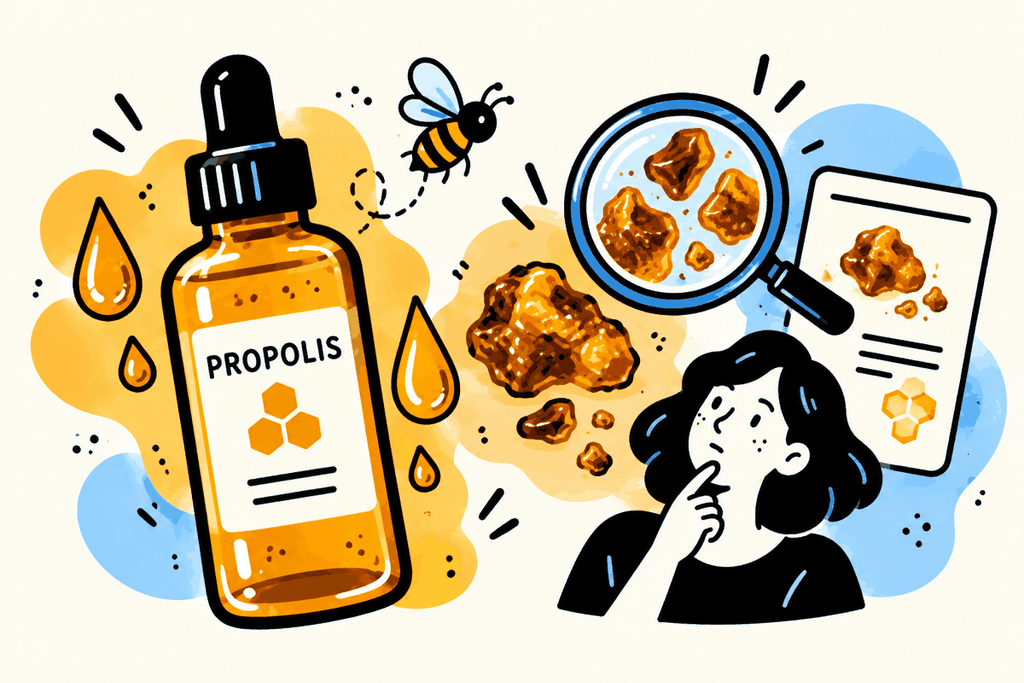
Propolis is a resin-like substance bees create by combining their own secretions with tree sap and botanical material, using it to seal and protect the hive from pathogens and environmental threats. Its use in skincare draws on this natural antimicrobial, protective function, applied to human skin barrier support rather than beehive maintenance.
Why Korean Brands Adopted It So Widely
Propolis fits neatly into two major pillars of Korean skincare philosophy simultaneously: brightening (covered in our niacinamide/vitamin C post) and barrier support (covered in our skin barrier repair guide). Few single ingredients credibly serve both roles, which is part of why propolis shows up across such a wide range of Korean product categories, such as serums, essences, sleeping masks, and even sunscreens.
The Active Compounds
Propolis contains a complex mixture of compounds, though research attention has focused most on:
- Flavonoids. Associated with antioxidant and anti-inflammatory properties
- Phenolic acids. Contribute to propolis’s antimicrobial reputation
- Amino acids and vitamins. Supporting general skin nourishment claims
The exact composition varies significantly based on the specific bee species, geographic region, and plant sources involved, which is part of why some premium Korean propolis products emphasize sourcing details (Korean propolis specifically, or specific regional harvests) as a differentiation point.
Does the Science Hold Up?
Propolis has a longer history of general antimicrobial and wound-healing research (including in traditional medicine contexts well beyond Korea) than some more recently trending K-beauty ingredients, giving it a reasonably solid, if not spectacular, evidence base for:
- Mild antibacterial and anti-inflammatory effects, relevant to acne-prone and irritated skin
- Antioxidant activity, supporting general anti-aging and environmental protection claims
- Some evidence for wound-healing support, echoing snail mucin’s similar (though chemically distinct) reputation
As with most K-beauty “hero ingredients,” the brightening and dramatic anti-aging claims attached to propolis in marketing outpace the more modest, supported benefits. Propolis is useful, but not a miracle ingredient.
Popular Korean Propolis Products
- Beauty of Joseon Glow Serum: Propolis + Niacinamide. Pairs propolis with niacinamide for a combined brightening approach, one of the most internationally recognized propolis-forward Korean products
- Skinfood Royal Honey Propolis Enrich Essence. An older, well-established Korean product combining propolis with honey for a dual soothing-and-nourishing formula
- COSRX Propolis Light Ampule. A lighter-weight option positioned for oily and combination skin specifically, addressing the common (and largely unfounded) concern that propolis products feel heavy
Who Should Use Propolis Products
Good candidates: those seeking a dual-purpose brightening-and-soothing ingredient, acne-prone skin dealing with inflammation, and anyone wanting an alternative brightening ingredient to niacinamide or vitamin C.
Use with caution: those with bee product allergies (propolis, like honey and royal jelly, carries a genuine allergy risk for a subset of people) should patch test carefully or avoid entirely if prior reactions to bee products are known.
Reading a Propolis Label
The word “propolis” on the front of a bottle tells you little about how much is inside. On the back, look for Propolis Extract (sometimes listed as Propolis Cera for the wax form) and check where it sits in the ingredient list. Ingredients are listed from highest to lowest concentration, so a propolis extract near the top suggests a meaningful amount, while one listed after the preservatives is likely present in a small quantity. Many propolis extracts are made with an alcohol or glycol base, which is worth knowing if your skin reacts to those.
Brands rarely publish exact percentages, and a high-sounding number on the box (for example “60% propolis extract”) describes the extract, not the pure resin, so it is not comparable between products. Treat claims as a starting point and judge the formula by how your skin responds over several weeks.
Propolis Allergy and Patch Testing
Propolis is a recognized contact allergen in dermatology, and people who react to bee products, balsam of Peru or certain fragrances can be more likely to react to it. Reactions usually show up as redness, itching or a rash where the product was applied, and they can appear a day or two after use rather than immediately.
- Test a small amount on the inner forearm or behind the ear once a day for three to four days before using it on your face.
- Introduce one new active at a time so you can tell what caused a reaction.
- Stop use if you notice stinging that lingers, swelling or a spreading rash, and see a doctor if it does not settle.
If you already know you react to honey, royal jelly or bee venom products, it is sensible to skip propolis or ask a dermatologist first.
Propolis vs Niacinamide vs Centella: Which Job Does Each Do?
| Ingredient | Best known for | Good fit when |
|---|---|---|
| Propolis | Soothing and mild antibacterial reputation, plus antioxidants | Skin is irritated or breakout-prone and you tolerate bee products |
| Niacinamide | Barrier support, oil balance, uneven tone | You want one daily ingredient for texture and tone |
| Centella asiatica | Calming redness and supporting a stressed barrier | Skin is reactive and you want the gentlest option |
These are not rivals. Many Korean routines layer a propolis essence under a niacinamide or centella product, but if your skin is sensitive, start with the simplest single product and add from there.
How to Incorporate Propolis Into a Routine
Propolis products span the full range of Korean routine steps (essence, serum, sleeping mask), so placement depends on the specific product format. As a general guide, lighter propolis essences or serums slot into the mid-routine treatment step (after toner, before heavier moisturizer), consistent with the layering logic covered in our 10-step routine guide.
Is propolis vegan?
No. As a bee-derived product, propolis is not vegan, similar to honey and royal jelly. Vegan-focused Korean skincare lines typically substitute plant-based alternatives.
Can I use propolis with niacinamide or vitamin C?
Yes, and this is a common intentional pairing in Korean formulations (like Beauty of Joseon’s Glow Serum), since the ingredients’ brightening mechanisms are complementary rather than conflicting.
Does propolis have a strong scent?
Some formulations retain a mild honey-like or resinous scent depending on purity and concentration, though most cosmetic-grade propolis extracts are processed to minimize strong odor.
Propolis occupies a useful, if less viral, niche in Korean skincare, a dual brightening-and-soothing ingredient with a reasonably solid traditional and modern research basis, worth considering as an alternative or complement to more famous K-beauty actives like niacinamide or Centella asiatica.
Read Next
Ceramides Explained: The Ingredient Behind Every Barrier Cream
Ceramides don’t generate viral hype the way snail mucin or Centella asiatica do, but they’re…
What’s Actually in a Korean Cleansing Oil? Ingredients Explained
Cleansing oils look deceptively simple on the ingredient label, often just a handful of oil…
What Does “Hanbang” Mean in Korean Skincare?
“Hanbang” appears constantly in Korean skincare marketing (printed on packaging, used in brand descriptions, referenced…
What Is Cica? Centella Asiatica Meaning, Benefits, and How to Use It
If snail mucin was the ingredient that introduced the world to K-beauty in the late…
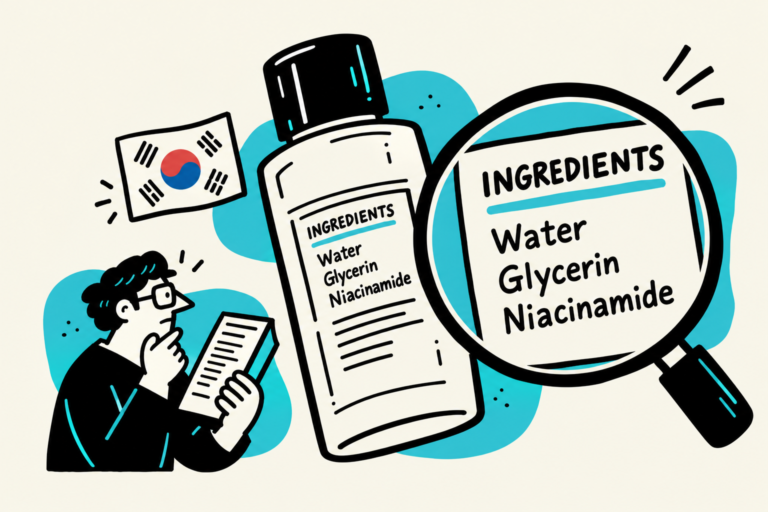
How to Read a Korean Skincare Ingredient List (And Spot a Fake Hero Ingredient)
A serum named after an ingredient does not have to contain much of it. That…
What Does “Emulsify” Mean in Skincare? A Cleansing Oil Explainer
In cleansing-oil instructions, “emulsify” means adding water and gently working it through the cleanser so…