Minimalist K-Beauty Routine: 5 Steps for Beginners
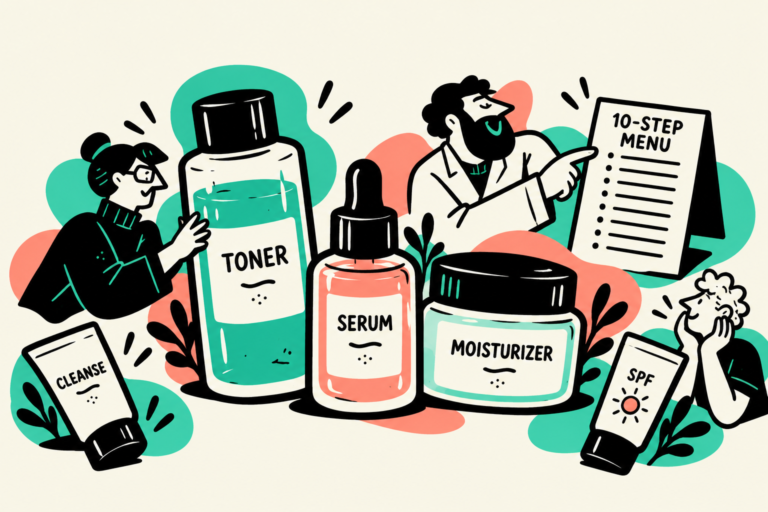
The 10-step routine gets all the international attention, but it can be intimidating for beginners, and it’s worth knowing that even in Korea, a real shift toward simplified routines has been happening for the past several years. This “skinimalism” trend (미니멀 스킨케어, “minimal skincare”) reflects growing awareness that more products isn’t always better, especially for skin barrier health. Here’s a effective 5-step version that keeps the core Korean skincare philosophy intact.
Why Simplify?
There are a few real reasons a simplified routine makes sense, not just for beginners but for anyone:
- Lower risk of over-exfoliation or ingredient conflicts. More products means more chances of accidentally stacking incompatible or redundant actives.
- Easier to identify what’s causing irritation. If a reaction occurs, a 5-product routine is far easier to troubleshoot than a 10-product one.
- More sustainable long-term. Consistency matters more than complexity in skincare, and a shorter routine is simply easier to actually stick with daily.
- Reflects a genuine shift in Korean skincare culture itself. Younger Korean consumers, in particular, have been moving toward “저자극” (jeojageuk, “low-irritation”) minimalist routines, partly as a reaction against the perceived excess of the 10-step trend during its international peak.
The 5 Steps
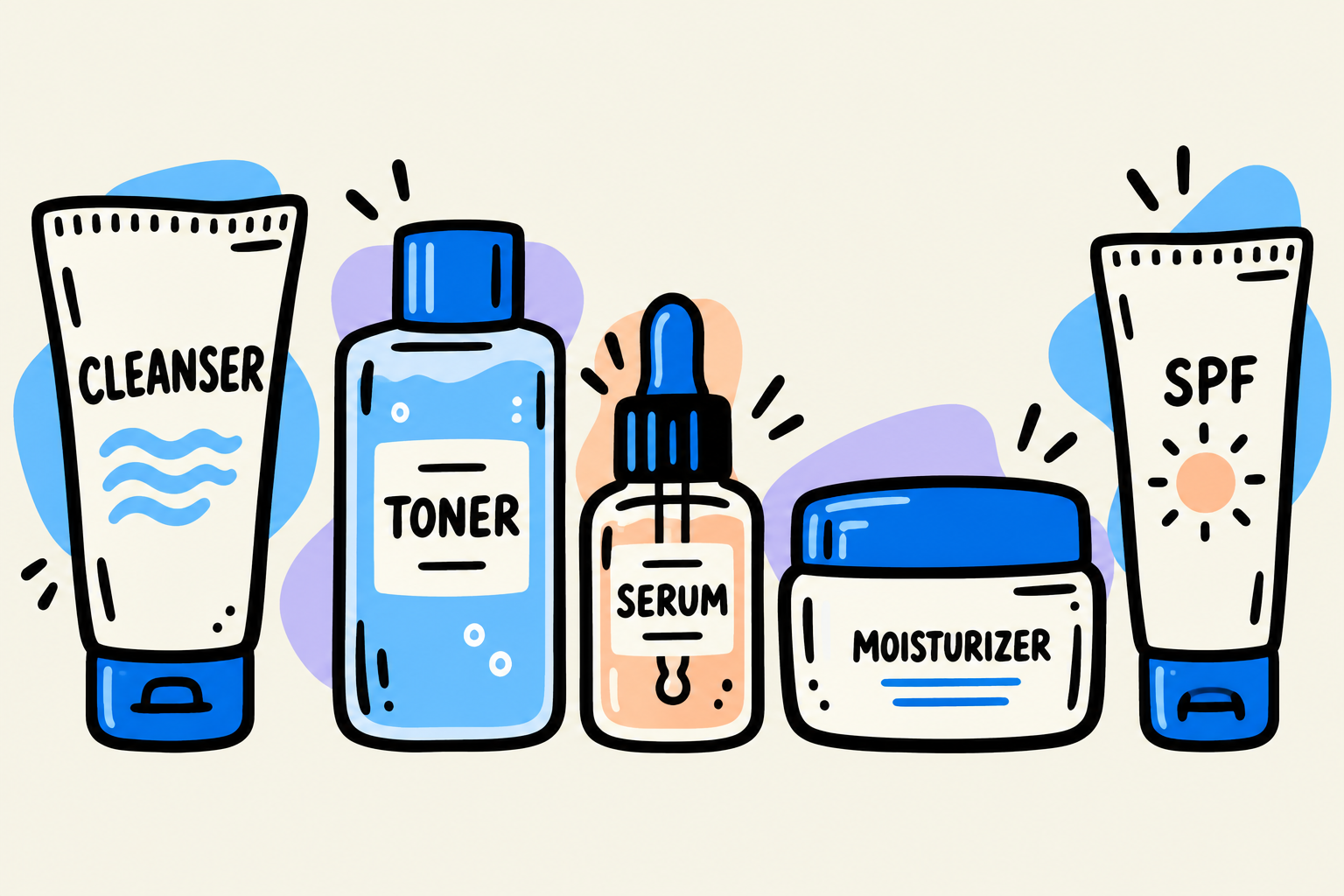
1. Cleanser
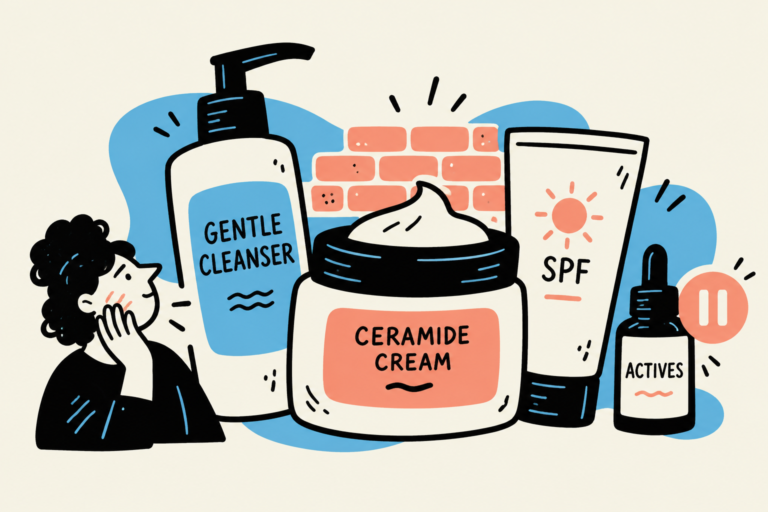
A single, gentle, low-pH cleanser is sufficient for most days if you’re not wearing heavy makeup or sunscreen. Save double cleansing for evenings when you wore makeup or a long-wear or water-resistant sunscreen, and skip it when your skin is irritated.
Recommended: Pyunkang Yul Low pH Pore Deep Cleansing Foam, a widely recommended Korean beginner cleanser known for its gentle, barrier-friendly formulation.
2. Toner
Serves double duty in a minimalist routine, rebalancing skin pH after cleansing and providing a light layer of hydration to prep the skin for the next step.
Recommended: Round Lab Birch Juice Moisturizing Toner, a versatile option suitable across most skin types.
3. Serum (Pick One Active Based on Your Main Concern)
This is the step where you customize the routine to your specific skin goal, rather than layering multiple targeted treatments.
- For hydration/dehydration: hyaluronic acid serum
- For dullness/tone: vitamin C or niacinamide serum
- For sensitivity/redness: Centella asiatica (Cica) serum
- For texture/pores: a gentle BHA or PHA formulation, used a few times weekly rather than daily
4. Moisturizer
Seals in hydration from the previous steps and provides a protective barrier layer.
Recommended: Illiyoon Ceramide Ato Concentrate Cream for drier skin, or Belif Aqua Bomb for oilier/combination skin.
5. Sunscreen (AM only)
The one step that should never be cut, regardless of how minimal the rest of your routine gets.
Recommended: Beauty of Joseon Relief Sun: Rice + Probiotics SPF50+, widely regarded as one of the most beginner-friendly, lightweight Korean sunscreens available.
What Gets Cut (and Why That’s Okay)
- Essence: beneficial but not essential. A well-chosen serum can absorb the essence step’s job of “prepping” the skin if your toner is sufficiently hydrating.
- Ampoules: highly concentrated treatments best reserved for specific concerns or occasional intensive care, not a daily necessity.
- Sheet masks: wonderful as an occasional (1-2x weekly) treat, but not required for baseline skin health.
- Eye cream: useful for specific concerns (fine lines, dark circles) but skippable if your face moisturizer already reaches close to the eye area and you have no specific eye-area concern yet.
When to Consider Adding Steps Back
A minimalist routine is a starting point, not a permanent ceiling. Signs you might benefit from adding a step:
- Your skin plateaus and stops improving after a few months on the basics. This might be the point to add a targeted treatment or exfoliant.
- You develop a specific new concern (like sun spots, or a breakout) that the general routine isn’t addressing.
- You want to layer in a sheet mask or ampoule occasionally for extra hydration during particularly dry seasons.
Building the Routine Gradually
Korean skincare culture generally favors introducing one new product at a time and monitoring for 1-2 weeks before adding the next, rather than starting an entire routine at once. A reasonable build-up order for a total beginner:
- Week 1-2: Cleanser + moisturizer + sunscreen only (this is the shortest version; if you want an even slower start, my 4-week plan begins with cleanser and sunscreen only and adds moisturizer in week 3)
- Week 3-4: Add toner
- Week 5-6: Add a single serum targeting your main concern
- Ongoing: Adjust based on how your skin responds, adding exfoliants or additional treatments only as needed
A Note on Budget
One underrated benefit of a minimalist routine: it’s considerably cheaper. Korean drugstore brands like Round Lab, COSRX, Pyunkang Yul, and Beauty of Joseon are specifically known for offering effective formulations at accessible price points (prices vary by retailer and region), which can keep a full 5-step routine affordable compared with many prestige Western skincare lines.
Questions Readers Often Ask
Is a 5-step routine “real” K-beauty, or is that only the full 10 steps? The 5-step version reflects genuine, current Korean skincare habits just as much as the 10-step version does. The “skinimalism” trend is a real and significant shift within Korean skincare culture itself, not a Western simplification of it.
Can I do a minimalist routine and still get “glass skin” results? Yes, though it typically takes longer and requires more consistency, since you’re relying on fewer, more targeted products rather than multiple layers of hydration and treatment doing the work simultaneously. For what the term actually means, see our glass skin explainer.
Should morning and evening routines be identical in a minimalist approach? Not quite. Sunscreen is AM-only, and evenings are a better time for any exfoliating or more potent treatment steps, since UV exposure isn’t a concern at night.
How do I know if my minimalist routine isn’t working? Give any new routine at least 4-6 weeks before judging results, since most active ingredients take that long to show visible change. If skin concerns worsen rather than plateau or improve, that’s a sign to simplify further or consult a dermatologist rather than add more products.
Adjusting It to Your Skin
A minimalist K-beauty routine isn’t a lesser version of “real” Korean skincare. It reflects a real and growing movement within Korean skincare culture itself, prioritizing consistency and barrier health over product quantity. Five well-chosen steps, done consistently, will typically outperform ten steps done inconsistently or layered without real purpose.
Related reading: Building a K-Beauty Routine From Scratch: A 4-Week Plan · Morning vs Night K-Beauty Routine: What’s the Difference? · Olive Young Shopping Guide for First-Time Visitors · Why Korean Beauty Trends Cycle So Fast
Read Next
Seeing a GP After Glycolic Acid Barrier Damage (My Barrier Recovery Diary, Part 2)
After months of slow recovery from glycolic acid damage, I saw a GP on October 9. Here is what I was told, what my routine looks like now, and how the first week of treatment has gone.
How Many Actives Is Too Many? A Simple Rule for Layering
There is a stage in most people’s skincare that I think of as the accumulation…
How to Repair a Damaged Skin Barrier: A Korean-Style Recovery Routine
“피부장벽” (pibu jangbyeok, “skin barrier”) is one of the most frequently used terms in Korean…
Choosing Skincare by Moisture Weight, Not Marketing Claims
Why the real reason a product does or does not work for your skin often comes down to a simple 1-to-3 moisture-weight mismatch, not the ingredient list.
The 10-Step Korean Skincare Routine, Explained Simply (and the 3 Steps I Actually Use)
The “10-step Korean skincare routine” is probably the single most famous export of K-beauty culture,…
K-Beauty Routine for Oily/Acne-Prone Skin
A Korean-style routine for oily or acne-prone skin can be simple: gentle cleansing, a moisturizer…