What Does “Emulsify” Mean in Skincare? A Cleansing Oil Explainer
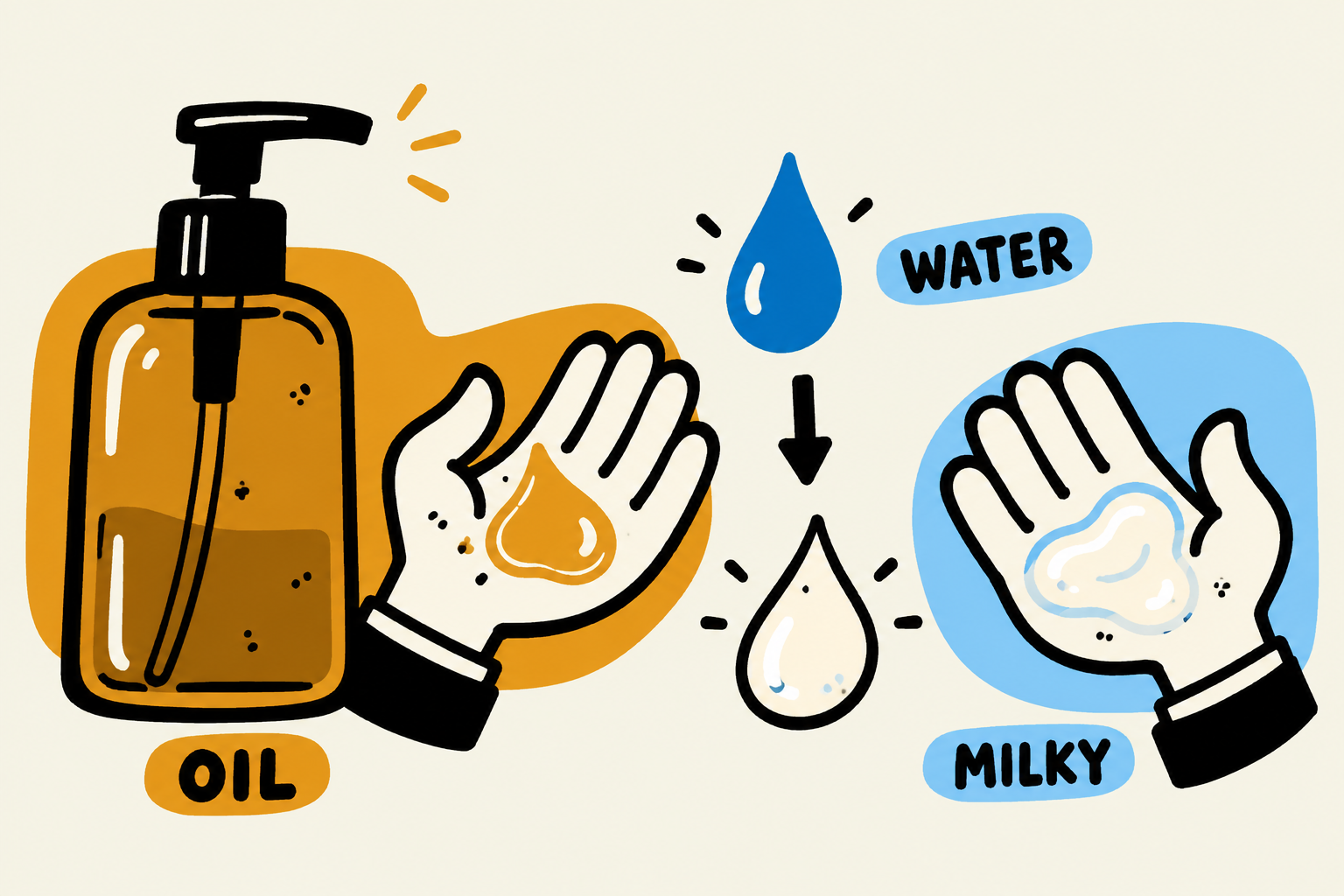
In cleansing-oil instructions, “emulsify” means adding water and gently working it through the cleanser so the oil-rich product disperses and can be rinsed away. Many oils and balms turn milky during this step. Follow the exact product directions; milkiness is a useful visual cue, not a universal quality test.
What Changes When You Add Water?
A formulated cleansing oil or balm contains ingredients that help oil and water mix during use. Adding water creates a dispersion rather than leaving a layer of plain oil floating on the surface. This helps carry loosened makeup and product away during rinsing.
The rinse-stage mixture does not need to be described as permanently stable. Products can differ in how cloudy they become, how much water they need and how they feel as they rinse. A dramatic white colour is not a measurement of cleansing performance.
For the ingredient roles, see the cleansing-oil ingredient guide. Ingredient names such as polyglyceryl esters are clues to formulation roles, not a stand-alone rating of the cleanser.
How to Emulsify: A Product-Based Example
Banila Co’s published instructions for Clean It Zero Original describe a dry-skin application followed by water and rinsing. This is manufacturer guidance, not a test I performed for this article.
| Step | What to do | What to avoid |
|---|---|---|
| 1. Apply | Use the product’s stated amount and starting conditions. For the Banila example, apply on dry skin. | Assuming every remover must start dry. |
| 2. Spread | Massage gently to distribute the product and loosen makeup. | A fixed long massage or harsh rubbing. |
| 3. Add water | Work water through the cleanser as directed. Many formulas become cloudy. | Treating colour alone as proof of complete removal. |
| 4. Rinse | Rinse thoroughly with the water temperature directed by the brand. | Prolonging washing until the skin feels squeaky. |
If your cleanser gives a different method, its instructions take priority over this example. Eye-area and contact-lens precautions also vary. Do not massage around the eyes just because another cleanser’s tutorial does so.
Oil, Balm, Milk and Micellar Water
| Product type | How to read the instructions |
|---|---|
| Cleansing oil | Often applied before water, then dispersed and rinsed. Check for wet-use exceptions. |
| Cleansing balm | Often spreads into an oil-rich texture, then uses water for rinsing. |
| Cleansing milk or lotion | Already has a different emulsion format. It may be rinsed or wiped off according to its label. |
| Micellar water | Apply and remove as directed. Do not assume its directions are identical to cleansing oil. |
Plain oils do not necessarily have the same rinse-off system as a formulated cleanser. A cleanser’s ability to emulsify and your need for another cleansing step are also separate questions. See the double-cleansing guide.
If the Oil Does Not Turn Milky
First read the instructions and confirm the product type. Some formulas may look less opaque than others. Lack of a dramatic colour change does not establish poor quality, and adding water early does not mean the emulsifier has stopped working.
Starting with water when the label specifies dry application can change how the cleanser spreads and contacts makeup. That is a reason to follow its method, not proof of failed emulsification. Avoid repeatedly adding product and rubbing harder to force a white colour.
If Skin Feels Slippery or Tight Afterwards
A slippery feel may reflect residual cleanser or the formula’s after-feel. Rinse as directed and assess whether the cleanser is removing your actual products comfortably. Do not diagnose every breakout as poorly emulsified residue.
Tightness or stinging can involve the formula, contact time, rubbing, water temperature or another cleansing step. It is not evidence that you need to cleanse more vigorously. Simplify or discontinue a product that consistently makes the routine uncomfortable.
If a new cleanser is followed by persistent breakouts or a concerning reaction, reassess it rather than trying to “push through” by massaging longer. A lotion or balm is not inherently safer than an oil. Seek advice for ongoing skin concerns.
Common Mistakes Worth Avoiding
Using a method from a different product; extending massage time to chase a colour change; adding a second cleanser automatically; and judging removal only by a squeaky feel. The goal is adequate removal with tolerable use, not the longest possible cleansing routine.
Use enough product to spread comfortably according to the label. The right amount depends on the formula and what you are removing, so “two pumps for everyone” is not a universal rule. Never use hot water as a way to compensate for uncomfortable rinsing.
Quick Answers
Can I skip adding water? If the product directs you to add water before rinsing, follow that step. Direct rinsing still introduces water, but may not match the intended method.
Does self-emulsifying mean water is unnecessary? No. Read the label. The term describes the formulation, not permission to leave cleanser on the skin.
Does every oil need a second cleanser? No. The need depends on the remover, your products and your skin.
Is a milkier cleanser better? Not necessarily. Cloudiness is not a standardized performance score.
Read Next
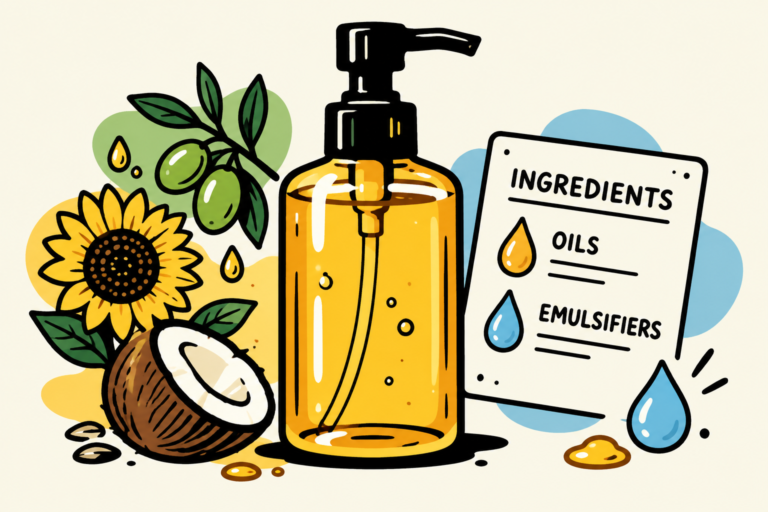
What’s Actually in a Korean Cleansing Oil? Ingredients Explained
Cleansing oils look deceptively simple on the ingredient label, often just a handful of oil…
What Is Cica? Centella Asiatica Meaning, Benefits, and How to Use It
If snail mucin was the ingredient that introduced the world to K-beauty in the late…
Mugwort (Ssuk) in Korean Skincare: What the Research Supports and Who Should Skip It
Mugwort is a Korean spring food turned skincare staple. Here’s which Artemisia is on your label, what the studies show, how it compares with centella and heartleaf, and who should be careful.
Propolis in Korean Skincare Explained: Benefits, Products, and How to Use It
Propolis has quietly become one of the more consistently used ingredients across Korean skincare’s brightening…
How to Read a Korean Skincare Ingredient List (And Spot a Fake Hero Ingredient)
A serum named after an ingredient does not have to contain much of it. That…
The Niacinamide + Zinc Combo Behind a Simple, Repeatable Morning Routine
Why so many Korean morning skincare routines stay identical every day, and the specific ingredient pairing doing most of the work.