Why Korean Beauty Trends Cycle So Fast
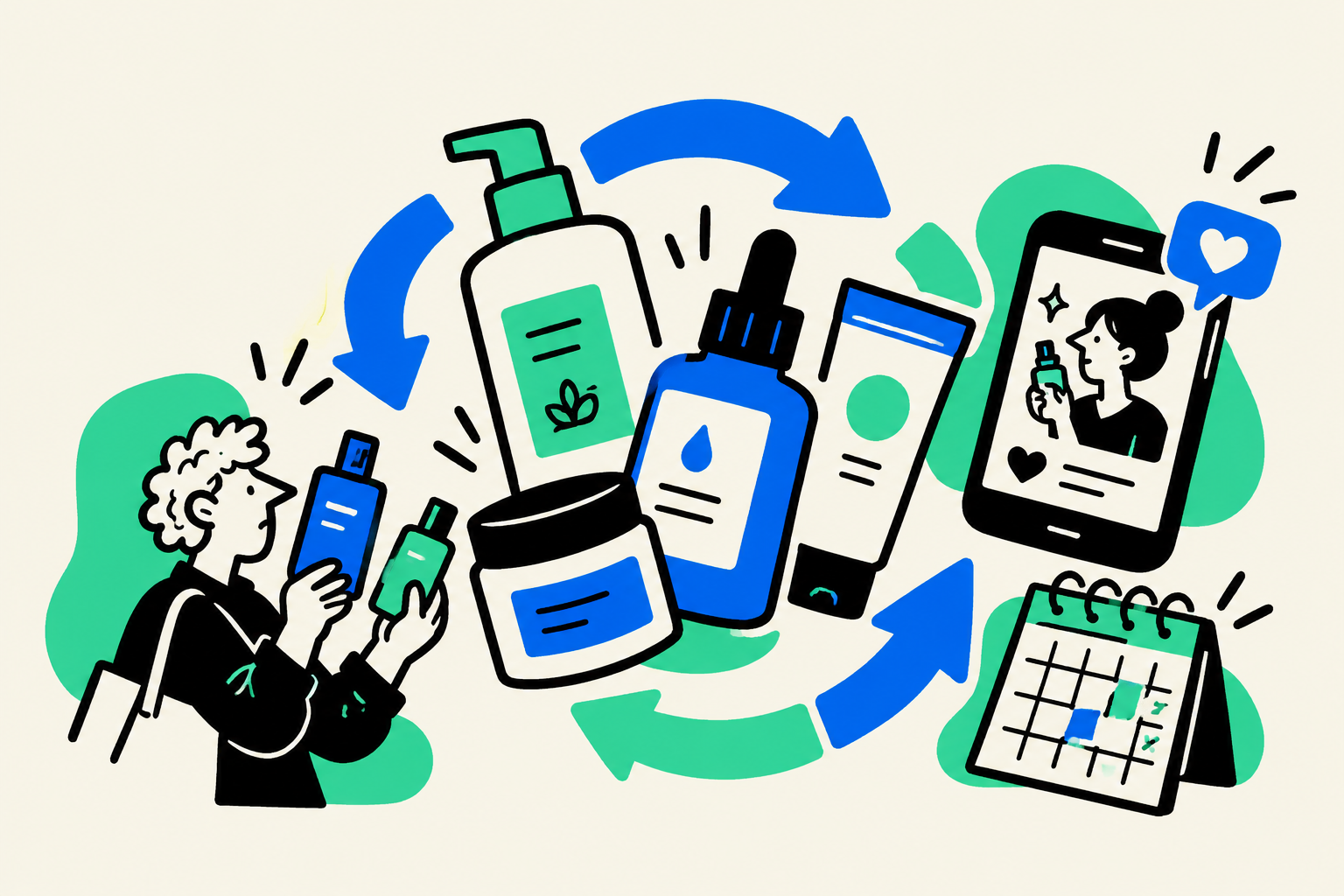
Anyone following K-beauty for even a couple of years notices the pattern: an ingredient or product format goes from obscure to everywhere within months, then gradually cedes attention to the next trend, while a smaller set of foundational products (sunscreen, basic cleansers) stay stable regardless. Understanding why this cycle moves so quickly reveals something real about how the Korean cosmetics industry actually operates.
This article is general information, not medical advice. If you’re dealing with persistent acne, rosacea, eczema or another skin condition, please see a dermatologist.
The Product Development Factor
Korean brands have a reputation for bringing new products to shelves quickly. Part of the reason is how the industry is organized: many brands rely on a dense network of contract manufacturers and ingredient suppliers that can develop, test and produce a new formula in a short time. Korea also regulates some product types, such as sunscreens, whitening and anti-wrinkle items, as “functional cosmetics” reviewed by the MFDS, while in the US most cosmetics do not need FDA approval before sale and sunscreens are regulated as drugs. The two systems are hard to compare directly, so regulation alone does not explain the speed. The shorter path from idea to a product on Olive Young shelves comes mostly from the supply chain and retail competition described below.
The Retail and Marketing Ecosystem
Korea’s cosmetics retail landscape, dominated by chains like Olive Young (covered in our shopping guide) alongside an enormous, fast-moving online and social media commerce ecosystem, rewards rapid product launches and aggressive promotional cycles. Brands compete intensely for the limited attention span of both domestic and international shoppers, creating commercial pressure to constantly introduce new “hero” ingredients and formats rather than resting on established product lines.
The Single-Brand-Success Pattern
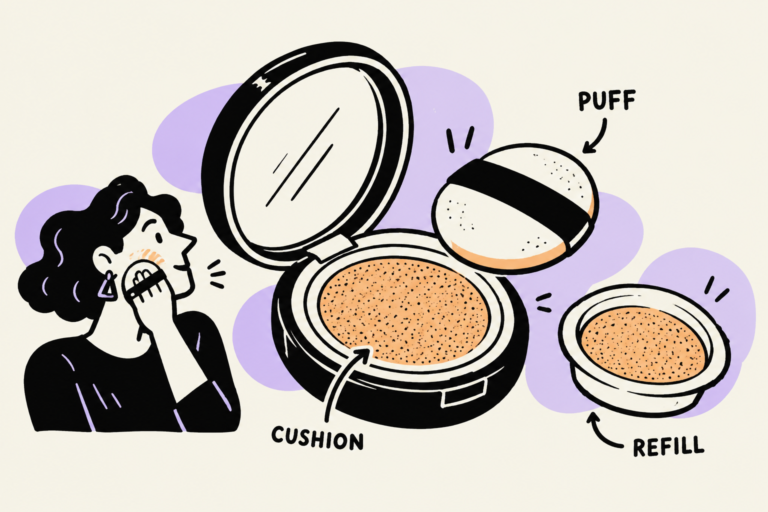
As noted in our Cica craze discussion (within our Centella asiatica and cushion compact posts), K-beauty trends often follow a consistent pattern: one brand achieves breakout success with a specific ingredient or format (Dr. Jart+’s Cicapair for Centella, IOPE’s Air Cushion for the cushion format, COSRX’s essence for snail mucin), and competitors rapidly launch their own versions within 12-24 months, saturating the category before attention shifts elsewhere. This competitive-imitation dynamic is a major driver of how quickly a single successful product becomes an entire trend category.
The Role of International Attention and Export Demand
Since roughly the mid-2010s, K-beauty’s international export success (driven partly by Hallyu’s broader cultural momentum, discussed in our K-pop idol skincare post) has added a second audience Korean brands actively formulate and market toward, alongside the domestic Korean consumer base. This dual audience can accelerate trend cycles further, since a product succeeding internationally (through YouTube reviews, social media virality, or international retailer placement) creates additional competitive pressure distinct from purely domestic Korean market dynamics.
What Stays Stable Despite the Fast Cycles
Not everything in Korean skincare moves quickly. Some foundational categories remain remarkably stable:
- Sunscreen’s non-negotiable daily role, discussed throughout this blog, hasn’t meaningfully changed even as specific product formulations and filter technology evolve
- The core double-cleansing method has remained a consistent practice for decades despite countless specific product trend cycles around it
- The general layering philosophy underlying the 10-step routine concept, even as specific “hero” ingredients within that structure rotate constantly
This distinction matters for anyone new to K-beauty: the underlying principles and habits are considerably more stable and worth learning than any single trending ingredient, which will likely be somewhat less prominent within a year or two regardless of current popularity.
Should You Chase Every New Trend?
Not necessarily, and there’s a reasonable case for skepticism toward jumping on every new viral Korean skincare trend:
- Newer ingredients often have less established safety and efficacy research than time-tested actives like niacinamide, ceramides, or basic hyaluronic acid, covered throughout this blog
- Trend-driven marketing frequently overstates benefits, a pattern discussed specifically in our K-pop idol skincare and Some By Mi toner review posts
- A stable, well-functioning routine built on foundational principles generally serves long-term skin health better than constantly rotating in the latest trending ingredient
That said, staying aware of genuine trends isn’t purely marketing noise. Some, like propolis or PDRN, do reflect real formulation innovation worth understanding, even if the surrounding marketing hype should be approached with appropriate skepticism.
How to Evaluate a New K-Beauty Trend Critically
- Check whether the ingredient has independent research beyond brand-sponsored marketing claims
- Consider whether it addresses a genuine skin concern you have, rather than adding it purely because it’s trending
- Introduce it gradually, following the same cautious approach covered in our 4-week beginner routine guide, rather than immediately overhauling your routine around a new trend
- Recognize that trend cycling is partly a commercial dynamic, not solely a reflection of genuine skincare innovation pace
Common Questions
Does the fast trend cycle mean older K-beauty ingredients are outdated?
No. Ingredients like snail mucin, niacinamide, and Centella asiatica remain well-supported and widely used even as they’ve become less “trendy” in marketing terms; declining hype doesn’t indicate declining efficacy.
Why do some trends (like glass skin) last much longer than others (like specific viral products)?
Broader aesthetic concepts (glass skin, chok-chok) tend to be more durable than specific product or ingredient trends, since they describe an enduring cultural beauty standard rather than a single replaceable product.
Is it bad to build a routine around currently trending products?
Not inherently, as long as the products are well-formulated and suited to your skin. The concern is more about chasing trends reflexively rather than evaluating whether a specific trending product actually addresses your needs.
Wrapping Up
Korean beauty’s rapid trend cycles reflect real structural factors (a fast-moving supply chain, intense retail competition, and dual domestic-international market pressure) rather than pure marketing randomness. Understanding this helps calibrate expectations: chase trends selectively and critically if you enjoy experimenting, but build your actual routine foundation on the more stable principles and time-tested ingredients that remain reliable regardless of what’s currently trending.
Related reading: Why Sheet Masks Are Everywhere in Korea (And How to Actually Use Them) · The “No-Makeup Makeup” Look and Its Skincare Foundation
Read Next
The “No-Makeup Makeup” Look and Its Skincare Foundation
The “no-makeup makeup” look (민낯 메이크업 or 쌩얼 메이크업 in Korean) is makeup designed to…
Skin Cycling, Korean Style: How It Differs From the Viral Trend
“Skin cycling” became a major viral skincare trend internationally, popularized by a US dermatologist’s structured…
“Chok-Chok” Skin Explained: Korea’s Other Dewy Skin Ideal
Chok-chok (촉촉) describes a moist, supple feel. In Korean skincare language, “chok-chok skin” means skin…
K-Pop Idol Skincare Routines: Fact vs. Marketing
“K-pop idol skin” has become one of the most powerful (and most exploited) marketing angles…
The Cushion Compact: How a Korean Invention Changed Global Makeup
A cushion compact is liquid complexion makeup held in a reservoir, usually a sponge, inside…
Glass Skin Explained: Is It Actually Achievable?
Glass skin is a describable goal built on hydration, gentle exfoliation, barrier care and sun protection. Here is what it means and how achievable it really is.