Olive Young Shopping Guide for First-Time Visitors
Olive Young is Korea’s dominant beauty and health retail chain, and for anyone visiting Korea or shopping through its international shipping arm, it’s the single most important stop for K-beauty products. Here’s how to navigate it effectively, whether you’re walking into a physical store in Seoul or browsing Olive Young Global online.
Key takeaways
Olive Young is the single most efficient way to access the full breadth of Korean skincare, whether shopping in person during a Korea visit or through its international online arm, offering better prices, more authentic sourcing, and a far wider selection than most products will ever have through international specialty retailers, at the cost of a less curated, more overwhelming browsing experience for newcomers.
What Olive Young Actually Is
Olive Young operates as Korea’s equivalent of a combined Sephora-meets-drugstore, carrying everything from budget Korean skincare brands to prestige lines, alongside health supplements, snacks, and household items, a broad retail format that goes well beyond a typical Western beauty specialty store. It’s owned by CJ Group, one of Korea’s largest conglomerates, giving it enormous retail leverage and negotiating power with beauty brands, which partly explains its dominant market position.
Physical Store Locations Worth Knowing
For visitors to Korea, a few flagship locations stand out:
- Myeongdong. Seoul’s most tourist-dense shopping district, with multiple large Olive Young locations, often specifically staffed with multilingual associates and offering tourist-specific promotions and tax refund processing
- Hongdae. Popular with a younger, trend-forward crowd, useful for spotting newer or more niche indie Korean brands before they go mainstream
- Gangnam. Reflects the area’s association with dermatology and higher-end beauty culture, often carrying a stronger selection of premium and clinic-adjacent skincare lines
How to Shop Olive Young Like a Local (Not Just a Tourist)
- Check the shelf tags for member prices. Olive Young’s loyalty program (Olive Members, linked to CJ ONE) can offer additional discounts on top of the regular price, so sign up before you check out and compare it with the current promotions in the app
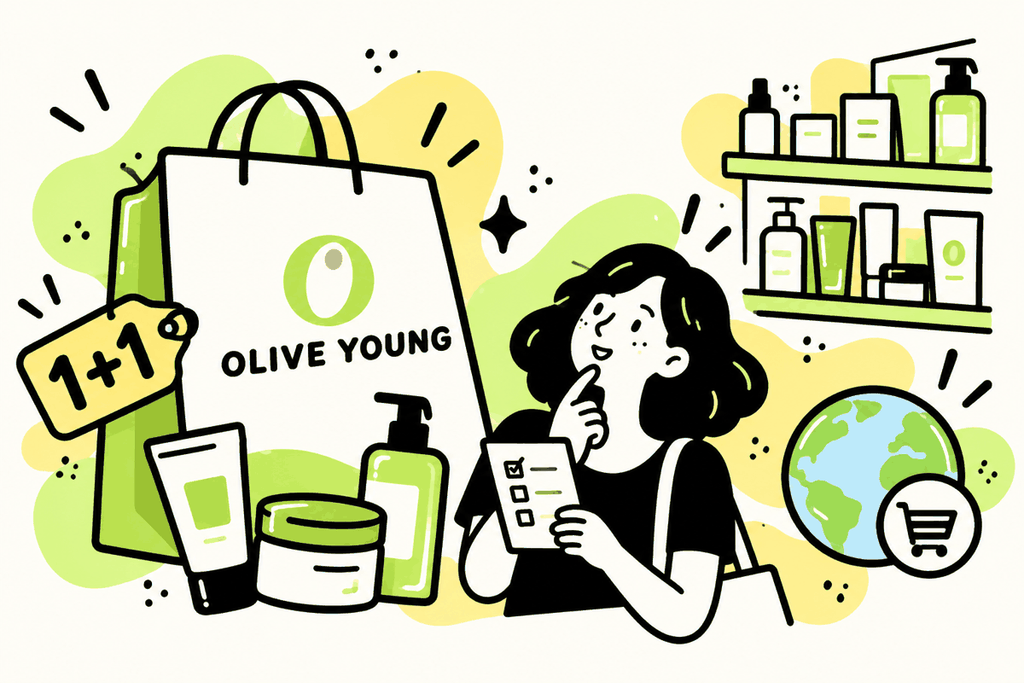
- Look for “1+1” or “2+1” promotional stickers. These buy-one-get-one-style deals rotate frequently and can offer substantial savings on regularly-priced items
- Don’t assume the best-known international brands (COSRX, Beauty of Joseon) are the best deals in-store. Olive Young carries dozens of lesser-known Korean indie brands at often lower prices with comparable formulation quality, several of which are covered across other posts on this blog
Tax-Free Shopping for Tourists
International visitors can access tax refunds on qualifying purchases at many Olive Young locations, particularly the larger tourist-district stores, which often have dedicated tax-refund desks or kiosks. Passport is required at time of purchase, and refund processing typically happens either in-store immediately or at the airport upon departure. Policies and minimum purchase thresholds change periodically, so checking current requirements before a big shopping trip is worthwhile.
Shopping Olive Young Online (Olive Young Global)
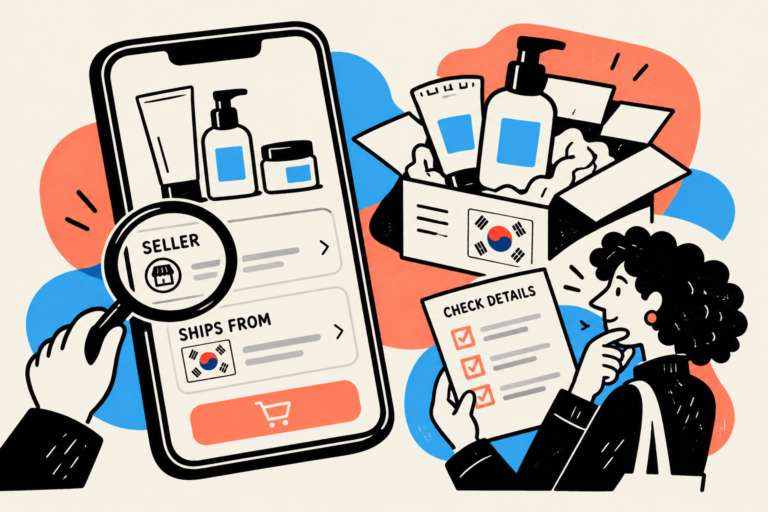
For those not traveling to Korea, Olive Young Global offers international shipping directly from the source, which, as discussed in our authentic K-beauty buying guide, is one of the most reliable ways to guarantee product authenticity without relying on third-party resellers. Pricing is typically in USD, with shipping costs and delivery times varying by region.
What to Actually Buy at Olive Young (vs. Elsewhere)
Worth buying at Olive Young specifically:
- Budget and mid-range Korean skincare brands where you benefit from bundled promotions and loyalty discounts
- Newer, trend-forward indie brands not yet widely available through international specialty retailers
- Korean-exclusive product formulations or limited editions not exported internationally
Less advantage buying at Olive Young vs. other retailers:
- Prestige Korean luxury brands (Sulwhasoo, The History of Whoo), which are often more efficiently purchased through duty-free or department store channels with their own dedicated promotions
- Products you already know you want in bulk, where a dedicated K-beauty specialty retailer’s occasional sitewide sales might beat individual in-store pricing
Navigating the Store Layout
Olive Young stores are typically organized by category rather than brand, which can feel overwhelming to first-time visitors used to brand-organized Western beauty retailers. Skincare is usually organized loosely by function (cleansers, toners, serums, masks) rather than by skin type or brand, a structure that rewards knowing specifically what ingredient or product type you’re looking for, which is part of why building the ingredient knowledge covered throughout this blog pays off directly when shopping in person.
A Few More Questions
Do I need to speak Korean to shop at Olive Young? Not in major tourist-district locations, where English signage and staff assistance are common, though smaller neighborhood locations may have more limited English support.
Is Olive Young more expensive than buying the same products internationally? Usually cheaper, sometimes significantly so, since international retail pricing typically includes import markup, currency conversion costs, and the international retailer’s own margin on top of the base Korean price.
Can I return items purchased at Olive Young? Return policies exist but are generally stricter and more limited than typical Western retail expectations, particularly for opened cosmetic products. Check specific store policy before purchasing if there’s a real chance you’ll want to return something.
Read Next
What Does “Cruelty-Free” Mean for Korean Beauty Brands?
“Cruelty-free” labeling is more complicated for Korean cosmetics brands than for many Western brands, due…
Physical vs. Chemical Sunscreen: The Korean Perspective
The physical-versus-chemical sunscreen debate plays out differently in Korean skincare culture than in many Western…
K-Beauty vs J-Beauty vs C-Beauty: Market Comparison
K-beauty means Korean beauty, J-beauty Japanese beauty and C-beauty Chinese beauty. These labels identify markets…
Essence vs. Serum: What’s Actually the Difference?
Few Korean skincare terms confuse beginners as consistently as “essence” versus “serum.” Both sit in…
Where to Buy Authentic K-Beauty Products Online (Avoiding Fakes)
For US shoppers, start with a brand’s official website or its country-specific authorized retailer list….
Niacinamide or Vitamin C: Which Should You Start With for Uneven Tone?
This is a common question when starting a Korean routine, and it usually comes up…