“Chok-Chok” Skin Explained: Korea’s Other Dewy Skin Ideal
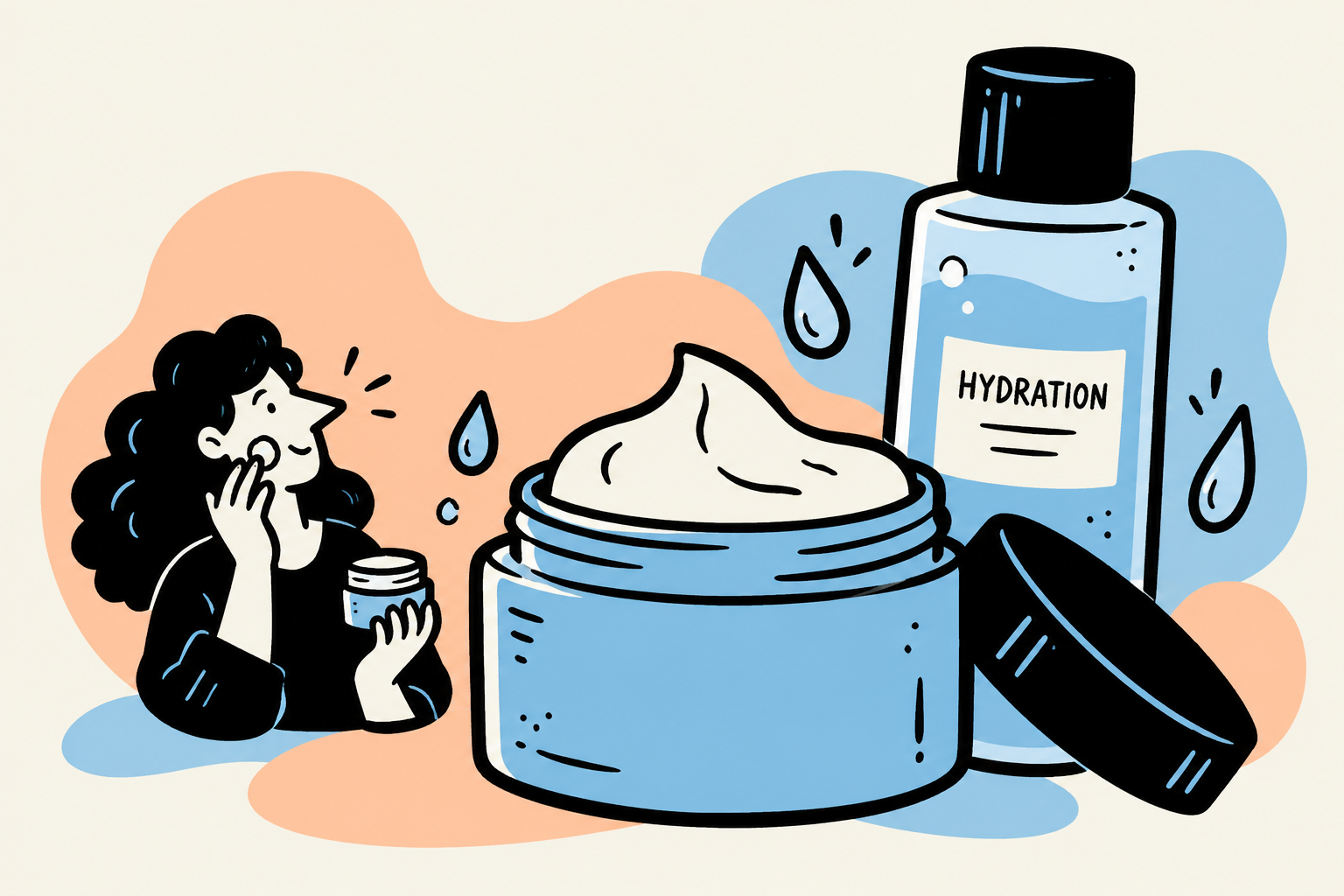
Chok-chok (촉촉) describes a moist, supple feel. In Korean skincare language, “chok-chok skin” means skin that feels comfortably hydrated. It is not a diagnosis, a measured hydration score or a requirement to have poreless, shiny skin.
What Does 촉촉 Mean?
촉촉하다 describes something as moist. In beauty conversation, “피부가 촉촉해요” can be translated as “my skin feels hydrated” or “my skin feels moist.” A product described as “촉촉한 크림” is a moisturizing or moist-feeling cream. Context determines the most natural English translation.
The doubled sound makes the phrase memorable, but “chok-chok” is not a separate ingredient or formal cosmetic category. It describes an impression. A brand using the word has not established a clinical result just by choosing that label.
Chok-Chok vs Glass Skin vs Oily Shine
| Term | What it emphasizes | What it does not prove |
|---|---|---|
| Chok-chok / 촉촉 | A comfortably moist, supple feel | Measured water content or perfect skin health. |
| Glass skin | A smooth, luminous visual ideal | That texture and pores have disappeared. |
| Dewy makeup | A visible finish created partly by makeup | That the skin underneath is well hydrated. |
| Oily shine | Visible surface oil | Whether skin also feels tight or needs moisturizer. |
These descriptions can overlap. Skin can feel comfortable without a high-shine finish, and a luminous makeup look can sit over skin that feels dry. There is no need to chase all of these effects at once. The glass-skin guide discusses the visual ideal separately.
Why the Word Appears on Korean Products
The phrase is useful when describing texture and after-feel, including creams, toners and complexion makeup. It tells the shopper something about the finish the brand wants to communicate. It does not show that every Korean person follows one hydration philosophy.
When reading a Korean listing, separate a sensory description from an efficacy claim. “Moist-feeling” does not establish how long a product improves hydration, whether it supports a particular skin condition or whether it will feel comfortable to you. A published test would need its own methods and results.
A Simple Routine for Comfortable Hydration
Start with cleansing that does not leave persistent discomfort, then a moisturizer you tolerate. Maintain daytime sun protection. You can add a hydrating toner or serum if it solves a real comfort or texture problem, but multiple thin layers are an option rather than a requirement.
Glycerin and hyaluronic acid are familiar names in hydrating formulas. Their presence does not establish the performance of the whole product. The moisturizer’s texture, other ingredients and your use pattern also matter.
Avoid adding a new oil cleanser, toner, essence and serum at once just to achieve a Korean label. If you like a shorter routine, the minimalist routine guide helps separate useful steps from optional extras.
Adjust the Feel to Your Skin
Dry-feeling skin: consider whether your cleansing is uncomfortable and whether your moisturizer gives enough comfort. A richer texture may be useful, but you do not need a sleeping pack as an automatic extra step.
Oily skin: surface shine and a moist feel are different. Choose an amount and texture you tolerate. Do not interpret every oily day as proof of dehydration or expect a toner to control oil by itself. See the oily-skin guide.
Combination skin: use more moisturizer on areas that feel dry and less where a heavy layer is uncomfortable. This is an adjustment to application, not a reason to build separate five-step routines for each area.
Can You Add Too Many Hydrating Products?
Yes, a long routine can become uncomfortable even if each bottle is marketed as hydrating. Pilling, heaviness and persistent irritation are reasons to simplify. More products also make it harder to identify which one is causing a problem.
Do not dismiss excess product as only waste. A hydrating label does not mean a formula cannot irritate. If skin remains itchy, inflamed or uncomfortable, stop chasing a finish and get appropriate advice.
Reading 촉촉 on a Label
Look for the full product name and version, then the ingredient list and directions. If “chok-chok” describes a sunscreen or cushion, decide whether you want that finish without assuming it proves better skincare performance.
A Korean term can help explain the brand’s intent, but the useful question is still concrete: does this product fit my routine and feel comfortable when used as directed? That is a clearer goal than reproducing the lighting or texture of a promotional photo.
Quick Answers
Is chok-chok the same as glass skin? No. Chok-chok usually communicates a moist feel, while glass skin names a visual aesthetic.
Can makeup create the look? Makeup can add luminosity. That finish does not measure hydration underneath.
Do I need a Korean product? No. The term is Korean, but a comfortable routine can use products from any country.
Is 촉촉 always translated as dewy? Not necessarily. “Moist” or “hydrated” can be more accurate when the context is after-feel rather than visible shine.
Read Next
Glass Skin Explained: Is It Actually Achievable?
Glass skin is a describable goal built on hydration, gentle exfoliation, barrier care and sun protection. Here is what it means and how achievable it really is.
The “No-Makeup Makeup” Look and Its Skincare Foundation
The “no-makeup makeup” look (민낯 메이크업 or 쌩얼 메이크업 in Korean) is makeup designed to…
K-Pop Idol Skincare Routines: Fact vs. Marketing
“K-pop idol skin” has become one of the most powerful (and most exploited) marketing angles…
Skin Cycling, Korean Style: How It Differs From the Viral Trend
“Skin cycling” became a major viral skincare trend internationally, popularized by a US dermatologist’s structured…
Why Korean Beauty Trends Cycle So Fast
Anyone following K-beauty for even a couple of years notices the pattern: an ingredient or…
The Cushion Compact: How a Korean Invention Changed Global Makeup
A cushion compact is liquid complexion makeup held in a reservoir, usually a sponge, inside…