The Cushion Compact: How a Korean Invention Changed Global Makeup
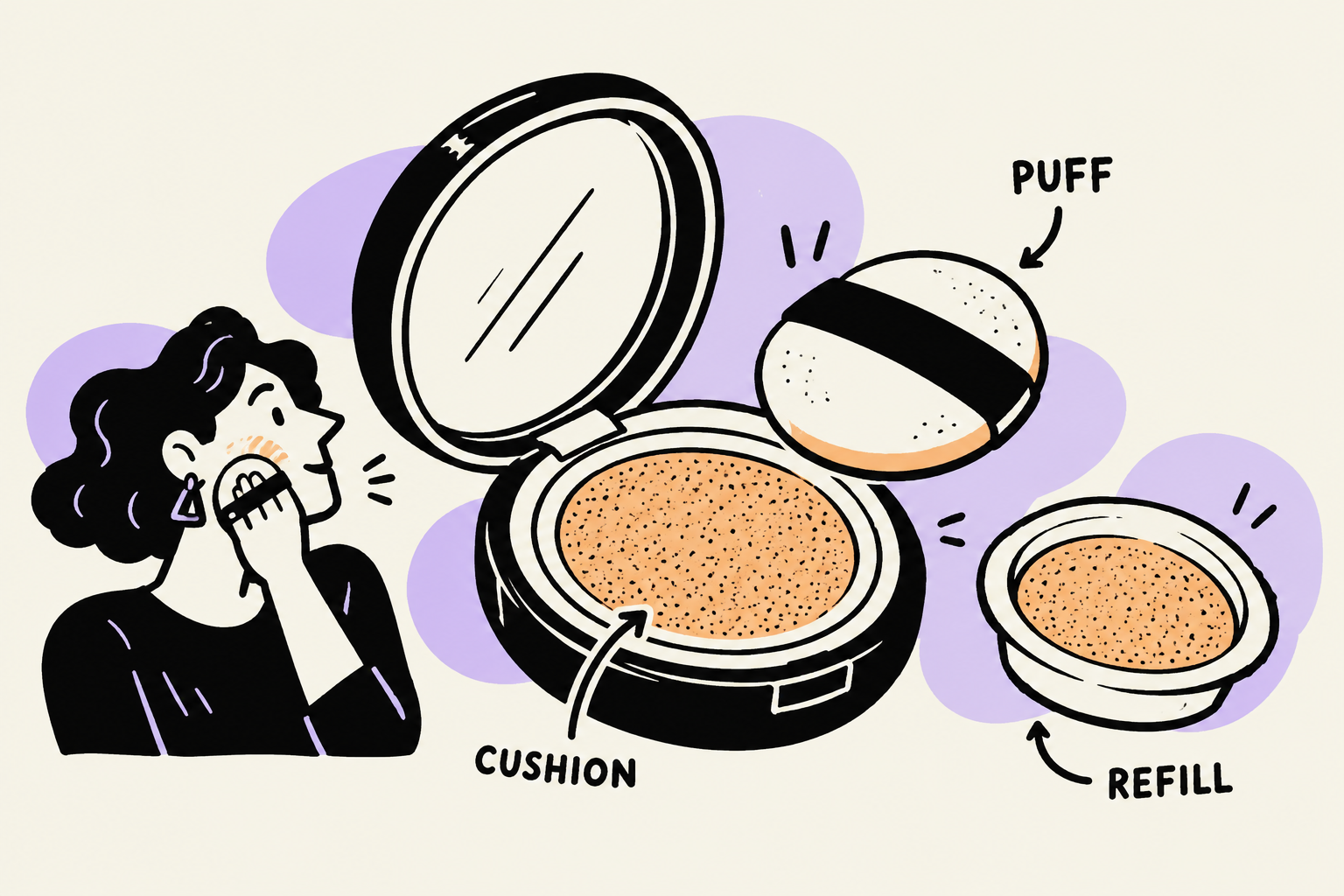
A cushion compact is liquid complexion makeup held in a reservoir, usually a sponge, inside a portable compact. A separate puff picks up a small amount for patting onto skin. “Cushion” describes this delivery format; it does not guarantee a dewy finish, sheer coverage or a particular skincare benefit.
The Korean Launch Behind the Format
Amorepacific’s account of the cushion’s development dates IOPE Air Cushion’s launch to March 2008. This is a manufacturer history source, useful for the launch date and the company’s description of its own development work. It is not an independent test of the finished makeup.
The practical idea was to put liquid product and an applicator into a compact that could be carried and reapplied. Instead of dispensing foundation onto the back of a hand, the user pressed a puff into the reservoir. Packaging and application became part of the product’s appeal.
That makes the cushion a useful example of Korean beauty innovation beyond a trending ingredient. The format changed how liquid makeup could be stored and picked up. It also gave brands another way to offer shade, finish and refill choices within a portable case.
Cushion, Liquid Foundation and BB Cream: What Changes?
| Format | How product is dispensed | What the format does not establish |
|---|---|---|
| Cushion compact | Puff pressed into a reservoir, then patted onto skin. | Coverage, finish, shade suitability or irritation risk. |
| Bottled liquid foundation | Pump, dropper or bottle; applied with fingers, brush or sponge. | A particular finish or coverage level. |
| BB cream | Usually dispensed from a tube or pump. | A standardized formula. BB is a product label; some BB products also come in cushions. |
A cushion can contain a foundation-style formula, a BB-style product or another complexion product. Compare the formula and shade as well as the container. Two cushions can feel less alike than a cushion and a bottled foundation.
How the Compact Works
The case holds the reservoir and closes around it. A separate applicator puff picks up product when pressed onto the surface. Some designs use a mesh or another reservoir arrangement instead of a conventional exposed sponge, so the exact mechanism varies.
Start with a light press rather than assuming you need to saturate the puff. Pat on a thin layer and add coverage where needed. Dragging a puff across the face can disturb the products underneath. Follow the brand’s application instructions, particularly around the eyes.
The compact’s convenience is separate from hygiene. Keep the puff clean according to its care instructions, let it dry properly and avoid sharing applicators. Close the compact after use. An airtight-looking lid does not make used makeup sterile.
Why the Format Travelled Beyond Korea
A portable reservoir and puff make the concept easy to understand without knowing Korean skincare terminology. The same basic arrangement can be used for different shades and finishes, which helped it become a recognizable makeup format rather than a product tied to one brand.
Do not read that history as proof that all Korean consumers prefer the same look. Cushions can be matte, luminous or somewhere between. The success of a format also does not establish that it performs better than bottled foundation for everyone.
Current Examples: Matte and Glow Within One Korean Brand
As checked on October 8, 2026, Laneige’s international site lists Neo Cushion The Matte and Neo Cushion The Glow. These are manufacturer descriptions of two different finishes, not results from my own wear test.
The pair illustrates a more useful distinction than “Korean cushions are dewy.” Choose between specific versions based on the finish, shade range, ingredient list and refill compatibility. Older articles discussing Laneige BB Cushion or an earlier Neo version should not be treated as ingredient references for the current products.
Are Korean and Overseas Versions Different?
They may be, but a country label is not enough to establish a formula change. Compare the exact product name, generation, shade and full ingredient lists on matched regional pages. A renamed product or a reformulation released at different times can look like a regional difference.
I have not established a general rule that domestic Korean cushions are dewier and exported cushions are more matte. The matte/glow examples above are a choice of product versions, not proof of a Korea-versus-US formulation difference. For any purchase, the label on the actual compact matters.
Refills, Shelf Life and SPF
A refill is worthwhile only if it fits the exact compact model. Check the product name and generation, since a brand may change the case or insert. Compare the refill price with the full compact and do not assume every model is refillable.
How long an insert lasts depends on its size, how much you apply and how often you touch up. Follow the expiry date and period-after-opening instructions instead of a universal two- or three-month rule.
An SPF claim on makeup does not tell you how much protection you obtain from a thin cosmetic layer. Keep your dedicated sunscreen routine; choose the cushion for its makeup performance rather than treating a touch-up as a measured sunscreen application.
Who Is a Cushion For?
It may suit someone who values a portable applicator and light, repeated application. A bottle can make more sense if you prefer using a brush, need a wider shade selection or want less contact between an applicator and the reservoir. Neither format guarantees better skin.
The invention story is the reason to understand the category; the exact formula, shade and care instructions are the reason to choose a particular compact.
Read Next
“Chok-Chok” Skin Explained: Korea’s Other Dewy Skin Ideal
Chok-chok (촉촉) describes a moist, supple feel. In Korean skincare language, “chok-chok skin” means skin…
Glass Skin Explained: Is It Actually Achievable?
Glass skin is a describable goal built on hydration, gentle exfoliation, barrier care and sun protection. Here is what it means and how achievable it really is.
Why Korean Beauty Trends Cycle So Fast
Anyone following K-beauty for even a couple of years notices the pattern: an ingredient or…
The “No-Makeup Makeup” Look and Its Skincare Foundation
The “no-makeup makeup” look (민낯 메이크업 or 쌩얼 메이크업 in Korean) is makeup designed to…
Skin Cycling, Korean Style: How It Differs From the Viral Trend
“Skin cycling” became a major viral skincare trend internationally, popularized by a US dermatologist’s structured…
K-Pop Idol Skincare Routines: Fact vs. Marketing
“K-pop idol skin” has become one of the most powerful (and most exploited) marketing angles…